Your digging level
Description
Muzică ușoară românească (Romanian "light music") is a strand of urbane, melodically rich popular music that crystallized in interwar Romania and matured under the post‑war broadcasting and festival system. It blends chanson-like storytelling and Italian canzone lyricism with jazz/swing rhythm sections and plush orchestral arrangements.
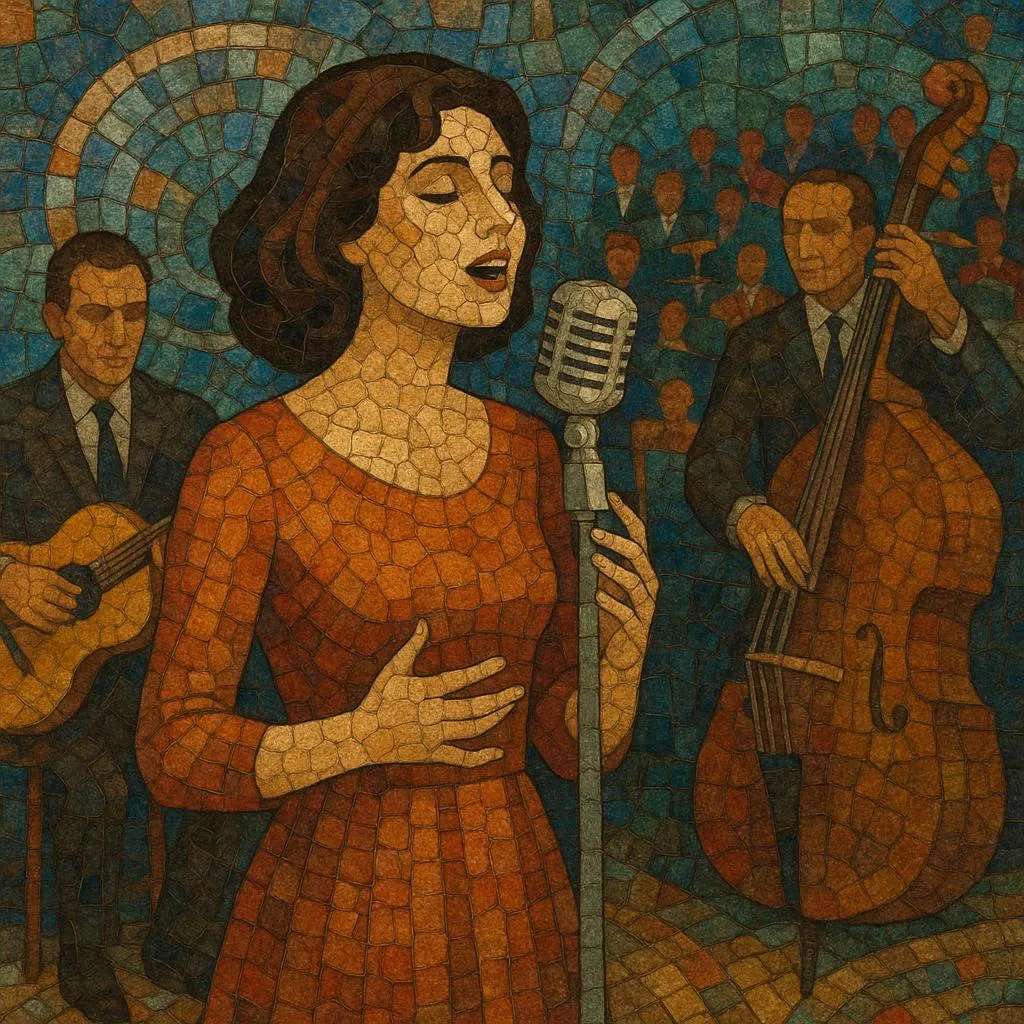
Typically performed by charismatic vocalists backed by radio/TV big bands or studio orchestras, the style favors singable, diatonic melodies, elegant modulations, and romantic or urbane themes. In the socialist era it became the state‑sanctioned face of modern entertainment, showcased at festivals such as Mamaia and Cerbul de Aur, and it remains a touchstone of Romanian pop nostalgia.
History
Romanian light music took shape in the 1930s urban milieu, when café‑concert culture, gramophone recordings, and radio promoted crooners like Jean Moscopol and Cristian Vasile. Their repertoires drew on fashionable tangos and foxtrots, French chanson, and American jazz/swing, adapted with Romanian lyrics and a locally preferred lyrical delivery.
After WWII, the genre was reorganized within state media. The Romanian Radio/TV orchestras and composers’ guild professionalized production, while censorship steered texts toward acceptable romance, civic optimism, and everyday life. Composers such as Radu Șerban, Temistocle Popa, Horia Moculescu, Florin Bogardo, and Marcel Dragomir supplied sophisticated yet accessible songs.
Festivals—including Mamaia (from 1963) and Cerbul de Aur (Golden Stag, from 1968)—became key platforms, fostering stars like Margareta Pâslaru, Dan Spătaru, Mirabela Dauer, Angela Similea, Corina Chiriac, Aurelian Andreescu, and Doina Badea. Arrangements typically featured big‑band rhythm sections, strings, woodwinds, and brass, marrying schlager polish with orchestral color and light jazz inflections.
The post‑1989 liberalization diversified the market; youth gravitated to rock, dance‑pop, and hip‑hop. Yet muzică ușoară’s melodic language, orchestrational approach, and vocal aesthetics fed directly into 1990s–2000s Romanian pop and adult contemporary. Archival broadcasts, reissues, and tribute concerts continue to shape collective memory, and the genre’s festival standards remain staples for conservatory and TV talent‑show repertoires.
Muzică ușoară românească provided a shared songbook and performance template for Romanian mainstream pop: carefully crafted melodies, emotive but poised vocals, and orchestral‑pop sheen. Its repertoire still signals intergenerational nostalgia and defines a specifically Romanian variant of European light entertainment music.