Your digging level
Description
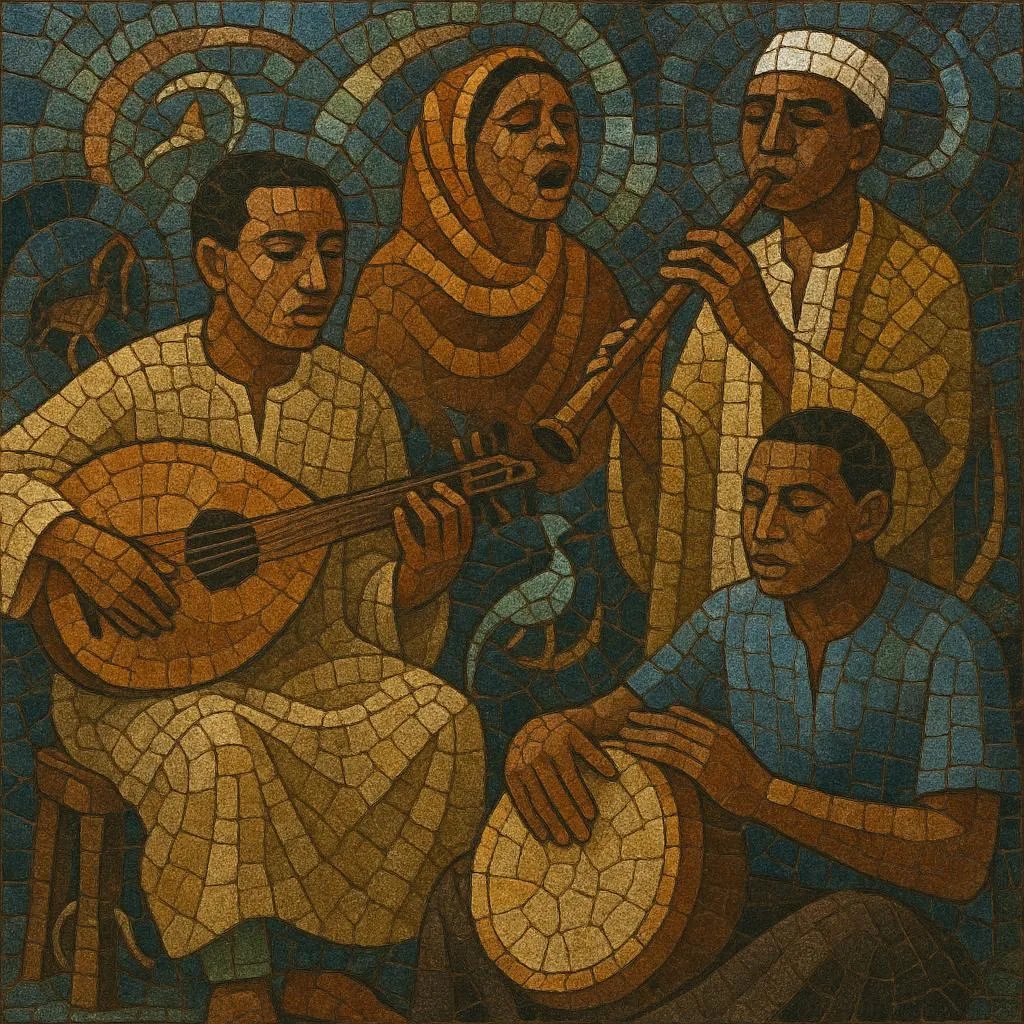
Comorian traditional music (musique traditionnelle comorienne) is the acoustic, community-rooted music of the Comoros archipelago in the Indian Ocean. It blends Swahili Coast aesthetics with Malagasy timbres and Arab-Islamic modal sensibilities, reflecting centuries of maritime exchange. Typical instruments include the gabusi/gaboussi (a small lute), the ndzendze/dzenzé (a box zither related to Malagasy zithers), frame drums and ngoma percussion, as well as violins and accordions in coastal taarab-style ensembles. Songs are commonly performed in Shikomori (Comorian) alongside Swahili and Arabic.
Stylistically, it spans graceful taarab-influenced poetry-singing to highly rhythmic dance repertoires used for life-cycle ceremonies, weddings, and village festivals. Swaying 6/8 and 12/8 grooves, call-and-response vocals, ululation, and melodic ornamentation are hallmarks. While the core is acoustic and communal, contemporary Comorian artists often fuse these foundations with blues, rock, reggae, and electronic textures, keeping the tradition dynamic and alive.
History
The Comoros sit along the historical Indian Ocean trade routes connecting East Africa, the Arabian Peninsula, Persia, South Asia, and Madagascar. Precolonial performance practices grew around communal ceremonies, Islamic religious life, and local dance-drumming (ngoma), absorbing poetic forms and musical ideas from Arab and Swahili travelers. Instruments such as the gabusi lute and the ndzendze zither embody this cross-island lineage, while vocal practices reflect both Islamic chant aesthetics and Bantu call-and-response.
From the late 19th century, taarab—flourishing in nearby Zanzibar—deeply influenced Comorian coastal towns. Violins, accordion, and modal song forms entered local ensembles, and Arabic poetic meters intertwined with Comorian lyrics. Under French colonial rule and increasing urbanization, new ensembles formed, codifying repertories for weddings and public festivities. Regional currents from Madagascar, Réunion (maloya), and the Mascarenes (séga) further diversified rhythms and dance repertoires.
After independence (1975), traditional styles remained vital at home while the Comorian diaspora in Mayotte, Réunion, Madagascar, Tanzania, and France helped document and amplify these musics. Studio recordings and radio exposure encouraged stylized arrangements, yet ceremonies—engagements, rites of passage, sambi (wedding) festivities—continued to anchor performance contexts. The mgodro rhythm became a recognizable island marker, and instrument makers preserved gabusi and ndzendze craftsmanship.
Since the late 20th century, artists have re-centered heritage instruments on modern stages, pairing ndzendze or gabusi with guitar, bass, drum set, and occasionally electronics. This has produced vibrant hybrids that travel global "world music" circuits while remaining grounded in local dances and poetic song. Community transmission—through family, neighborhood troupes, and ritual specialists—continues to sustain the tradition.