Your digging level
Description
Música tabasqueña refers to the regional traditional and popular music of Tabasco, a humid, riverine state in southeastern Mexico. It blends indigenous Chontal and mestizo practices with Gulf-coast string and tropical dance idioms.
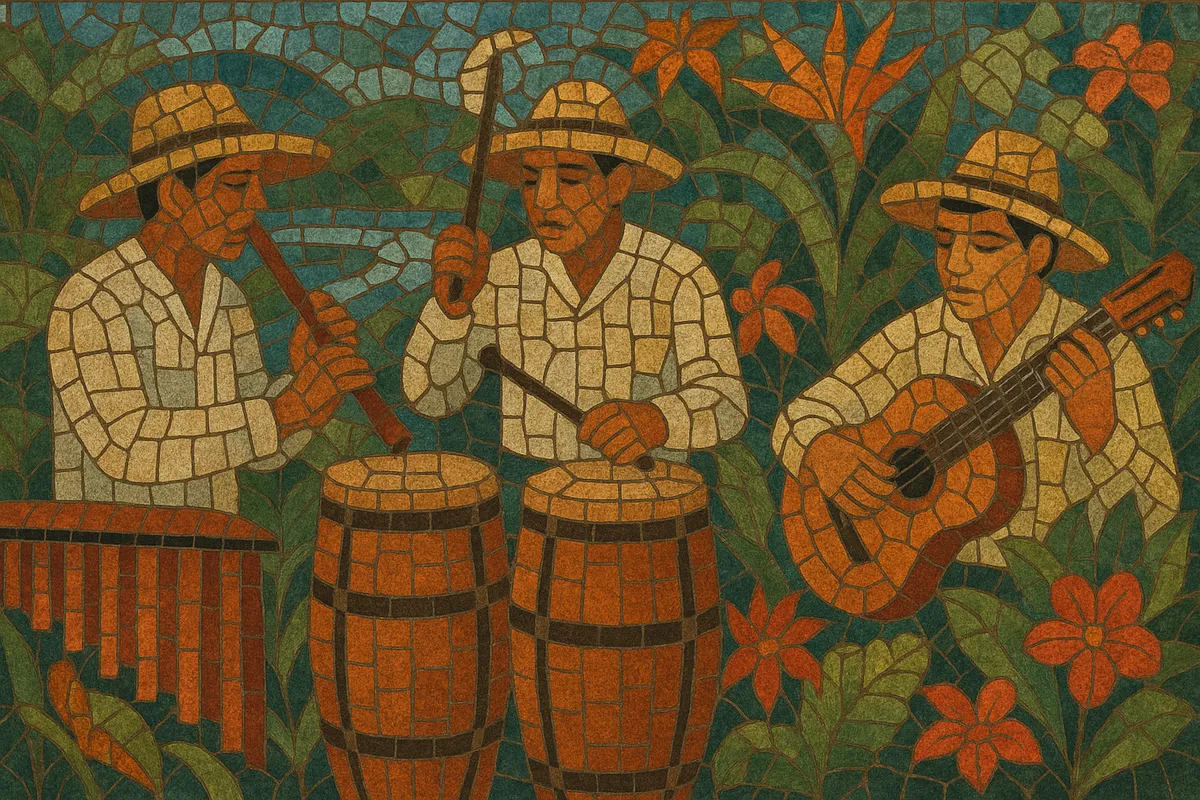
Core sounds include tamborileros ensembles (two-headed drums with a high-pitched cane or wooden flute called pito), festive zapateo tabasqueño dance rhythms, marimba and guitar-based salon repertoires, and mid‑20th‑century tropical/cumbia orchestras. Lyrically, songs frequently celebrate local identity—rivers like the Grijalva and Usumacinta, flora and fauna such as the pejelagarto and pochitoque, and everyday life in ranchos and towns.
The result is a repertoire that moves easily between communal, percussive processional pieces and romantic bolero/cumbia numbers designed for social dancing, retaining a distinct Tabasco swing and regional accent.
History
Tabasco’s musical life coalesced around indigenous Chontal tamborileros traditions—small processional groups using double-headed drums and a bright, piercing pito flute—paired with mestizo string practices for the local zapateo tabasqueño dance. As river commerce and festivals linked Tabasco with neighboring Chiapas, Veracruz, and the Yucatán Peninsula, marimba repertories, son jarocho/huasteco song forms, and salon genres like danzón and bolero joined the local soundscape.
With the spread of radio and public dances, marimba ensembles and small orchestras became fixtures of civic life. Repertoires mixed local sones, zapateos, and instrumental marimbas with bolero and danzón. Tamborileros groups remained central at community and religious festivities, keeping indigenous timbres in the mainstream of regional celebration.
The Mexican cumbia wave brought a distinctly tabasqueño flavor to tropical dance bands. Artists from Tabasco popularized humorous, upbeat cumbias that referenced local culture and speech, further defining the state’s sonic identity nationwide. Throughout this period, school- and municipality‑based tamborileros and marimba groups kept traditional repertoire active alongside dance-hall tropical sounds.
Cultural institutions, municipal ensembles, and university groups have documented and taught tamborileros technique, zapateo choreography, and regional marimba repertoire. Meanwhile, regional pop and cumbia acts continue to draw on tabasqueño rhythms, melodies, and imagery. Today, música tabasqueña spans folkloric stages, community fiestas, and popular dance floors, maintaining a living link between indigenous percussion, Gulf-coast song forms, and modern Mexican tropical styles.