Your digging level
Description
Musica sudcaliforniana refers to the contemporary regional-music scene that grew in Baja California Sur, Mexico, blending norteño, sierreño, norteño-banda, ranchera, and cumbia norteña aesthetics with local stories, slang, and coastal/ranch life imagery.
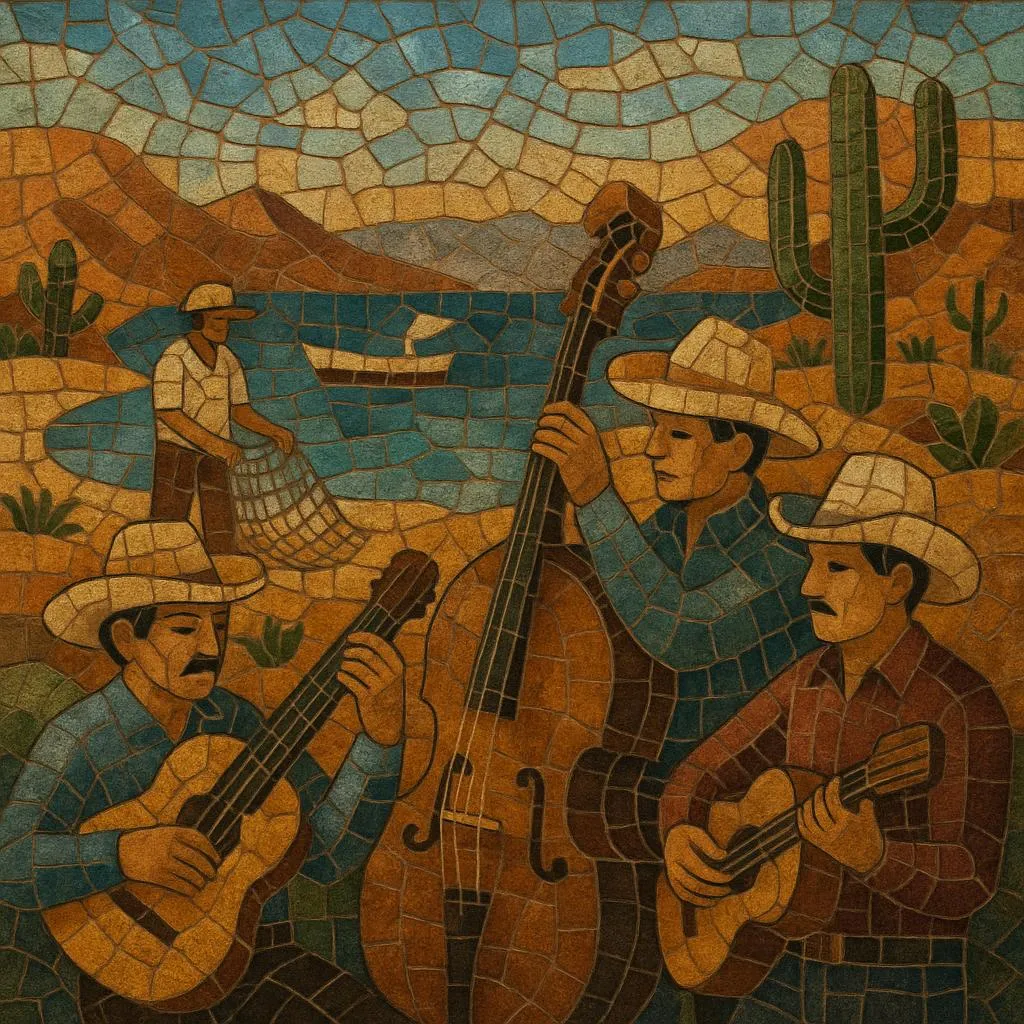
Typical ensembles range from sierreño trios (requinto/guitarra sierreña, guitarra de acompañamiento, and tololoche or bass) to norteño-banda and full drum-kit norteño groups featuring accordion and bajo sexto, or brass-heavy banda lineups. Songs often alternate between corrido narrative forms and romantic ballads, moving fluidly among polka, waltz, two-step, and cumbia grooves.
Lyrically, the style foregrounds the everyday of Baja California Sur—desert highways, the Sea of Cortez, fishing, ranching, fiestas patronales, love and heartbreak—framed by the broader soundworld of Regional Mexicano but stamped with a distinct Sudcalifornian identity.
History
Musica sudcaliforniana crystallized from long-standing Regional Mexicano traditions that had circulated across the Baja peninsula for decades—rancheras at family gatherings, corridos learned by ear, and norteño/sierreño repertoire brought by touring bands from Sinaloa and Sonora. Local musicians adapted these idioms to small-town venues, palapas, and community fiestas, favoring portable string ensembles and accordion-driven groups.
The 2010s saw a marked self-identification as a Sudcalifornian scene. Independent bands began foregrounding local toponyms, area codes, and imagery in group names, artwork, and lyrics. Live circuits in La Paz, Los Cabos, and Comondú supported a steady calendar of bailes where norteño-banda, sierreño trios, and cumbia norteña could share bills. Low-cost recording and social media allowed homegrown acts to distribute original corridos and baladas at scale.
YouTube, Facebook, and later short-video platforms amplified the scene beyond the peninsula. The sound diversified: some acts leaned into brassy banda arrangements and power waltzes; others favored intimate sierreño textures and tololoche-led ballads; many toggled between corrido storytelling and pop-leaning romantic duets. Despite the breadth, core markers remained: polka/waltz/two-step grooves, I–IV–V and minor-mode turns, lyrical focus on coastal–desert life, and a dance-forward delivery.
Musica sudcaliforniana now functions as a recognizable micro-ecosystem within Regional Mexicano—rooted in Baja California Sur’s cultural geography yet fully conversant with national trends like norteño-banda crossover and contemporary corrido writing. The scene sustains itself through a tight live network, independent labels, and steady digital releases.