Your digging level
Description
Musica quintanarroense refers to the contemporary music scene centered in the Mexican state of Quintana Roo (Cancún, Playa del Carmen, Tulum, Chetumal), where Caribbean currents meet Yucatán‑Peninsula traditions and modern Mexican popular music.
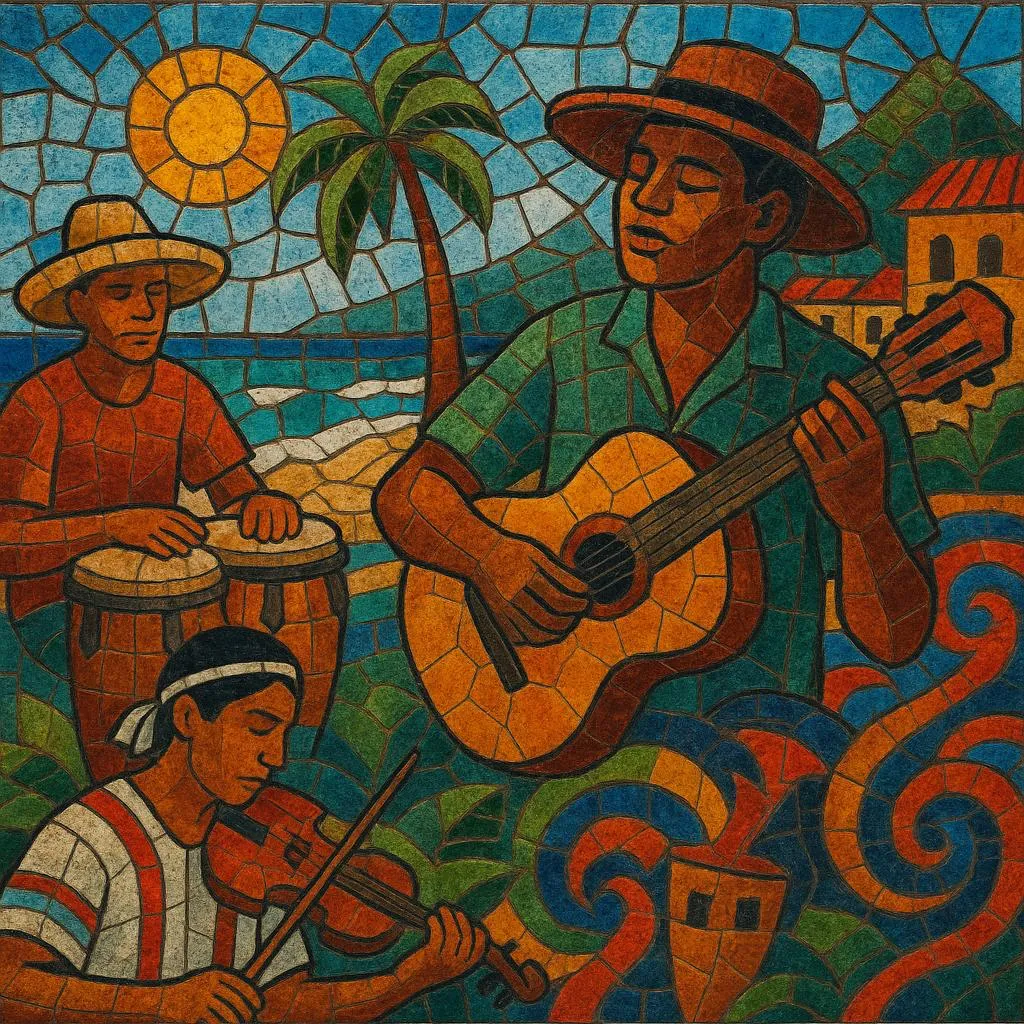
It blends coastal reggae and dancehall grooves, reggaeton and urban pop production, Yucatecan roots such as jarana and trova, and local Maya practices like Mayapax ensembles. Because the state is a tourism hub with constant cultural interchange, electronic club sound design, indie rock, and tropical cumbia often coexist in the same catalog, yielding a sun‑soaked, beach‑city aesthetic with bilingual (Spanish/Maya) lyrics and Caribbean rhythmic sensibilities.



History
Quintana Roo sits at the crossroads of the Caribbean and the Yucatán Peninsula. Long before the modern scene, regional repertoires such as jarana yucateca and trova circulated across the peninsula, while Maya ritual and social music—especially Mayapax (Maya pax)—anchored indigenous sound worlds in communities around today’s Felipe Carrillo Puerto.
The rapid growth of Cancún, Playa del Carmen, and Riviera Maya created steady stages for hotel circuits, beach clubs, and festivals. This brought sustained contact with reggae, dancehall, soca, and international electronic DJs. Local bands began fusing ska/reggae backbeats and cumbia with peninsula song forms and Spanish/Maya songwriting, as well as experimenting with rock en español and Latin alternative aesthetics.
With digital platforms labeling state‑level micro‑scenes, “musica quintanarroense” crystallized as an umbrella for artists from the state spanning reggae and roots, indie/alt‑rock, R&B/urban, and beach‑club electronic. Many projects foreground bilingual identity, coastal imagery, Afro‑Caribbean percussion, and environmentally conscious or community‑minded themes. The result is a distinctive, exportable coastal Mexican sound that remains porous and collaborative, reflecting Quintana Roo’s role as a cultural meeting point.