Your digging level

For this genre
0/8
🏆
Sign in, then listen to this genre to level up

Description

Música mexiquense refers to the body of popular and folk styles cultivated in the State of Mexico (Estado de México, or Edomex), the densely populated ring around Mexico City. The label covers both long‑standing rural traditions in the south of the state (Tierra Caliente sones and ritual music among Mazahua and Otomí communities) and a powerful, urban, working‑class sound forged in industrial municipalities such as Nezahualcóyotl, Ecatepec, Naucalpan, and Tlalnepantla.

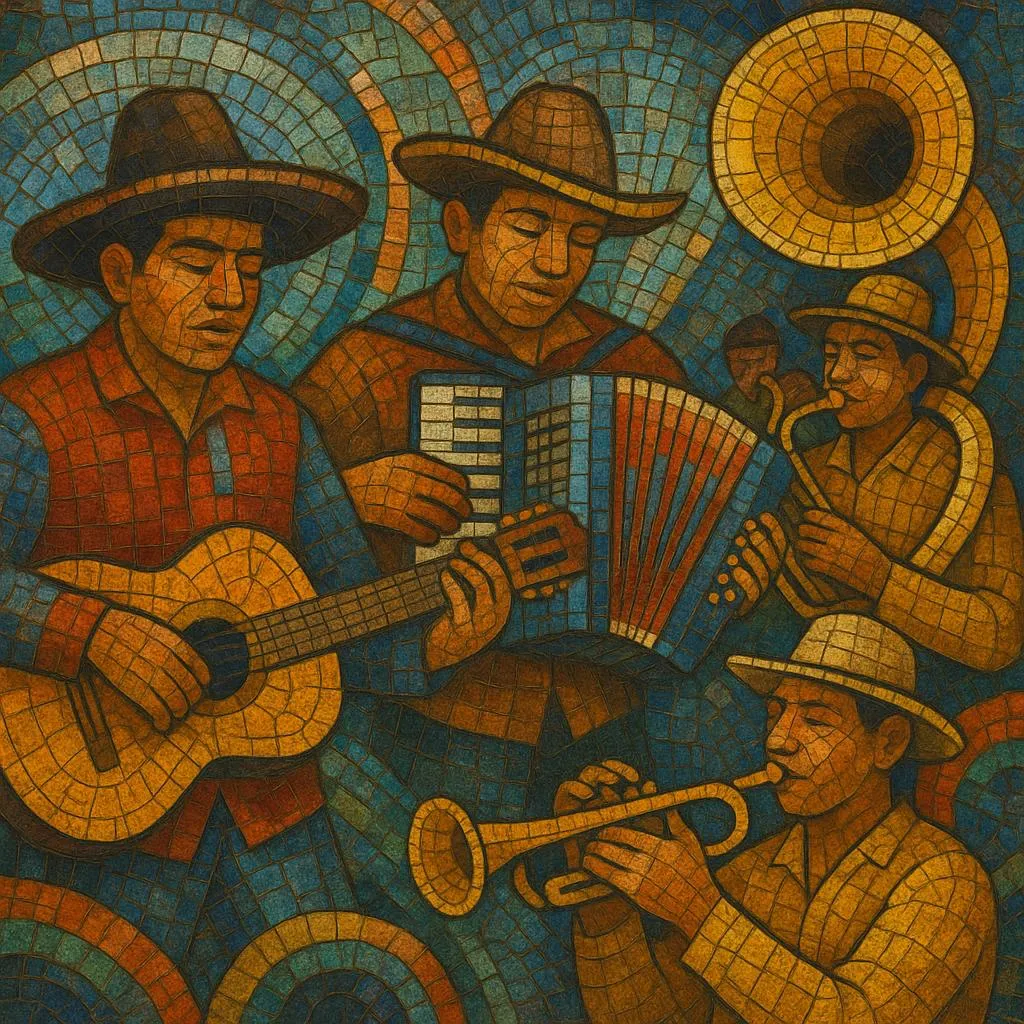
In practice, música mexiquense blends cumbia sonidera and grupera/romantic cumbia with brass wind bands, mariachi and rural string ensembles, plus urban rock and hip‑hop. Its social settings run from public dances and neighborhood fiestas (bailes sonideros) to patron‑saint festivals, civic ceremonies, and large concert halls. The result is a rhythm‑forward, dance‑centric regional identity distinguished by powerful PA systems, synthesizer/organ cumbia leads, tambora‑style percussion, and a deep culture of dedicatorias (shout‑outs) and collective participation.


Sources: Spotify, Wikipedia, Discogs, RYM, MB, user feedback and other online sources

History

Roots and Early 20th Century

The State of Mexico’s southern districts belong to the broader Tierra Caliente cultural zone shared with Guerrero and Michoacán. There, son calentano (violin‑led dance music accompanied by guitarra de golpe and tamborita) took shape in the late 19th and early 20th centuries and remained central to community dances and ritual calendars. Parallel to this, Mazahua and Otomí ensembles maintained ceremonial repertories with wind bands and string groups.

Urbanization and the Sonidero Belt (1950s–1980s)

Rapid post‑war urban growth created vast working‑class municipalities (notably Ciudad Nezahualcóyotl and Ecatepec). Imported Colombian cumbia records and local sound‑system culture (sonideros) converged with Mexican grupera and brass‑band practices. By the 1970s–80s, neighborhood dance events (bailes) driven by massive PAs, shout‑outs, and cumbia remixes defined a distinct Edomex identity contiguous with Mexico City’s east side.

Consolidation and Media Era (1990s–2000s)

Romantic cumbia/grupera groups and wind‑band offshoots flourished alongside urban rock ("rock urbano"), while state ensembles and municipal bands formalized public‑culture roles. Independent labels, pirate cassettes, and later CDs/DVDs and regional TV amplified the scene beyond local borders, intertwining Edomex with the national touring circuit.

Digital Age and Hybridity (2010s–present)

YouTube, Facebook Live, and DJ edit culture boosted sonidero aesthetics (extended intros, pitched organs, dedicatorias) and fed two‑way flows with migrants, notably influencing Chicago’s Mexican cumbia circuits. Meanwhile, hip‑hop, reggaetón inflections, and EDM textures appear in local productions, while southern Edomex continues to champion son calentano and community wind bands.

How to make a track in this genre

Ensemble and Timbre
•   Urban baile setting: lead synth/organ (for cumbia sonidera lines), electric bass with a tumbao pattern, rhythm guitar (clean or lightly overdriven), congas + güiro + timbales, and a robust drum kit. Add brass (trumpets/trombones) or full wind band for larger events. •   Rural/Tierra Caliente setting: violin carrying melody and ornaments; guitarra de golpe and quinta huapanguera for harmonic/rhythmic strum; tamborita for accented dance patterns.
Rhythm and Groove
•   Prioritize danceability (cumbia at ~90–100 BPM; son calentano with brisk ternary dance pulses). Use a steady güiro, syncopated conga slaps, and kick patterns that emphasize beats 1 and 3 in cumbia; let the bass articulate a cyclical tumbao. •   For sonidero aesthetics, extend intros/outros for MC shout‑outs (dedicatorias) and gradual filter sweeps or tape‑delay throws.
Harmony and Melody
•   Cumbia/grupera favors diatonic progressions (I–V–vi–IV; ii–V–I turnarounds) with bright, singable hooks. Lead synth adopts a nasal, organ‑like timbre playing parallel thirds or octave doubles. •   Son calentano violin uses rapid mordents, slides, and call‑and‑response with the strummed guitars; maintain modal color close to major with occasional Mixolydian inflections.
Lyrics and Delivery
•   Themes: barrio pride, romance, nostalgia, working‑class resilience, fiesta and community rituals. Keep verses concise with a memorable, repeated coro. •   In baile contexts, include a present MC (sonidero) to engage the crowd, make dedications, and cue dance breaks.
Production and Performance Practice
•   Mix for the dance floor: strong low‑mid for bass and drums; bright, slightly over‑present synth/organ lead; generous plate reverb on vocals but keep lyrics intelligible. •   Live: prioritize PA headroom and sub response; allow extended sections for dance circles and shout‑outs; in rural formats, preserve acoustic blend and the percussive snap of the tamborita.

Top tracks

Locked
Share your favorite track to unlock other users’ top tracks

Upcoming concerts

in this genre
Influenced by
Has influenced

Download our mobile app

Get the Melodigging app and start digging for new genres on the go
© 2026 Melodigging
Melodding was created as a tribute to Every Noise at Once, which inspired us to help curious minds keep digging into music's ever-evolving genres.
Buy me a coffee for Melodigging