Your digging level
Description
Música Feirense refers to the diverse musical production and cultural scene of Feira de Santana, a major city in Bahia, Brazil, known as the "Princesa do Sertão" (Princess of the Hinterland).
Situated at the crossroads between the coastal Recôncavo and the arid Sertão, the genre is not a single rhythm but a vibrant convergence of styles. It is characterized by the pioneering spirit of the "Micareta" (the first off-season carnival in Brazil), a very strong local Reggae scene often dubbed the "Jamaica Baiana", and a deep connection to rural roots through Forró and Samba de Roda.
In recent decades, it has become a powerhouse for Arrocha and a breeding ground for contemporary MPB and alternative rock, blending traditional northeastern instrumentation with urban electric sounds.
History
The musical history of Feira de Santana is anchored in its role as a commercial and cultural hub connecting different regions of Bahia.
A defining moment occurred in 1937 with the creation of the Micareta, initially called "Micareme", organized by Maneca Ferreira. This event established the city as a pioneer in off-season carnivals, fostering a culture of Trios Elétricos and festive music that would later feed into the Axé movement.
Throughout the late 20th century, the city developed a unique identity. While Luiz Caldas, the "father of Axé," was born there, the city also cultivated a distinct Reggae scene in the 1980s, led by artists like Dionorina and Jorge de Angélica, who mixed Jamaican rhythms with social commentary relevant to the region.
In the 2000s and 2010s, Feira de Santana became a critical center for the popularization of Arrocha, a romantic, seresta-influenced genre that exploded nationally. Simultaneously, an alternative scene flourished with festivals like Feira Noise, showcasing a fusion of rock with regional aesthetics.
Composing in the Feirense style requires blending the rural with the urban.
Rhythm: Utilize a strong percussion base. If leaning towards the Micareta style, use the heavy surdo and repique of Samba-Reggae or Axé. For the Reggae side, emphasize the off-beat skank but consider adding a Brazilian percussion twist (like the triangle). For Arrocha, use a 4/4 beat with a prominent keyboard backing and a 'brega' romantic feel.
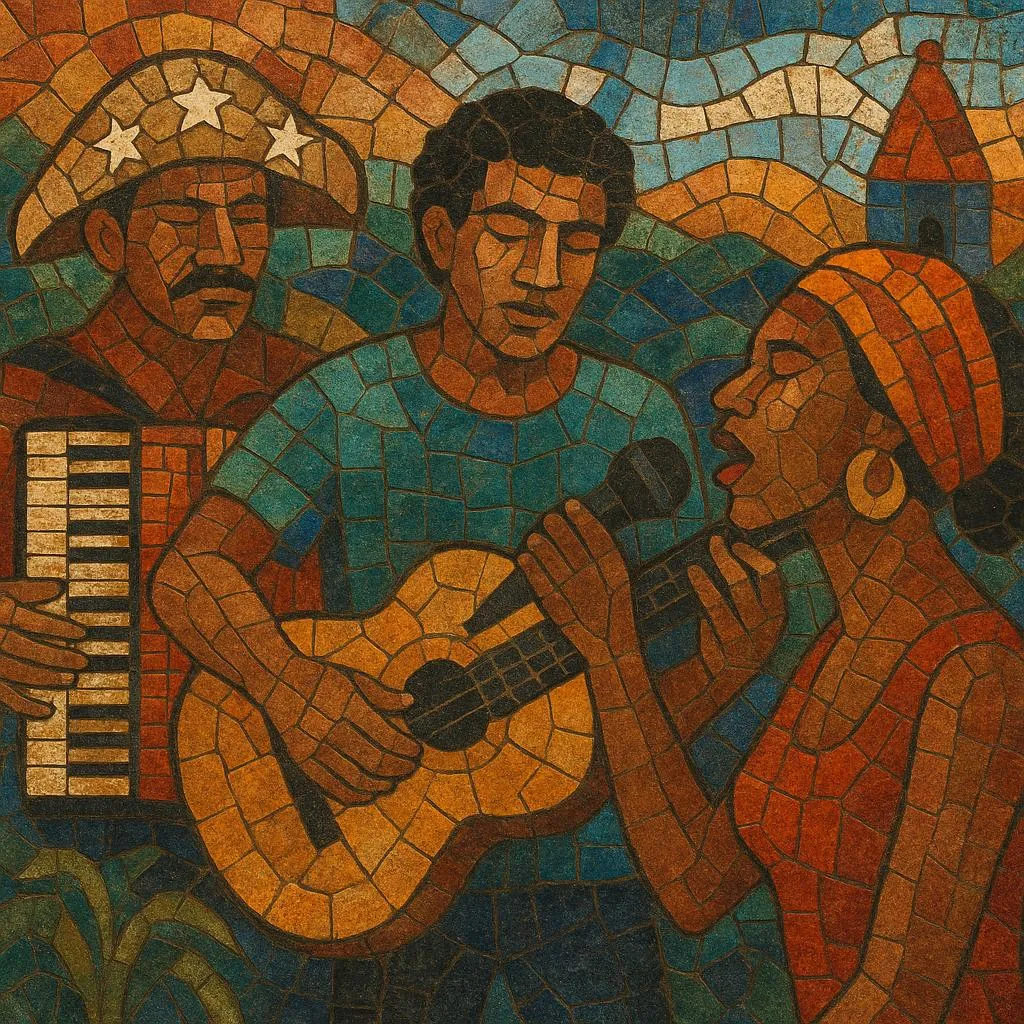
Instrumentation: A typical ensemble might mix electric guitars (often with clean, chorus-heavy tones or distorted solos) with traditional instruments like the zabumba, sanfona (accordion), and brass sections (referencing the city's philharmonic tradition).
Lyrics: Themes often revolve around the dichotomy of the city—the busy life of the 'Feira' (market), romantic longing (sofrência), social struggles, or the celebration of local identity and the 'sertanejo' soul.