Your digging level
Description
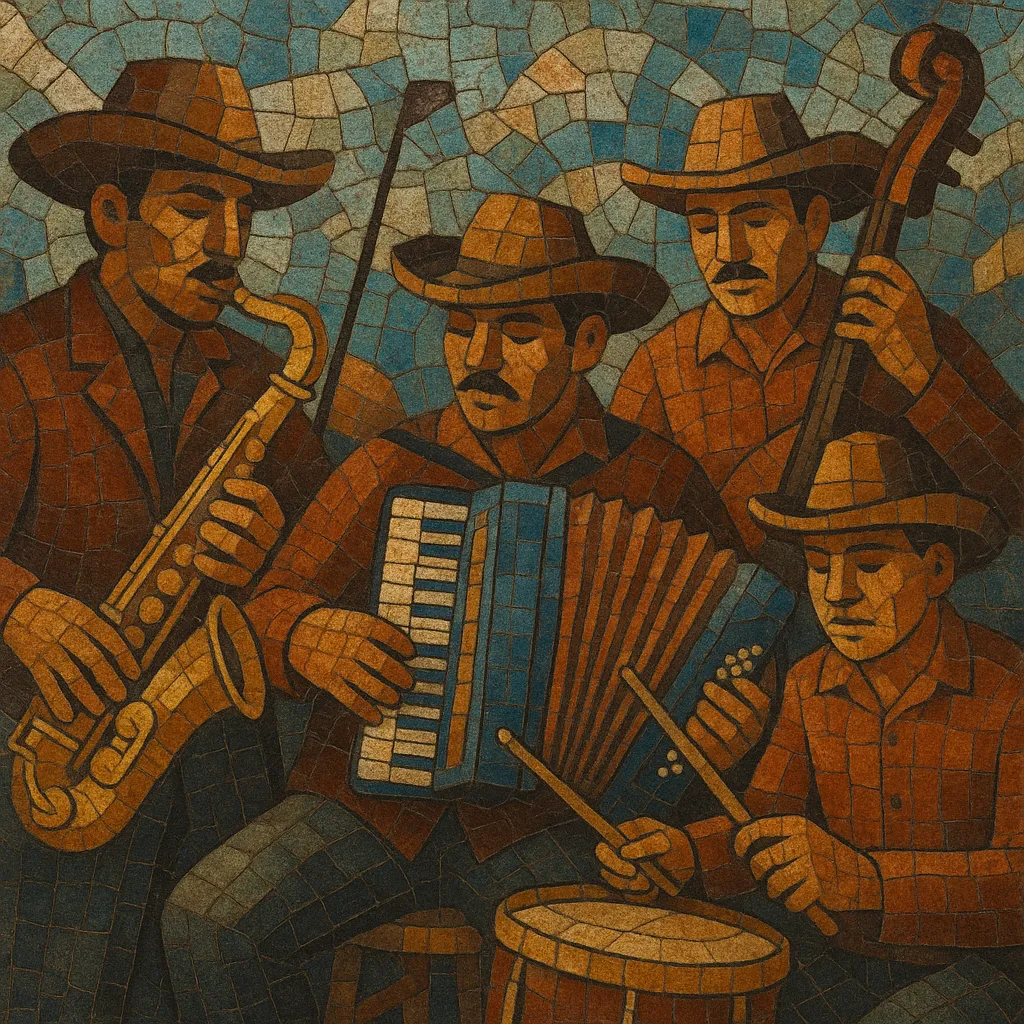
Música coahuilense refers to the regional Mexican sound as it is practiced and identified with the state of Coahuila in northern Mexico. It is rooted in the classic norteño ensemble but is distinguished by the strong presence of saxophone alongside accordion, bajo sexto, bass, and drums.
Dance-derived rhythms such as polka (2/4), schottische/redova (2/4 with a hop feel), and waltz (3/4) are foundational, often alternating in a single dance set. Songs range from romantic ballads and story-telling corridos to festive pieces for public dances (bailes) and town fairs (ferias).
Lyrically, música coahuilense centers on love, nostalgia, regional pride, everyday working life, and borderland experiences. Its timbre is bright and driving, with close vocal harmonies and punchy, melodic sax lines doubling or answering the accordion.
History
The musical life of Coahuila developed within the broader norteño tradition that took shape along the Mexico–U.S. border in the early 1900s. European social dances brought by immigrants (polka, schottische, waltz, mazurka) blended with Mexican song forms (ranchera) and narrative corridos. By mid-century, ensembles in Coahuila increasingly featured the saxophone, adding a warm, melodic voice to the classic accordion-led conjunto sound.
Through radio, dances, and local labels, the sax-driven norteño approach became a hallmark of the Coahuila scene. Working-class dance halls in Saltillo, Torreón, Monclova, and surrounding towns popularized brisk polkas, sentimental waltzes, and corridos recounting regional stories. The steady four-piece rhythm section (bajo sexto, bass/tololoche, drums) anchored the style, while sax and accordion traded hooks and harmonized melodies.
As touring circuits linked Coahuila with neighboring Durango, Nuevo León, Chihuahua, and Texas, the sax-forward norteño sound traveled widely. Recording quality improved, arrangements grew tighter, and romantic repertoire expanded, keeping the style present on regional radio and at community festivities.
Música coahuilense remains a living dance music. It continues to thrive at town fiestas and social gatherings, and its sax-accordion signature contributes to the broader visibility of regional mexicano. Contemporary groups adopt modern production while preserving traditional rhythms and lyrical themes, sustaining the genre’s identity across generations.