Your digging level

For this genre
0/8
🏆
Sign in, then listen to this genre to level up

Description

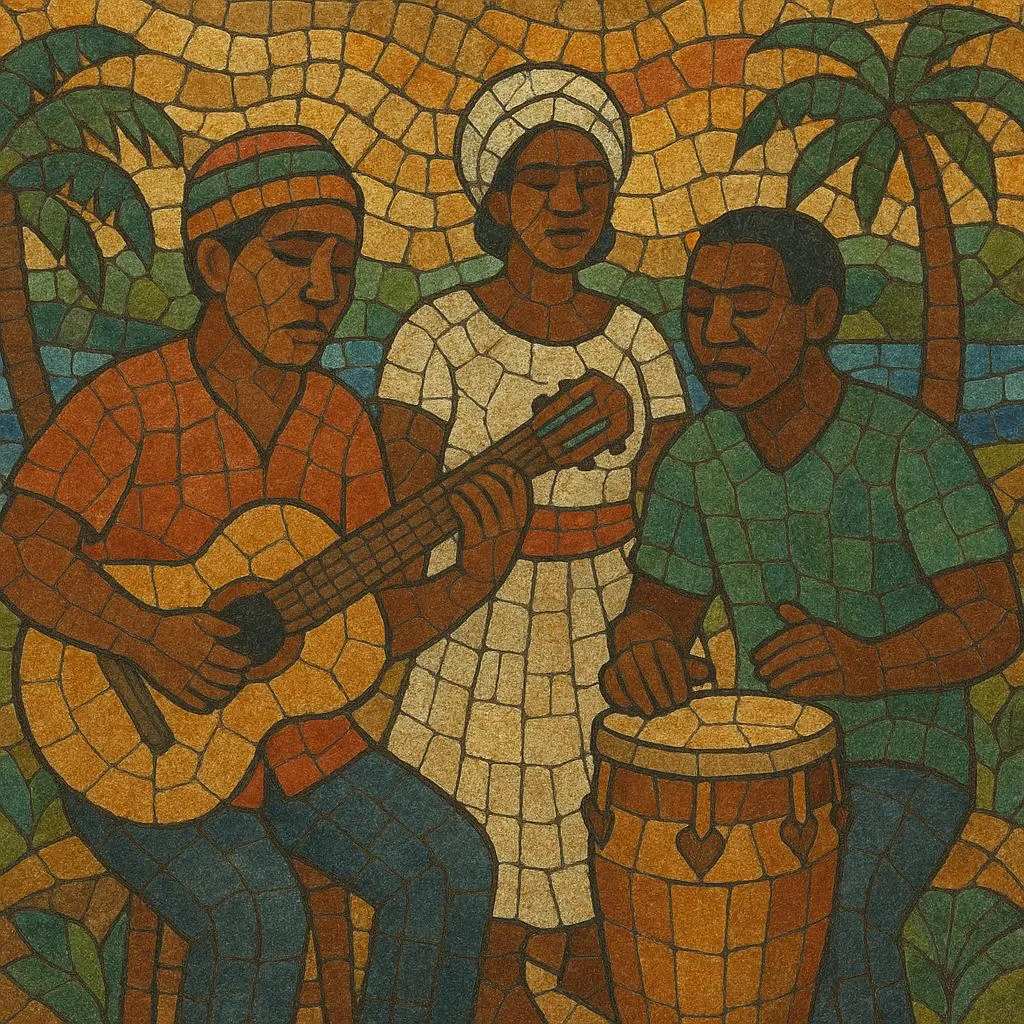
Música amapaense refers to the popular and roots-inflected music scene from the Brazilian state of Amapá, on the far north of the Amazon basin.

It blends Afro-Amapá rhythms such as marabaixo (linked to black confraternities and the Festas do Divino), Amazonian folk percussion and call‑and‑response with MPB songwriting, carimbó and guitarrada grooves from neighboring Pará, and the Caribbean sway of lambada and nearby French Guianese/Caribbean zouk.

The result ranges from acoustic, poetic MPB with regional imagery (rivers, tide, quilombola memory, the Marco Zero) to danceable, percussion-led songs that carry the pulse of local festas and processions.


Sources: Spotify, Wikipedia, Discogs, RYM, MB, user feedback and other online sources

History

Origins

Amapá’s musical identity is rooted in Afro-Amapá traditions—especially marabaixo and batuque—cultivated in Macapá’s historic communities (e.g., Laguinho and Favela) and in quilombola territories. These devotional and festive practices shaped the area’s characteristic drum patterns, call-and-response singing, and communal dancing. Throughout the 20th century, local composers absorbed neighboring Pará’s carimbó and guitarrada, as well as Caribbean currents (zouk, cadence-lypso) that circulate across the Guianas.

1980s–2000s: Regional MPB and the modern scene

From the 1980s, singer-songwriters and ensembles began framing marabaixo/batuque rhythmic cells within MPB song forms—acoustic guitars, rich harmonies, and lyric poetry tied to Amazonian landscapes. This period consolidated a recognizable “amapaense” voice: urban yet riverine, Afro-diasporic yet dialoguing with Brazil’s national songbook. Local festivals, radio, and cultural institutions helped professionalize artists and repertories while preserving community-led marabaixo groups.

2010s–present: Plurality and continuity

The contemporary scene remains plural: roots projects keep marabaixo at the fore; MPB and folk-pop continue to narrate everyday Amapá; and younger acts intersect with brega, lambada revival, indie, and electronic textures. Across these paths, the through-line is a percussive lilt, regional storytelling, and the assertion of Afro-Amazonian heritage.


How to make a track in this genre

Core feel and rhythm
•   Start from marabaixo/batuque cells in 2/4 or a lilting 4/4: a steady, swung pulse with accented off‑beats. •   Use caixa de marabaixo (rope-tension drum timbre), handclaps, shakers, and communal responses to create a circular, procession-like groove.
Harmony and melody
•   Frame rhythms with MPB-flavored harmony: tonic–subdominant motion, added 9ths/11ths/6ths, and secondary dominants for color. •   Melodic lines are lyrical and singable, often call-and-response or refrain-driven; emphasize pentatonic and modal inflections that sit comfortably over percussion ostinati.
Instrumentation
•   Acoustic guitar/violão as the harmonic backbone; add bass (electric or acoustic), light keys, and regional percussion. •   For danceable tracks, borrow carimbó/guitarrada guitars (clean, syncopated riffs) and lambada’s swaying backbeat.
Lyrics and narrative
•   Write in Portuguese with regional imagery: rivers, tide cycles, rain, mangroves, santo festivities, and quilombola memory. •   Balance poetry and everyday speech; themes often celebrate community, ancestry, and the Amazonian environment.
Arrangement tips
•   Begin sparse (voice + violão) to foreground narrative, then layer percussion and group vocals. •   Use short percussion breaks and coro refrains to evoke the circle-dance ethos. •   Keep dynamics organic—ritual roots favor gradual builds over abrupt drops.

Top tracks

Locked
Share your favorite track to unlock other users’ top tracks

Upcoming concerts

in this genre
Influenced by
Has influenced
No genres found

Download our mobile app

Get the Melodigging app and start digging for new genres on the go
© 2026 Melodigging
Melodding was created as a tribute to Every Noise at Once, which inspired us to help curious minds keep digging into music's ever-evolving genres.
Buy me a coffee for Melodigging