

Your digging level
Description
The music of the Valencian Community (eastern Spain) is a rich, plural tradition that spans rural song, wind-band culture, art music, and contemporary popular styles. It reflects centuries of Mediterranean exchange and Iberian history, resulting in a sound world where traditional voices coexist with symphonic halls, folk revivals, and modern urban scenes.
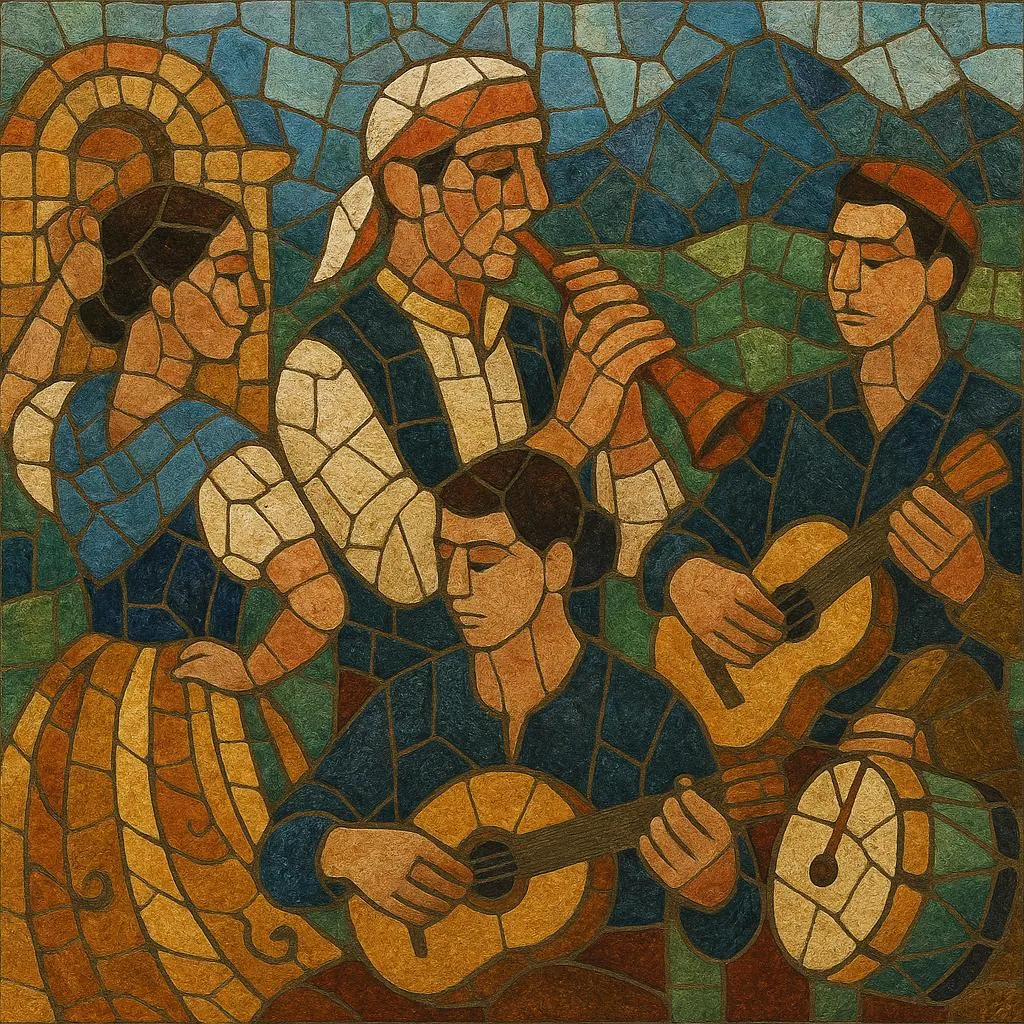
Traditional expressions include the cant valencià d’estil (Valencian art-song style), albaes (improvised strophic verses), and festive dance-songs such as jotes, fandangos, and danses, typically accompanied by the piercing dolçaina (double-reed shawm) and tabal (drum). Equally distinctive is the region’s unparalleled wind-band movement (societats musicals), which fills towns with concert bands performing pasodobles and concert works.
Contemporary music ranges from singer-songwriters who helped catalyze cultural renewal in the late 20th century to rock, ska, and fusion groups that weave the dolçaina, band textures, and local rhythms into modern arrangements. Classical legacies—from guitar pioneers to world-famous composers—further underline Valencia’s role as a Mediterranean musical crossroads.
History
Valencian musical identity began taking shape in the medieval period through courtly and popular traditions influenced by Christian, Muslim (Al-Andalus), and Jewish cultures. Improvised and responsorial practices—now evident in albaes and cant valencià d’estil—echo these older layers, while the Phrygian-tinged melodic color so common around the Mediterranean can be heard in traditional tunes.
From the 19th century onward, the region developed one of the world’s strongest concert band ecosystems (societats musicals), embedding music-making in everyday civic life. Valencian bands cultivated pasodobles for processions and festivals and expanded into substantial concert repertoire, training generations of musicians and conductors.
Valencia produced artists of global stature: guitar innovator Francisco Tárrega helped define modern classical guitar technique and repertoire; composer Joaquín Rodrigo (of Concierto de Aranjuez fame) carried Valencian lyricism to international concert stages. Their presence cemented the region’s influence on European art music.
In the later 20th century, singer-songwriters such as Raimon and Ovidi Montllor became emblematic voices of cultural and linguistic affirmation, bridging poetry and song and shaping the modern image of Valencian music within the broader Catalan-language Nova Cançó.
Groups like Al Tall pioneered the folk revival, while Obrint Pas and La Gossa Sorda fused ska/rock with dolçaina, bands, and local rhythms. In parallel, pop outfits (e.g., Presuntos Implicados) and mainstream icons (e.g., Nino Bravo) extended Valencia’s reach across Spanish-language markets. Today, thriving orchestras, opera houses, festivals, and conservatories coexist with dynamic indie, rock, and urban scenes, keeping tradition and innovation in constant dialogue.

