Your digging level
Description
Music of Moldova encompasses a continuum from village folk and ritual song to urban pop, rock, and hip hop that circulates across Eastern Europe.
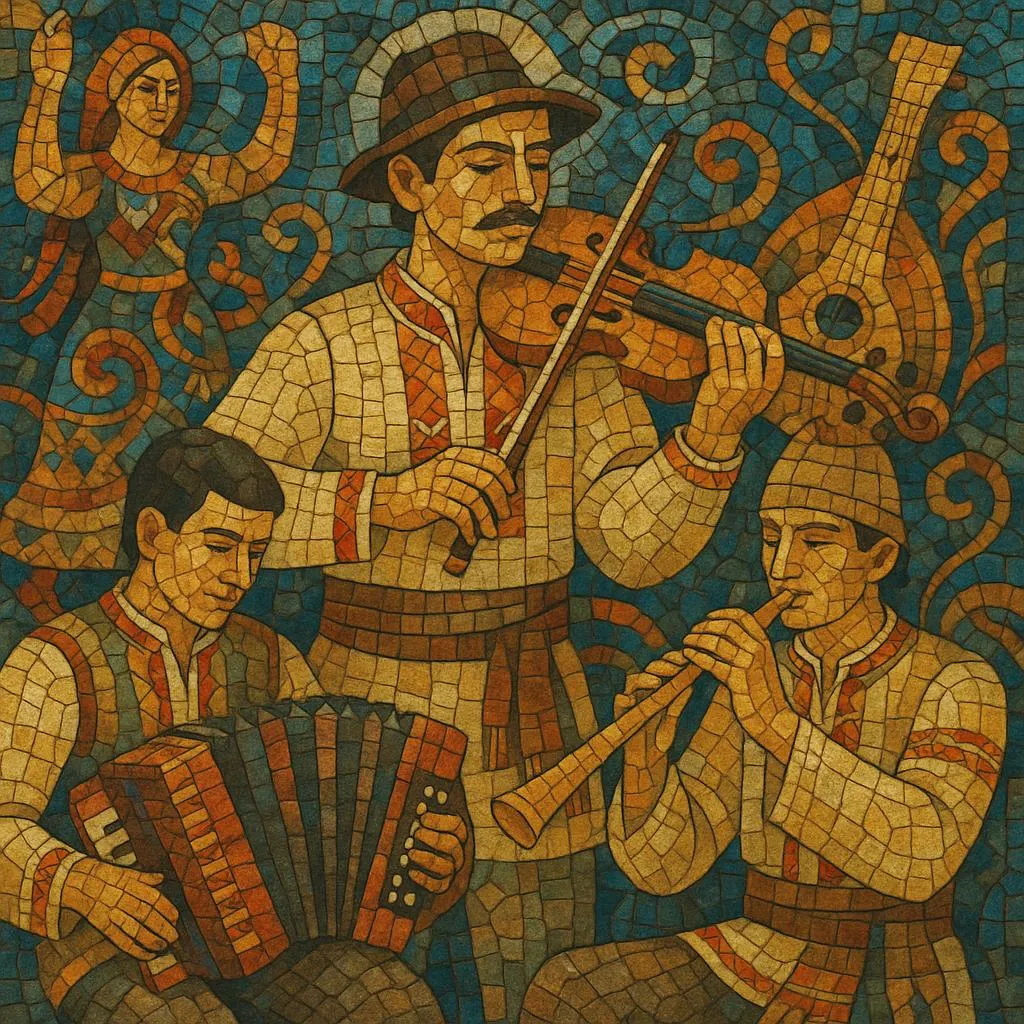
Closely related to Romanian traditions, Moldovan folk features swift, complex rhythms for circle and line dances (hora, sârba, brâul), lively syncopation, rich melodic ornamentation, and a strong improvisatory ethos among lăutari (professional folk musicians). Characteristic timbres come from violin, fluier (end-blown flute), nai (pan flute), cobza, accordion, cimbalom (ţambal), clarinet, and, in some regions, brass fanfare ensembles.
Alongside folk, Orthodox chant, art music, and Soviet-era estrada/pop left deep marks. Since the 1990s, Moldovan acts have excelled in Eurodance/Europop and rock, producing globally recognized hits (e.g., O‑Zone’s “Dragostea din tei”) and memorable Eurovision entries (e.g., SunStroke Project’s “Epic Sax Guy”). Contemporary scenes in Chișinău and Cahul support pop, rock, hip hop, and jazz/folk fusions, while national folk orchestras preserve and modernize traditional repertoires.
History
Moldovan musical life long predates the nation-state. Rural repertoires—dance suites (hora, sârba, brâul), lyrical doinas (free-rhythm laments), ritual songs, and wedding music—were transmitted orally by villagers and Roma lăutari. In the 19th century, collectors and emerging national institutions began to notate, arrange, and professionalize these traditions.
Under the Russian Empire and later in the interwar period (when most of present-day Moldova was part of Romania), Orthodox chant, urban salon music, and Western classical idioms intermingled with folk practice. Conservatory training fostered composers and arrangers who adapted village materials for stage and salon.
After WWII, state ensembles and broadcasters shaped a distinct “Moldovan” sound within Soviet cultural policy. National folk orchestras (e.g., the celebrated Orchestra “Lăutarii” of Chișinău) standardized virtuoso folk arrangements with cimbalom, pan flute, and strings. Estrada (light pop) coexisted with folk stylizations and brass fanfares. The group Flăcăi rose to prominence in the 1970s, turning their hometown of Cahul into a notable musical center.
Post‑1991 independence catalyzed diverse scenes: rock (e.g., Zdob și Zdub), pop and Eurodance (e.g., O‑Zone, Dan Bălan), and a wave of Eurovision appearances (Natalia Barbu; Nelly Ciobanu; SunStroke Project’s viral “Epic Sax Guy”). Cross‑border collaborations with Romania intensified, while artists like Carla’s Dreams and Alternosfera reached regional charts. Parallel to these, jazz/folk fusions and conservatory-trained soloists (pan flute, nai; cimbalom) have maintained a strong concert tradition.
Moldovan folk remains identifiable by quick tempi, asymmetric or syncopated dance rhythms, embellished modal melodies (often Dorian, Aeolian, and harmonic minor colors), and lăutari improvisation. Modern Moldovan pop leverages catchy hooks, Eurodance rhythms, and showmanship, while national orchestras and choirs keep folk and sacred repertoires in circulation.