

Your digging level
Description
Music of Liechtenstein refers to the country’s art, sacred, folk, and community-band traditions rooted in the German-speaking Alpine world.
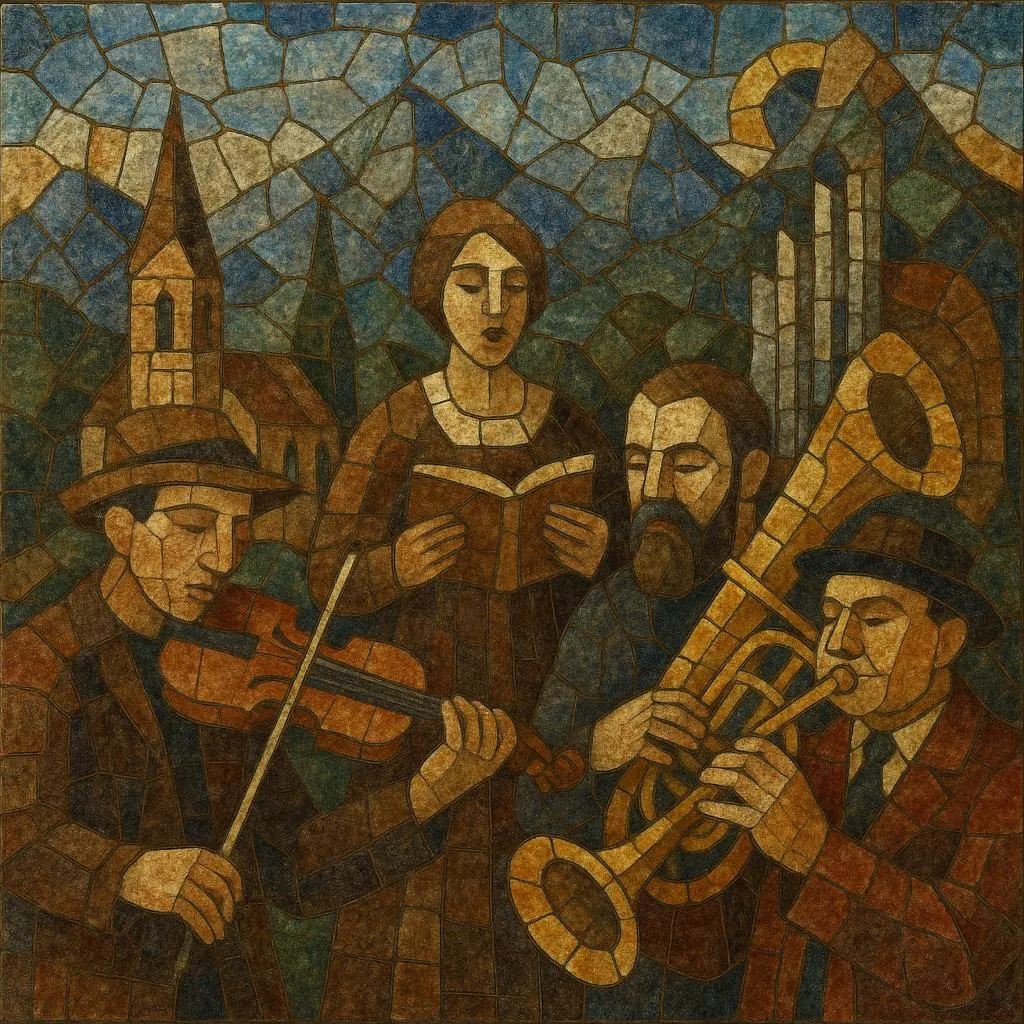
The best-known figure is the Romantic composer Josef Rheinberger (1839–1901), an organ virtuoso and teacher who helped shape European late‑Romantic organ, choral, and chamber repertoire; he mentored Engelbert Humperdinck and was a friend of Franz Liszt. Alongside this art‑music lineage, Liechtenstein sustains a vigorous grassroots culture of Harmoniemusik (civic wind bands), church choirs, brass ensembles, and Alpine folk practices (Ländler/polkas, dialect songs, and occasional alphorn performance).
Today, concert life (orchestra, chamber societies, choirs) coexists with local music schools and community bands, continuing a dual identity: a small nation with an outsized Romantic‑era legacy and a living Central European folk‑civic band tradition.
History
Liechtenstein’s musical practices developed within the Catholic, German‑speaking Alpine sphere. Parish life fostered sacred singing and organ use, while nearby monastic and collegiate centers disseminated chant and polyphony. Village dance and song followed broader Alpine patterns (Ländler, waltz, polka), often played by small string, button‑accordion, and brass groups.
The internationally renowned composer Josef Rheinberger (1839–1901) became the country’s central musical figure. Based largely in Munich, he composed organ sonatas, masses, motets, chamber works, and pedagogical pieces that embodied late‑Romantic craftsmanship. He mentored Engelbert Humperdinck and maintained friendships with leading musicians such as Franz Liszt, helping to connect Liechtenstein—culturally and symbolically—to the European art‑music mainstream.
Throughout the 20th century, church choirs, Harmoniemusik (civic wind bands), and local music schools underpinned everyday music‑making. These ensembles performed marches, overtures, transcriptions, and sacred repertoire, keeping orchestral and choral traditions audible in parishes and town squares. Chamber societies and orchestral initiatives amplified concert life, while Rheinberger’s works secured regular performance in organ and choral programs.
Today, professional and semi‑professional ensembles share the scene with robust community music. Orchestral concerts, organ recitals, and chamber events complement folk‑derived dance music and brass‑band festivals. Education (music schools, youth ensembles) strengthens participation, and programming often weaves Rheinberger’s legacy into broader Austro‑German classical and Alpine repertoires.

