Your digging level for this genre

0/8
🏆
Sign in, then listen to this genre to level up

Description

Mbolé is a contemporary urban dance-music style from Cameroon, born in the working-class neighborhoods of Yaoundé.

It blends the relentless, hand-crafted street-percussion energy of bench- and bottle-based jam sessions with modern programmed drums, call-and-response chants in Camfranglais (a mix of French, English, and local languages), and tightly looped hooks.

The groove is direct, communal, and physical—rooted in local Beti rhythms (as heard in bikutsi) but arranged in club-friendly 4/4 with syncopated claps, toms, whistles, and booming low-end. Lyrically it is playful, observational, and slang-heavy, turning everyday life into chantable slogans and dance commands.

History

Origins (mid-2000s)

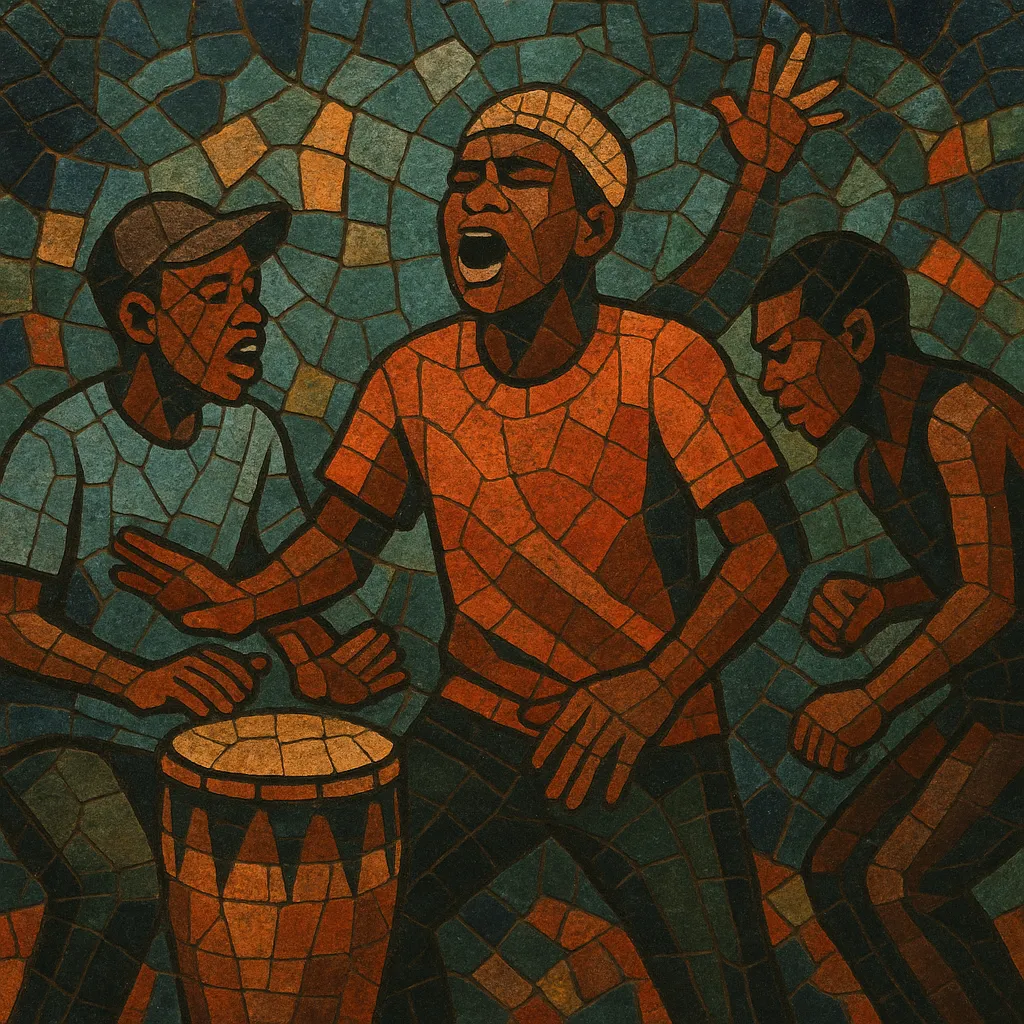
Mbolé emerged in the mid-2000s among youth in the outskirts of Yaoundé, Cameroon. Street "orchestras" improvised rhythms using benches, bottles, handclaps, shakers, and whistles, adapting neighborhood party energy into tight, repetitive grooves. Its DNA reflects older Cameroonian styles—especially bikutsi from Beti communities—while the ethos was resolutely street-level, participatory, and dance-first.

Consolidation and Street-to-Club Pipeline (2010s)

Through the 2010s, the sound coalesced: simple 4/4 frameworks carried the swing and percussive drive of bikutsi, with chants delivered in Camfranglais and local tongues. Low-cost recording tools and smartphones helped spread tracks virally via WhatsApp, Facebook, and YouTube, carrying mbolé from block parties into taxis, bars, and eventually club sets in Yaoundé and Douala.

Breakthrough and Hybridization (late 2010s–early 2020s)

As the scene grew, producers started translating the bench/bottle ensemble into DAW-based kits: dry kicks, tom patterns, clipped claps, whistles, and call-and-response hooks. Cross-pollination with Afrobeats, coupé-décalé, amapiano log-drum aesthetics, and local hip hop widened its reach and refined its club impact. Viral dance challenges and radio play pushed mbolé into national visibility.

Today

Mbolé now stands as a distinct Cameroonian urban sound—dance-driven, hook-centric, and proudly street. It remains rooted in communal participation while embracing modern production, with artists and producers codifying recognizable drum patterns, chant structures, and slang that define the style.

How to make a track in this genre

Tempo and Groove
•   Work in 4/4 around 96–110 BPM. Keep the groove propulsive and dance-forward. •   Emulate the street-ensemble "bench" feel: steady kick on beats 1 and 3 (or a four-to-the-floor drive), with syncopated toms and off-beat claps. •   Let bikutsi’s triplet energy inform ghost notes and hand-percussion fills, even when the main grid is straight.
Percussion and Rhythm Design
•   Core kit: punchy kick, dry snare/clap, toms, shakers, woodblocks, whistle hits, and short crowd shouts. •   Layer bottle/wood hits or claves to evoke the original street setup; add amapiano-style log-drum accents sparingly to modernize. •   Use short fills and dropouts to cue dances; keep loops simple and hypnotic.
Harmony and Melody
•   Minimalist harmony—two to four chords at most (I–IV–V or i–VII), or a modal vamp. •   Lead with rhythmic riffs (plucks, marimba/balafon-like patches, or bell synths) rather than long melodic lines. •   Prioritize repetition: hooks should be short, chantable, and loop-friendly.
Vocals and Lyrics
•   Use call-and-response: leader chants a phrase, crowd/group answers. •   Write in Camfranglais plus local languages (e.g., Ewondo), favoring slang, humor, and street aphorisms. •   Include “dance commands” and shout-outs (neighborhoods, crews) to heighten participation.
Arrangement and Structure
•   Intro with percussion and vocal tag; drop into a full groove by bar 9. •   Alternate chant-based verses with repetitive, hooky refrains. •   Insert breaks for claps/whistles and dance cues; end with a communal outro or DJ-friendly tail.
Sound Design and Mixing
•   Emphasize low-mid punch and tight transients; keep reverbs short and rooms small. •   Sidechain bass lightly to kick; carve space for toms and claps. •   Preserve a "live, on-the-street" feel: slight timing imperfections and crowd layers add authenticity.

Top albums

Top tracks

Locked
Share your favorite track to unlock other users’ top tracks
Influenced by
Has influenced
No genres found
Challenges
Digger Battle
Let's see who can find the best track in this genre
© 2025 Melodigging
Melodding was created as a tribute to Every Noise at Once, which inspired us to help curious minds keep digging into music's ever-evolving genres.
Buy me a coffee for Melodigging