Your digging level

For this genre
0/8
🏆
Sign in, then listen to this genre to level up

Description

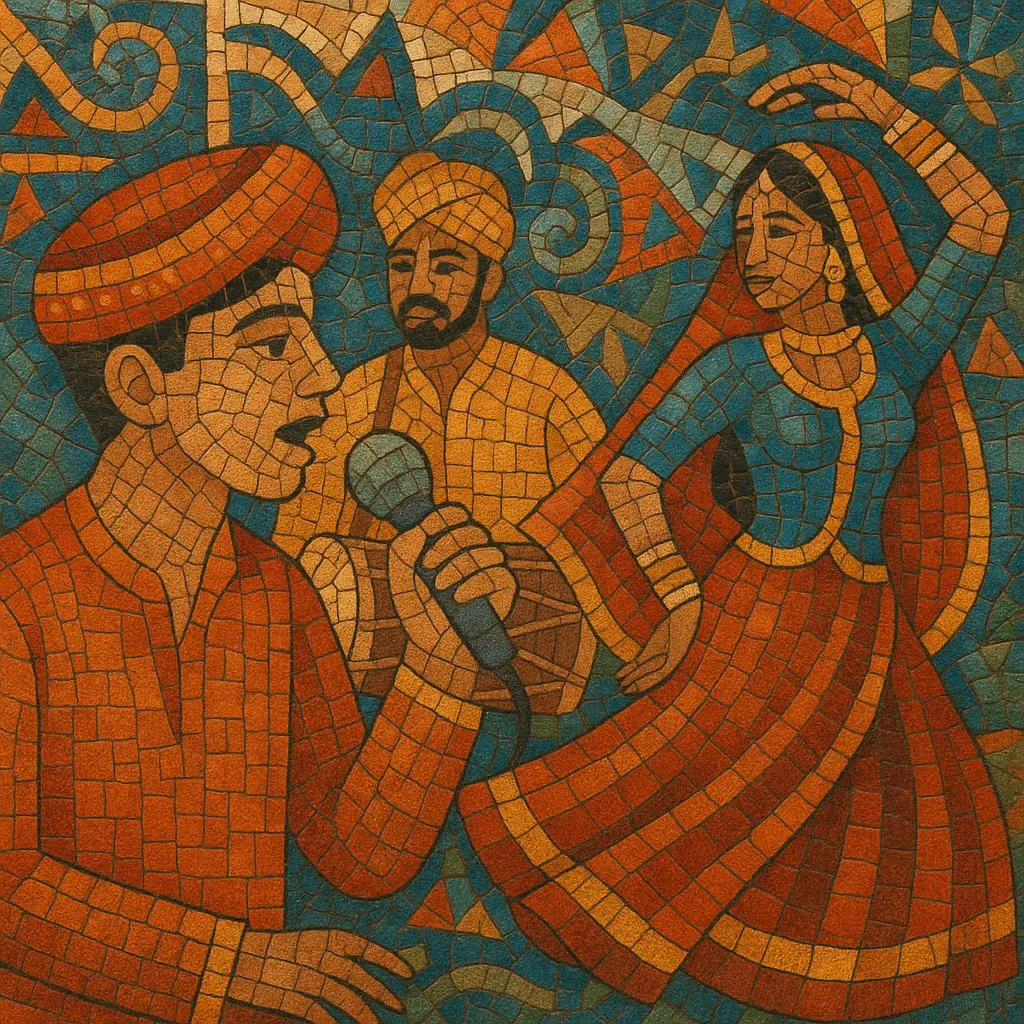
Marwadi pop is contemporary popular music sung primarily in Marwari (a major Rajasthani language) and made for listeners across the Marwar region of western Rajasthan, India. It blends local folk melodies, rhythms, and storytelling with modern Indian pop, Bollywood-style production, and, more recently, YouTube-driven aesthetics.

Stylistically, Marwadi pop keeps the catchy hooks, verse–chorus forms, and danceable beats of mainstream Indian pop, while retaining the earthy timbres, call‑and‑response patterns, and ornamented vocal lines of Rajasthani folk. Traditional instruments such as dholak, khartal, algoza, kamaicha, and harmonium often sit beside electronic drums, synth bass, and autotuned leads.

Thematically, the songs center on courtship, wedding rites (banna‑banni), playful banter, regional pride, desert life, and devotional strands that shade into pop. The genre’s modern surge has been propelled by low‑budget video clips, wedding performance circuits, and streaming platforms, making it one of the most visible regional pop scenes in North India.


Sources: Spotify, Wikipedia, Discogs, RYM, MB, user feedback and other online sources

History

Roots (pre‑1990s)

Marwari‑language singing has a deep foundation in Rajasthani folk traditions (Manganiyar and Langa repertoires, ghoomar and panihari songs, wedding/ritual genres). These practices supplied the melodic modes, call‑and‑response structures, and narrative themes later adapted by pop performers.

Cassette era and emergence (1990s)

With India’s regional cassette boom, local labels in Rajasthan began issuing Marwari‑language albums that packaged folk tunes with accessible pop arrangements. Portable tape players and bus‑stand kiosks spread these songs across Jodhpur, Jaisalmer, Barmer, Pali, and Nagaur. Early pop‑folk hybrids established the template: bright refrains, dholak‑led grooves, and harmonium/kamaicha textures under concise, hooky structures.

VCD/DVD and stage circuits (2000s)

Cheap VCDs and wedding/event circuits professionalized the scene. Producers borrowed polish from Bollywood and pan‑Indian pop while keeping folk timbres up front. Star vocalists built audiences through touring, local TV, and regional radio, and the genre stabilized around wedding and festive repertoires that guaranteed demand.

Streaming and YouTube breakout (2010s–present)

Smartphone adoption and platforms like YouTube/Facebook dramatically expanded reach. Viral dance clips, lyric videos, and wedding performance uploads became primary discovery channels. Arrangements incorporated EDM drops, synth bass, and tighter studio vocals (often with autotune), while collaborations with folk icons and TV talent‑show alumni gave the style national visibility. Today, Marwadi pop sits alongside Rajasthani folk‑fusion and mainstream Indian pop as a thriving, highly visual regional genre.


How to make a track in this genre

Core palette
•   Language and delivery: Write lyrics in Marwari (or closely related Rajasthani dialects). Use direct, image‑rich lines about love, teasing (banter songs), weddings (banna‑banni), local landscapes, and pride in Marwar. •   Melody: Base tunes on folkish scalar shapes (often diatonic with Khamaj/Bhairavi colors). Employ ornamentation—meend (slides), murki/khathak (quick turns), and light gamak—to retain folk expressivity within a pop contour.
Rhythm and groove
•   Tempos: 90–120 BPM for danceable cuts; slower (70–90 BPM) for romantic/nostalgic numbers. •   Patterns: Dholak theka with hand‑clap (khartal) backbeats; ghoomar‑style lilts (can sit in 3+3 or 6/8 feels) and straight 4/4 pop kicks for chorus lift. Layer shakers/khartal for tactile drive.
Instrumentation and production
•   Acoustic: Dholak, khartal, algoza, harmonium, kamaicha/sarangi for lead lines and drones. •   Modern: Kick/snare/hat kits, synth bass, pads, plucks, and occasional EDM risers. A tampura or harmonium drone under verses keeps a folk center of gravity. •   Vocals: Prominent lead with light autotune for intonation polish; stacked call‑and‑response hooks; double the chorus line an octave up for lift. Add group shouts for wedding energy.
Form and arrangement
•   Structure: Intro – Verse 1 – Pre‑chorus – Chorus – Verse 2 – Chorus – Bridge/Break – Final double chorus/outro. •   Hooks: Land the song title in the chorus’s first line; reinforce with a short instrumental motif (algoza/kamaicha or a synth lead) that recurs between sections.
Mix and feel
•   Keep the vocal upfront; carve space with side‑chained pads beneath choruses. Let dholak transients remain natural while the kick anchors low end. Pan claps/khartal wide; place folk leads (algoza/kamaicha) slightly forward for regional identity.
Performance contexts
•   Tailor arrangements for weddings and stage shows: extend dance breaks; include call‑and‑response cues; prepare a shorter, radio‑friendly edit (≈3:00) for streaming.

Top tracks

Locked
Share your favorite track to unlock other users’ top tracks

Upcoming concerts

in this genre
Influenced by

Download our mobile app

Get the Melodigging app and start digging for new genres on the go
© 2026 Melodigging
Melodding was created as a tribute to Every Noise at Once, which inspired us to help curious minds keep digging into music's ever-evolving genres.
Buy me a coffee for Melodigging