

Your digging level
Description
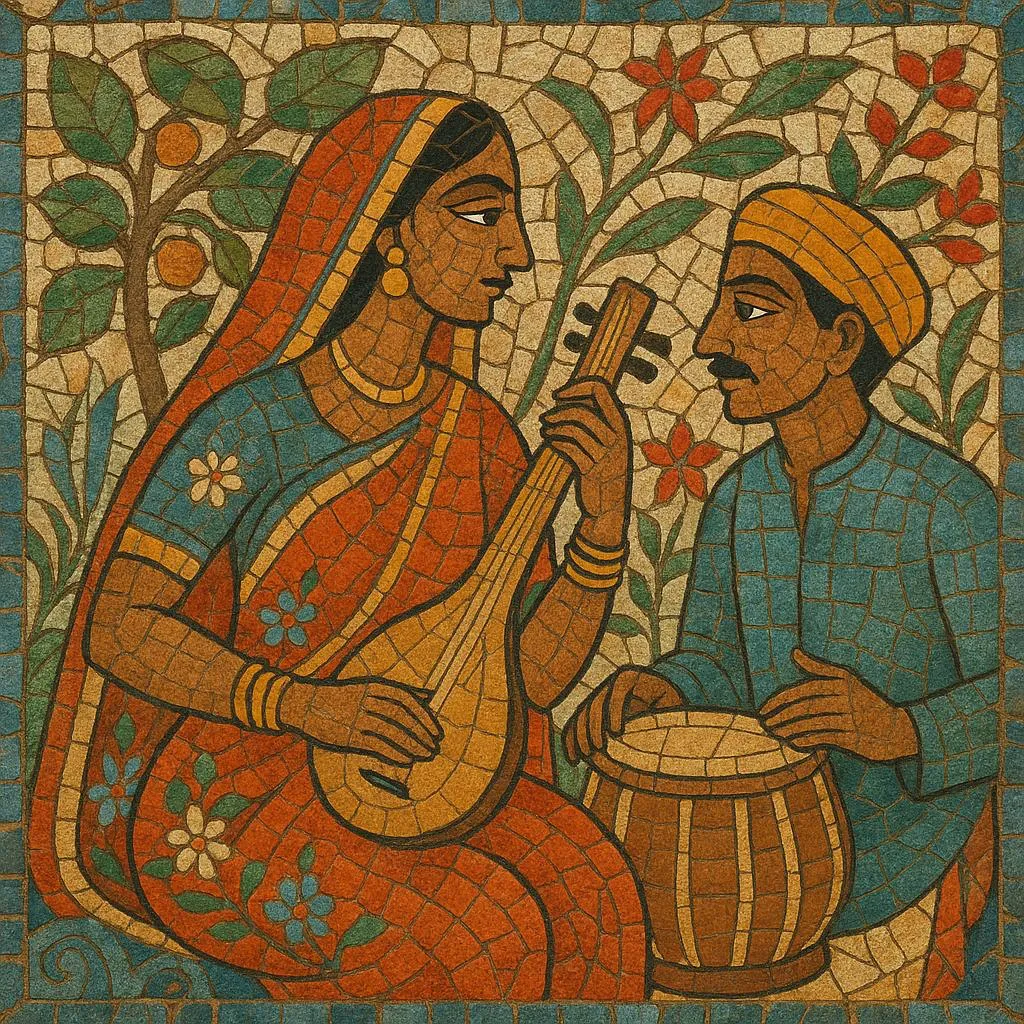
Maithili music is an ancient musical tradition from Mithila, a historical region that today spans northern Bihar and Jharkhand in India and the eastern Terai of Nepal. Sung in the Maithili language, it encompasses devotional, seasonal, and life‑cycle repertoires performed at births (Sohar), weddings (Vivah‑geet), harvests, and festivals such as Chhath and Sama‑Chakeva.
Melodically, it draws on raga sensibilities familiar to North Indian (Hindustani) practice—often in accessible folk contours—while retaining a distinctly regional diction, prosody, and ornamentation. Typical instruments include harmonium, bansuri (flute), dholak, tabla, manjira/kartal (hand cymbals), shehnai (especially for wedding processions), sarangi, and regional drums; modern ensembles also incorporate guitar, keyboards, and light percussion. The lyrics frequently portray everyday village life, seasonal cycles, and devotional love (notably Radha–Krishna), giving the music a relatable, melodic, and emotive character.
The tradition is closely associated with the medieval poet–saint Vidyapati (14th–15th centuries), whose Maithili padavali (lyrical songs) profoundly shaped later devotional and light‑classical repertoires. Across centuries, Maithili music has continued to evolve—remaining central to ritual and social life—while adapting to radio, cinema, and digital platforms.
History
Maithili music arises from Mithila, bounded by the Mahananda (east), the Ganges (south), the Gandaki (west), and the Himalayan foothills (north). Its ritual functions—birth, initiation, marriage, agrarian cycles, and festivals—suggest very old roots that predate written documentation. Oral transmission in domestic spaces and village gatherings preserved its core forms and dialectal poetics.
The first major written milestone is linked to Maha Kavi Vidyapati (c. 1352–c. 1448). His Maithili padavali—lyrical, often Radha–Krishna themed—codified a refined poetic-musical idiom. These songs circulated beyond Mithila and were later incorporated into light‑classical and devotional repertoires. Vidyapati’s influence positioned Maithili as a prestigious song language across North India and Nepal.
Through the early modern period, women’s songs (Sohar, Vivah‑geet), seasonal repertoires (Holi/Phagua, monsoon songs), and festival cycles (e.g., Chhath, Sama‑Chakeva) anchored music to social life. Call‑and‑response and community choruses were common, with shehnai and dholak/tabla providing auspicious color at weddings and processions.
The advent of gramophone, radio (Akashvani), regional cinema, and later television expanded the reach of Maithili songs. Artists recorded folk and devotional numbers with harmonium‑tabla accompaniment, soon augmented by guitar, synthesizer, and studio arrangements. Migrant communities in urban India and Nepal popularized the music in new venues while retaining village repertoires for life‑cycle rites.
Today, YouTube, streaming, and social media have amplified Maithili music’s visibility. Contemporary performers revive traditional lyrics (including Vidyapati) alongside new compositions, balancing folk timbres with polished pop production. As a transborder tradition shared by India and Nepal, Maithili music remains both an emblem of cultural identity and a living practice adaptable to modern aesthetics.


