Your digging level
Description
Mainland Southeast Asia metal is an umbrella term for heavy metal scenes centered in mainland Southeast Asian countries, especially Thailand, Vietnam, Myanmar, Cambodia, Laos, and often Malaysia.
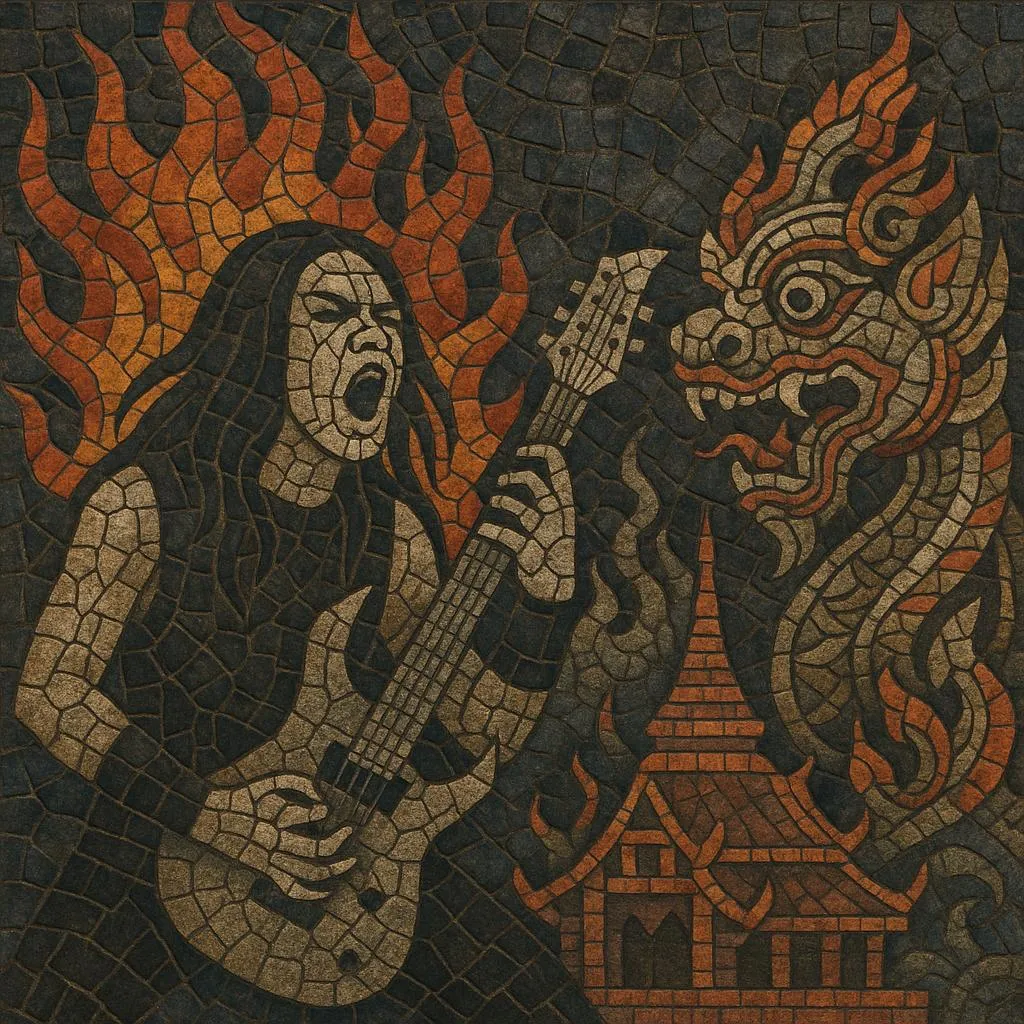
It blends globally shared metal vocabulary (distorted guitars, fast drumming, harsh vocals, and riff-driven songwriting) with local language lyrics, regional melodic preferences, and occasional incorporation of traditional instruments, scales, and folk rhythms.
The sound ranges from classic heavy metal and thrash to metalcore, death metal, and black metal, with many bands reflecting the dominant international subgenres of their era while adding local identity through themes, imagery, and performance culture.

![Averse - Hey [OFFICIAL VIDEO] | Bangladesh Heavy Metal/Thrash Metal |](https://i.ytimg.com/vi/URT7m-fJZ5Q/hqdefault.jpg)


History
Metal bands began forming in larger cities where access to imported recordings, rehearsal spaces, and underground venues was possible. Early scenes were often closely tied to cassette trading, small local labels, and DIY live shows.
As internet access increased, musicians could learn production techniques and stylistic details from global scenes more easily. Subgenres such as metalcore, melodic death metal, and modern extreme metal gained ground, and local festival circuits and cross-border touring slowly expanded.
Streaming, social media, and home recording made it easier for bands to release music internationally. Collaborations and tours across Thailand, Vietnam, Malaysia, and neighboring countries strengthened the idea of a regional metal ecosystem, while some artists increasingly integrated local language, history, and traditional sonorities to stand out globally.