Your digging level

For this genre
0/8
🏆
Sign in, then listen to this genre to level up

Description

Mahori (Thai: มโหรี; comparable to Khmer mohaori) is a courtly Thai classical ensemble for secular entertainment that blends the bright, percussive xylophones and gong-chime circles of the piphat (and its Khmer counterpart, pinpeat) with the supple strings and flute of the khrueang sai ensemble.

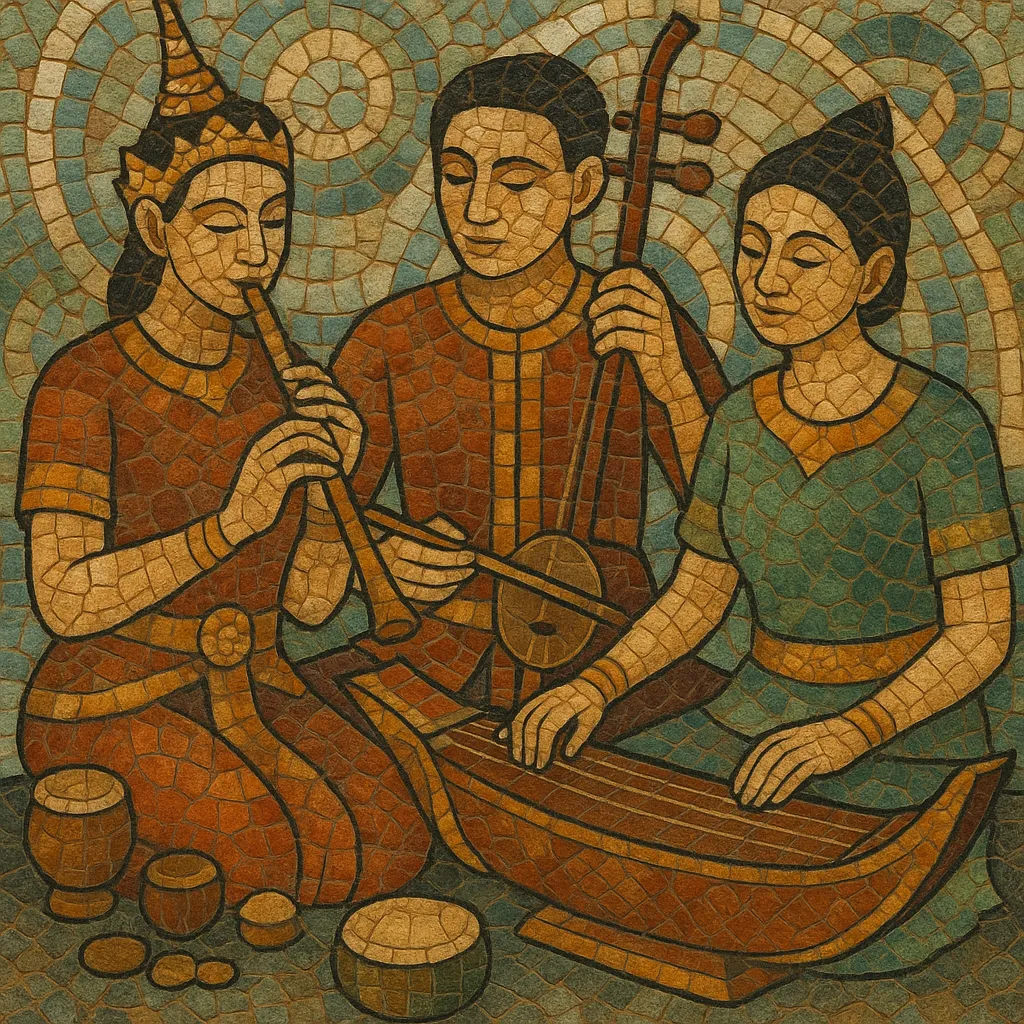
In practice, a mahori set features heterophonic interplay: ranat (xylophones), khong wong (gong-circles), and time-marking hand cymbals (ching) interlock with the lyrical saw duang and saw u fiddles, the plucked zither (jakhe), and the khlui bamboo flute. Traditionally lighter and more intimate than a full piphat, mahori was favored in palatial salons and aristocratic settings.

Three broad ensemble sizes are recognized: Mahori Khrueang Lek (small), Mahori Khrueang Khu (medium, or “paired”), and Mahori Khrueang Yai (large). Each tier adjusts instrumentation density while preserving the signature blend of piphat/Pinpeat percussion with khrueang sai strings.


Sources: Spotify, Wikipedia, Discogs, RYM, MB, user feedback and other online sources

History

Origins and Courtly Role

Mahori crystallized in the royal and aristocratic culture of Siam (Thailand) during the Ayutthaya period and matured through the early Rattanakosin era. As a secular counterpart to ritual and theatrical ensembles, it offered refined entertainment in palatial salons, emphasizing elegance and intimacy over the thunderous spectacle of the outdoor piphat.

Instrumental Synthesis

From its inception, mahori united the xylophones and gong-chimes of piphat/Pinpeat with the khrueang sai string-and-flute core (saw duang, saw u, jakhe, khlui). Compared to piphat, heavy barrel drums were often reduced or replaced by lighter hand drums (thon–rammana), keeping the timbral shimmer while softening overall volume for indoor spaces and mixed-gender performance contexts.

Ensemble Types and Repertoire

By the 18th–19th centuries, court musicians and composers standardized three sizes—Mahori Khrueang Lek (small), Khrueang Khu (medium), and Khrueang Yai (large). Repertoire favored graceful, melodic pieces and dance-linked forms, using cyclical time marked by the ching pattern and layered heterophony across strings, flutes, xylophones, and gong-circles.

20th Century to Present

In the 20th century, Thailand’s Fine Arts Department and conservatories codified teaching, notation, and ensemble practice, anchoring mahori in curricula and public performance. Today, university and professional ensembles maintain the tradition, while cross-border resonances with Cambodia’s mohaori attest to a shared, long-standing Southeast Asian orchestral heritage.

How to make a track in this genre

Core Sound and Scale
•   Use the Thai equidistant heptatonic framework (seven near-equal steps). Choose a mode/register that suits indoor, lyrical playing. •   Write a single cantus-style melody intended for heterophonic realization—every instrument plays the same line with idiomatic ornaments.
Instrumentation
•   Percussion/keys: ranat ek (lead xylophone), ranat thum (lower xylophone), khong wong yai/lek (gong-circles), ching (hand cymbals), thon–rammana (light drums). •   Melodic core: saw duang (high fiddle), saw u (low fiddle), jakhe (plucked zither), khlui (bamboo flute). •   For larger “Khrueang Yai” settings, thicken the piphat/pinpeat side (more gongs/xylophones); for “Khrueang Lek,” keep strings and light percussion prominent.
Rhythm and Form
•   Organize phrases into cyclical time marked by the ching pattern (open “ching” and closed “chap”), with cadential emphasis by gong-circles. •   Keep tempos moderate-to-lively, but maintain poise—mahori favors elegant danceability rather than overpowering drive.
Texture and Ornaments
•   Aim for classic Thai heterophony: the ranat ek leads with agile figuration; strings and flute shadow and elaborate the tune; gongs outline structural points. •   Apply idiomatic ornaments: quick grace figures on ranat; glides and micro-inflections on saw duang/saw u; delicate portamenti and tremoli on jakhe; breathy turns on khlui.
Repertoire Shaping
•   Select graceful, secular pieces suited to salon performance. Balance contrasting sections (register, density, and dynamics) and conclude cycles with clear cadences in the gong-circles. •   In medium and large ensembles, distribute melodic weight: let strings sing phrases, then hand lines to ranat/gongs for sparkling replies.
Performance Practice
•   Prioritize blend and clarity over volume. The drum part should support, not dominate. •   Shape phrases with collective rubato at cadences, maintaining ensemble unity through the ching and gong cues.

Top tracks

Locked
Share your favorite track to unlock other users’ top tracks

Upcoming concerts

in this genre
Influenced by

Download our mobile app

Get the Melodigging app and start digging for new genres on the go
© 2026 Melodigging
Melodding was created as a tribute to Every Noise at Once, which inspired us to help curious minds keep digging into music's ever-evolving genres.
Buy me a coffee for Melodigging