Your digging level
Description
Luxembourgish folk music is the traditional vernacular music of the Luxembourgish people, shaped by village life, seasonal customs, and social dancing.
It commonly features dance tunes (especially polka- and waltz-family forms), singable strophic songs in Luxembourgish, and instrumental melodies carried by fiddles, clarinets, brass, and later accordion.
Because Luxembourg sits between Germanic and Romance cultural spheres, its folk repertoire often reflects cross-border similarities with neighboring regions while keeping a distinct Luxembourgish language identity and local repertoire tied to specific communities and festivities.
History
Luxembourgish folk music developed from older local song and dance practices in rural communities, alongside strong cultural exchange with surrounding German, French, Belgian, and Rhineland areas.
In the 1800s, social dance music expanded and standardized across Europe, and Luxembourgish communities adopted and localized forms such as the polka and waltz. Village musicians and small wind-and-string groups supported weddings, kermesses, and seasonal celebrations.
During the 1900s, civic wind bands, choral societies, and folkloric associations increasingly documented, arranged, and publicly presented traditional material. Radio, recordings, and festivals helped stabilize a shared national repertoire, while the Luxembourgish language remained central in many songs.
In recent decades, folk material has continued through community bands and cultural events, with occasional revival-minded performances and new arrangements that keep traditional dance rhythms and melodies recognizable while adapting instrumentation and stage presentation.
Write short, memorable melodies suited to social dancing, commonly in 8- or 16-bar phrases with clear repetition (AABB is a practical default).
Use strophic song forms for vocals (same melody each verse) with a simple chorus that can be sung by a crowd.
For polka-like tunes, keep a steady duple feel with strong downbeats; aim for a lively tempo that supports group dancing.
For waltz-like tunes, emphasize a clear 3/4 pulse with a strong beat 1 and lighter beats 2–3, often with an “oom-pah-pah” feel.
March-like pieces work well for processions and civic contexts, with a firm, even beat and clear phrasing.
Use functional, diatonic harmony (I–IV–V and related secondary chords) and keep cadences obvious so dancers and singers feel grounded.
Prefer bright major keys for festive repertoire, but include minor-mode tunes for reflective or narrative songs.
Favor stepwise motion with occasional leaps that outline triads; keep the range comfortable for instruments like fiddle, clarinet, or voice.
Use motifs that repeat and sequence; avoid overly complex chromaticism so the tune remains learnable by ear.
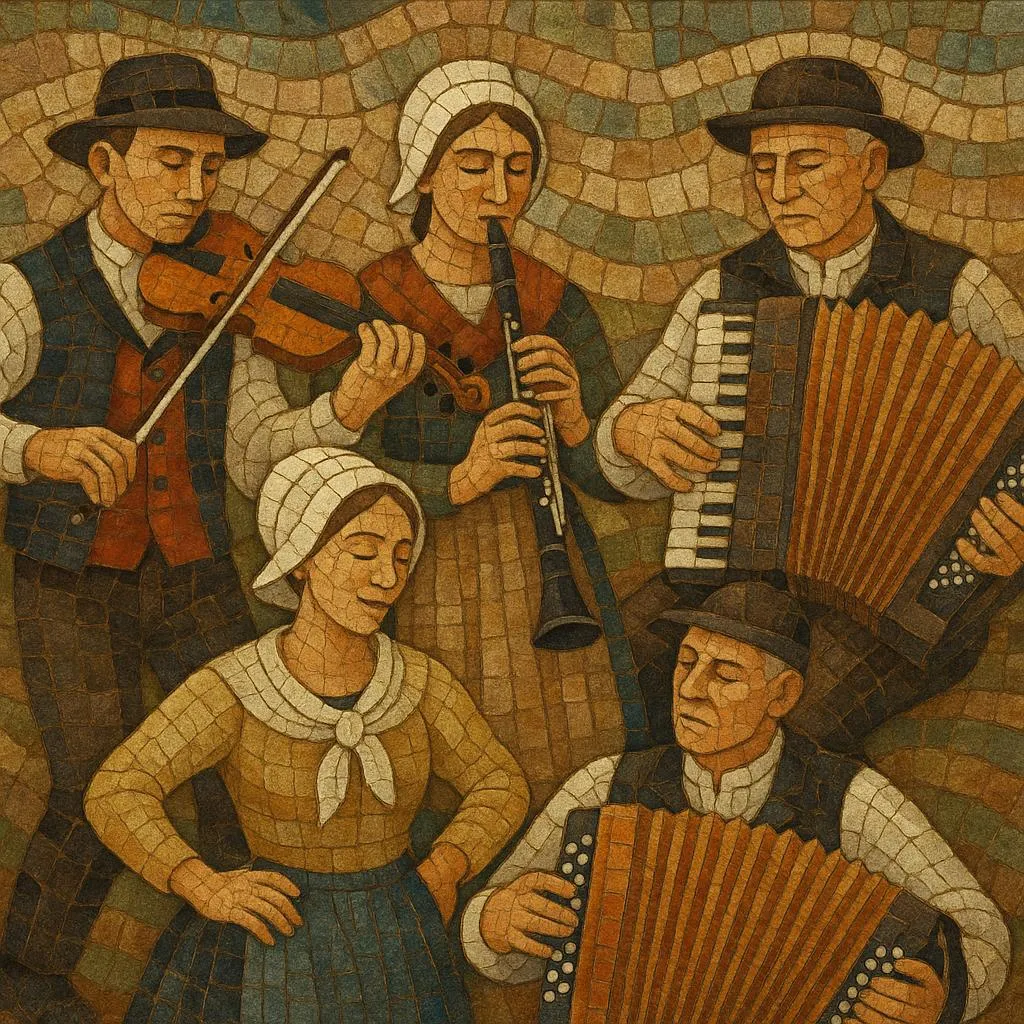
A traditional-leaning ensemble can be built from fiddle (or clarinet) as lead, with accordion providing harmony and rhythmic drive.
Add brass (trumpet/flugelhorn, trombone, tuba) for band-style power, and use snare drum for marches or festive events.
If you want a smaller setup, combine fiddle + accordion + guitar (or bass) and keep percussion light.
Write lyrics in Luxembourgish when possible, using everyday imagery (village life, seasons, work, community gatherings, local places).
Keep verses syllabically straightforward and rhyme predictably; prioritize singability and communal participation.
Play with a strong, danceable pulse and clear articulations; ornament lightly (grace notes, small turns) without obscuring the beat.
Encourage call-and-response or a repeated refrain so non-specialists can join in quickly.