Your digging level
Description
Lezginka is a high‑energy folk dance music tradition of the North Caucasus, most closely associated with the Lezgins of Dagestan (Russia) but performed widely by many Caucasian peoples, from Chechens and Avars to Circassians and Azeris.
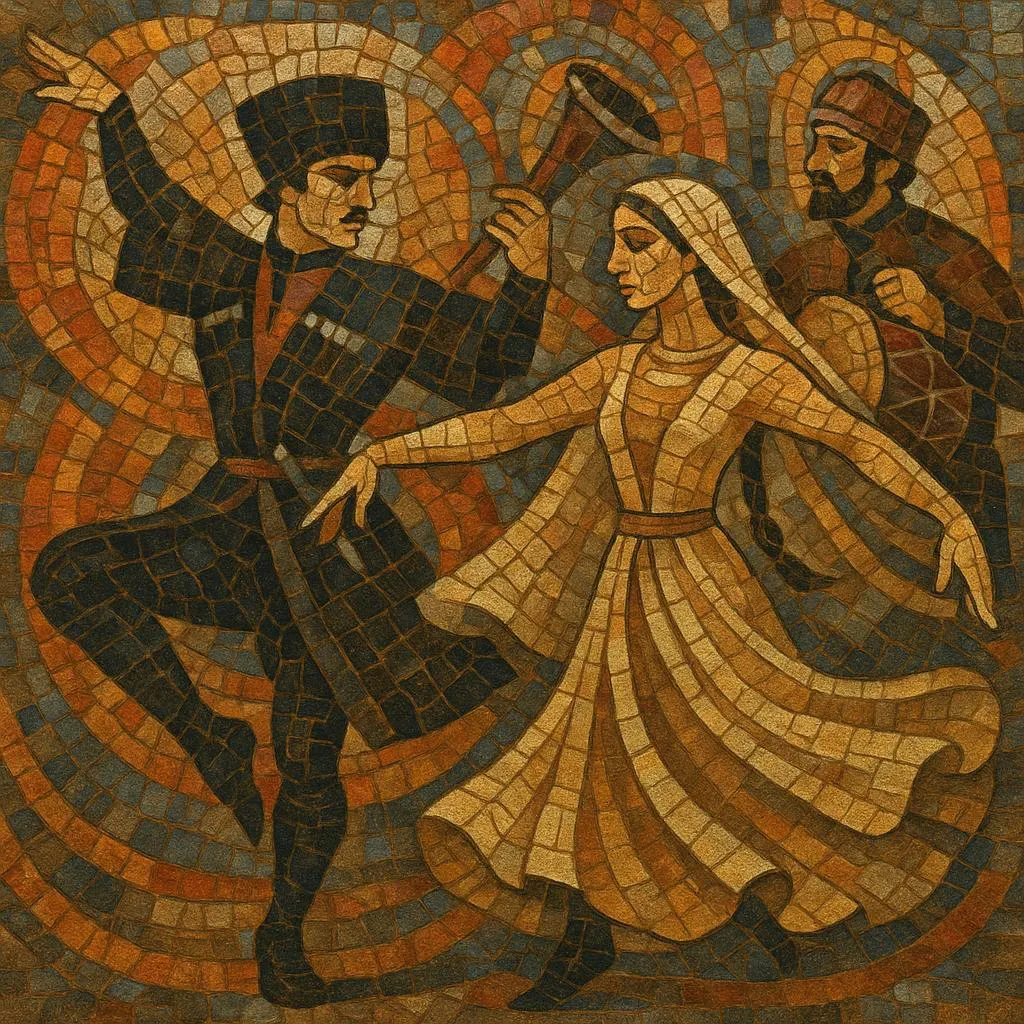
Musically, Lezginka pieces are fast, driving, and dance‑forward, commonly in a brisk compound (6/8) or tight duple (2/4) meter with emphatic percussion patterns. Melodies are typically short, modal, and highly rhythmic, often played on piercing double‑reed oboes (zurna/surna), accompanied by big frame or kettle drums (nagara/dhol) and the regional garmon (a local accordion). The sound is designed to propel virtuosic choreography: explosive, eagle‑like male steps and gliding, poised female lines.
Beyond village and wedding contexts, Lezginka became a showpiece in stage folk ensembles and even classical and ballet repertories, where orchestrated “Lezghinka” numbers popularized the style for international audiences.
History
Lezginka is rooted in the communal dance and festival life of the Northeast Caucasus. While the practice itself is older, the Russian name “Lezginka/Lezghinka” gained currency in the 19th century, when travelers and composers began documenting and arranging regional dances. The term came to function as an umbrella label for related fast Caucasian dance tunes and choreographies, even when performed by non‑Lezgin groups.
In the late 19th and early 20th centuries, Lezginka thrived at weddings and seasonal feasts, accompanied by zurna and drum, and later by the Caucasian garmon. During the Soviet era, professional folk dance troupes codified regional variants, standardizing steps, costumes, and musical accompaniments for concert halls. This period also seeded the practice of orchestrated Lezginka suites, which brought the genre into symphonic, ballet, and touring ensemble contexts.
Russian and Caucasian composers and choreographers arranged Lezginka themes for orchestra and ballet, turning it into a virtuosic showpiece. These stylizations preserved the music’s signature speed and rhythmic bite while expanding its instrumentation and harmonic palette for concert audiences around the world.
Today, Lezginka lives in two parallel spheres: (1) community settings—weddings, family celebrations, and regional festivals—where traditional instruments and spontaneous dancing dominate; and (2) staged productions—national folk ensembles and ballet companies—where carefully orchestrated versions highlight precision footwork and dramatic flair. Modern recordings also blend Lezginka rhythms with pop and electronic elements, keeping the tradition audible far beyond the Caucasus.