Your digging level
Description
Latin surf rock blends the twangy, reverb‑drenched guitar instrumentals of classic surf with Afro‑Caribbean and Latin American rhythms. You’ll hear rapid tremolo‑picked melodies and spring‑reverb splash riding atop cumbia or cha‑cha grooves, mambo hits, and tumbao‑style bass figures.
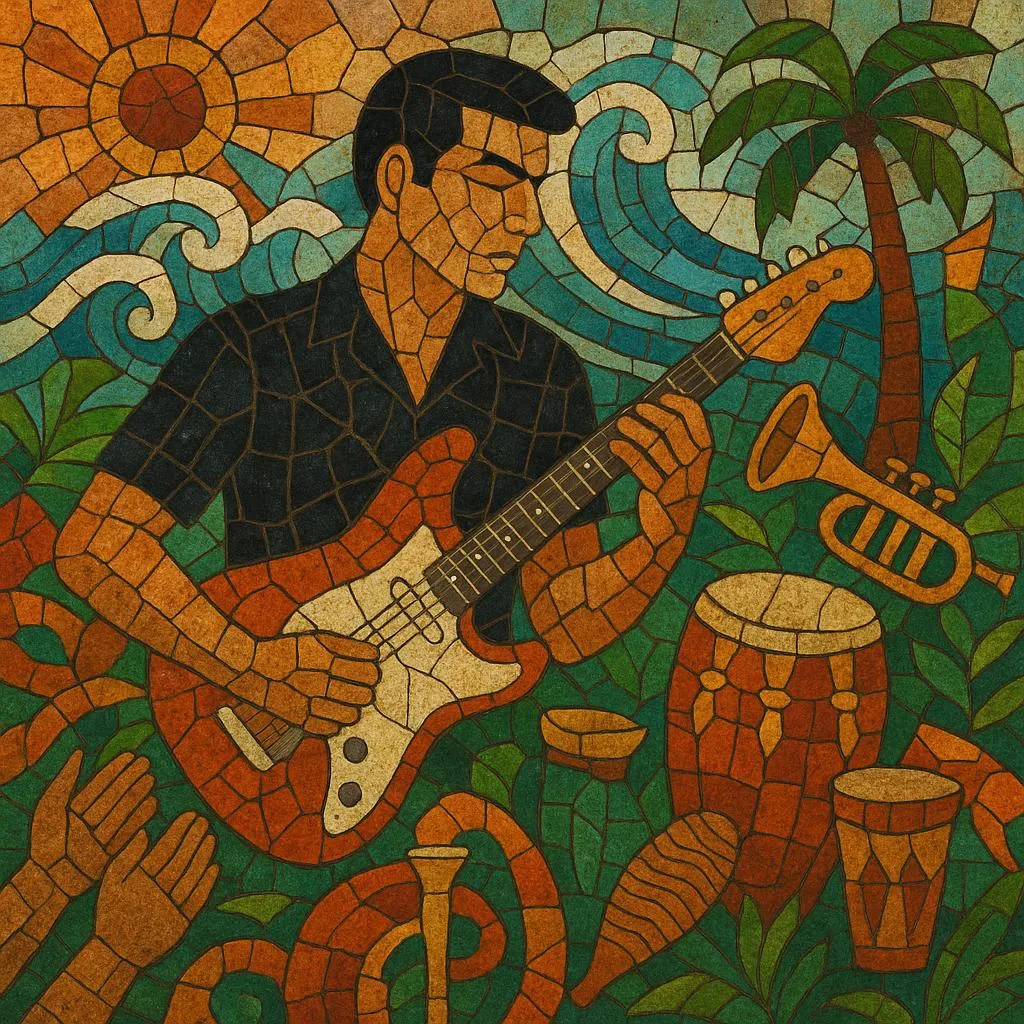
Typical arrangements feature Fender Jaguar/Jazzmaster guitars through outboard spring reverb tanks, driving tom‑heavy drums, and Latin percussion such as congas, bongos, timbales, güiro, and clave. Farfisa/Combo organ, baritone guitar, and occasional brass or mariachi‑style trumpets add color. The vibe is retro, cinematic, and dance‑oriented—equal parts beach party, lucha‑libre poster, and tropical nightclub.
Harmonically, Latin surf rock keeps surf’s minor‑key, modal/spy‑theme flavor (natural/harmonic minor, Dorian, Phrygian/Phrygian‑dominant) while borrowing rhythmic cells and montuno figures from son, mambo, and cumbia. The result is instrumental rock that feels both vintage and distinctly Latin.
History
Latin surf rock emerged in the early 1960s when surf music’s global wave reached Latin America and the Iberian world. Local bands embraced the US West Coast surf sound—fast tremolo picking, spring reverb, and tom‑driven beats—but recast it with the rhythms they grew up with: cumbia, mambo, cha‑cha‑chá, bolero, and son. In Mexico, the beach culture of Acapulco and the iconography of lucha libre fed the look and swagger; in Peru and across the Andes, instro groups folded surf guitar phrasing into tropical and criollo dance frameworks.
By the mid‑1960s, surf instrumentals and Latin dance music were regularly sharing stages and repertoire. Bands in Mexico, Peru, Argentina, Brazil, and Spain adopted combo organs, baritone guitar, and Latin percussion, creating a distinctly Latinized surf pulse. Even as the British Invasion shifted mainstream rock tastes, the surf‑meets‑Latin approach left a lasting imprint—especially in Peru and the Amazon basin, where surf guitar voicings would soon shape emerging electric cumbia styles.
The 1990s surf revival reignited interest throughout Latin America and Spain. New groups leaned into cinematic “spy” harmonies, spaghetti‑western moods, and the showmanship of masked or retro‑uniformed stage personas, while doubling down on cumbia/son‑based grooves to keep dance floors moving. Independent labels, small festivals, and garage‑punk networks helped the style circulate regionally.
Contemporary Latin surf rock thrives across Mexico, South America, and Spain. Many bands remain instrumental, though some add chant‑like hooks or shout‑choruses. Production ranges from purist analog reverb tanks to modern, heavier mixes suitable for large stages. The genre now sits comfortably between garage scenes, vintage rock‑and‑roll nights, psych/cumbia circuits, and retro soundtrack culture—still unmistakably surf, but with an unmistakably Latin heartbeat.