Your digging level

For this genre
0/8
🏆
Sign in, then listen to this genre to level up

Description

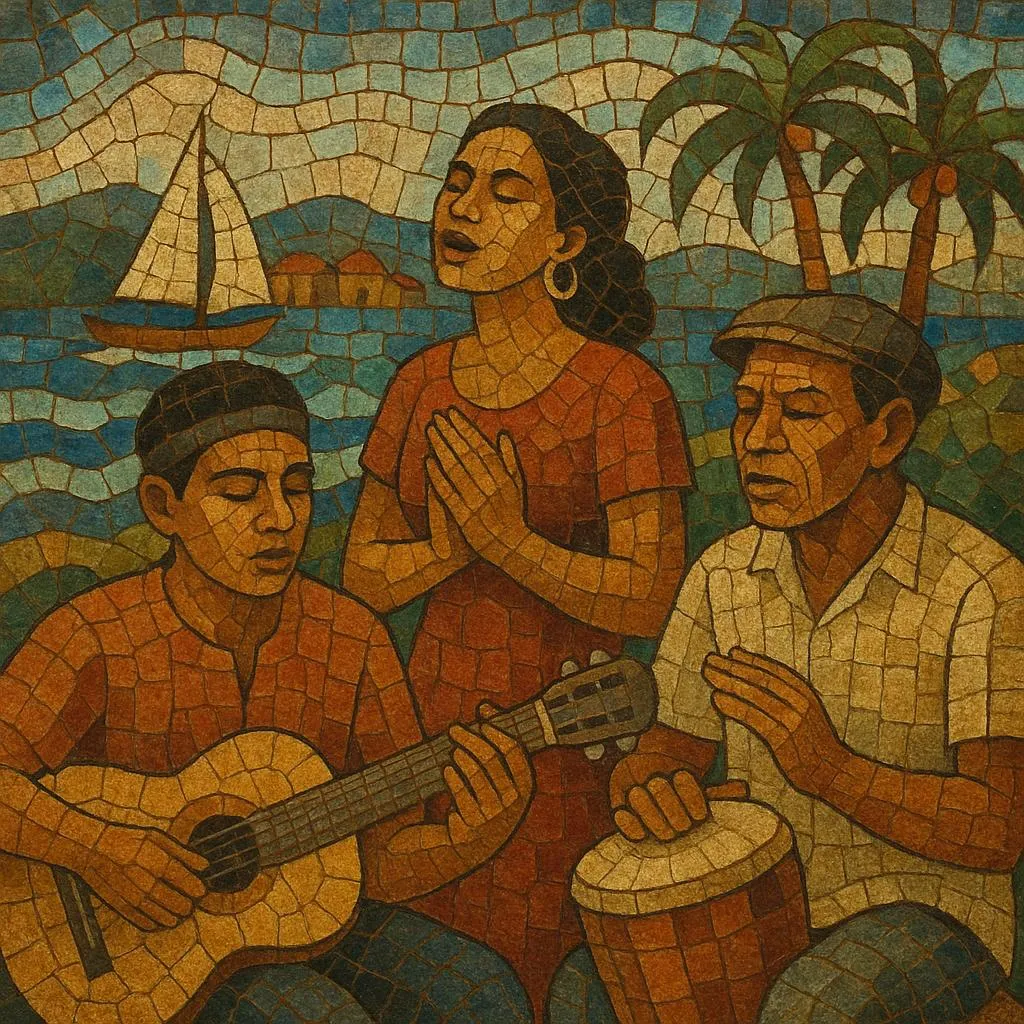
Lagu Maluku is a regional popular-song tradition from the Maluku Islands (Moluccas) in eastern Indonesia.

It blends local Malukan melodic idioms and story-telling with broader Indonesian popular music practice, often featuring singable, lyrical tunes, call-and-response tendencies, and dance-friendly grooves.

Lyrics are commonly in Indonesian, Ambon Malay (Melayu Ambon), or local Malukan languages, and topics frequently emphasize place, seafaring, community ties, and everyday life—often with a warm, nostalgic character.


Sources: Spotify, Wikipedia, Discogs, RYM, MB, user feedback and other online sources

History

Roots in Maluku musical life

Lagu Maluku grows out of Maluku’s long-standing vocal and communal music practices, where group singing, responsorial patterns, and rhythm for social dancing are common.

Traditional local ensembles and instruments (notably tifa-based drumming traditions and gong/idiophone colors associated with Malukan performance) shaped a recognizable regional “feel” even when later arrangements adopted modern band formats.

Mid-20th-century popularization

In the decades after Indonesian independence, regional songs (lagu daerah) were increasingly circulated via radio, recordings, and stage shows.

Within this broader national trend, Malukan songs became codified in widely shared repertoires—often arranged for guitar-led ensembles or dance bands—while preserving local linguistic markers and melodic turns.

Diaspora and cross-cultural circulation

Large Malukan communities outside the islands (especially in the Netherlands) contributed to continued performance, recording, and reinterpretation of Malukan repertoire.

This diaspora context encouraged hybrid arrangements that could include Western band instrumentation, pop harmonies, and stage-oriented production while retaining Malukan identity through language, themes, and signature rhythmic/vocal gestures.

Contemporary practice

Today, Lagu Maluku exists both as a “classic” regional repertoire and as a living style that adapts to contemporary pop aesthetics.

Modern productions may incorporate electronic beats and pop mixing, but recognizable Malukan features—especially lyrical focus on place and community, sing-along refrains, and danceable groove—remain central.

How to make a track in this genre

Instrumentation
•   Core band: acoustic guitar or electric guitar, bass, drum kit; optionally keyboard for pads and melodic hooks. •   Regional color (optional but effective): add tifa-style hand drums and light percussion (shakers/claves) to echo Malukan rhythmic identity. •   Vocals: prioritize a strong lead vocalist plus group backing vocals for refrains and responses.
Rhythm & groove
•   Use steady, danceable meters (commonly 4/4), with a light, forward-moving feel. •   Favor syncopated but not overly dense accompaniment: off-beat guitar strums, buoyant bass lines, and percussion patterns that suggest communal dance. •   Consider call-and-response: lead line answered by chorus, especially in the hook.
Melody & harmony
•   Write memorable, singable melodies with a clear contour and an easily repeated refrain. •   Harmony often works well with simple functional progressions (e.g., I–IV–V, I–vi–IV–V) and bright major tonalities, while allowing occasional minor or modal color for nostalgia. •   Arrange the chorus so it can be sung in unison or simple thirds for a communal sound.
Form
•   Commonly effective structure: Intro – Verse – Chorus – Verse – Chorus – Bridge/Instrumental – Final choruses – Outro. •   Include an instrumental interlude (guitar or keyboard lead) to mirror dance-band and regional-song performance practice.
Lyrics & language
•   Use Indonesian, Ambon Malay, or local Malukan language depending on authenticity goals. •   Typical themes: home/place identity, sea travel, longing, community pride, everyday stories. •   Keep refrains short and slogan-like so audiences can join in quickly.
Production/performance tips
•   Mix vocals prominently; keep the groove tight and “live-feeling.” •   In performance, encourage audience participation on the chorus; the style benefits from communal energy more than virtuosity.

Top tracks

Locked
Share your favorite track to unlock other users’ top tracks

Upcoming concerts

in this genre
Influenced by
Has influenced

Download our mobile app

Get the Melodigging app and start digging for new genres on the go
© 2026 Melodigging
Melodding was created as a tribute to Every Noise at Once, which inspired us to help curious minds keep digging into music's ever-evolving genres.
Buy me a coffee for Melodigging