Your digging level

For this genre
0/8
🏆
Sign in, then listen to this genre to level up

Description

Lagu Karo is the popular-song tradition of the Karo people of North Sumatra, Indonesia, sung in the Karo language. It bridges older ceremonial/folk repertoires and modern Indonesian pop idioms.

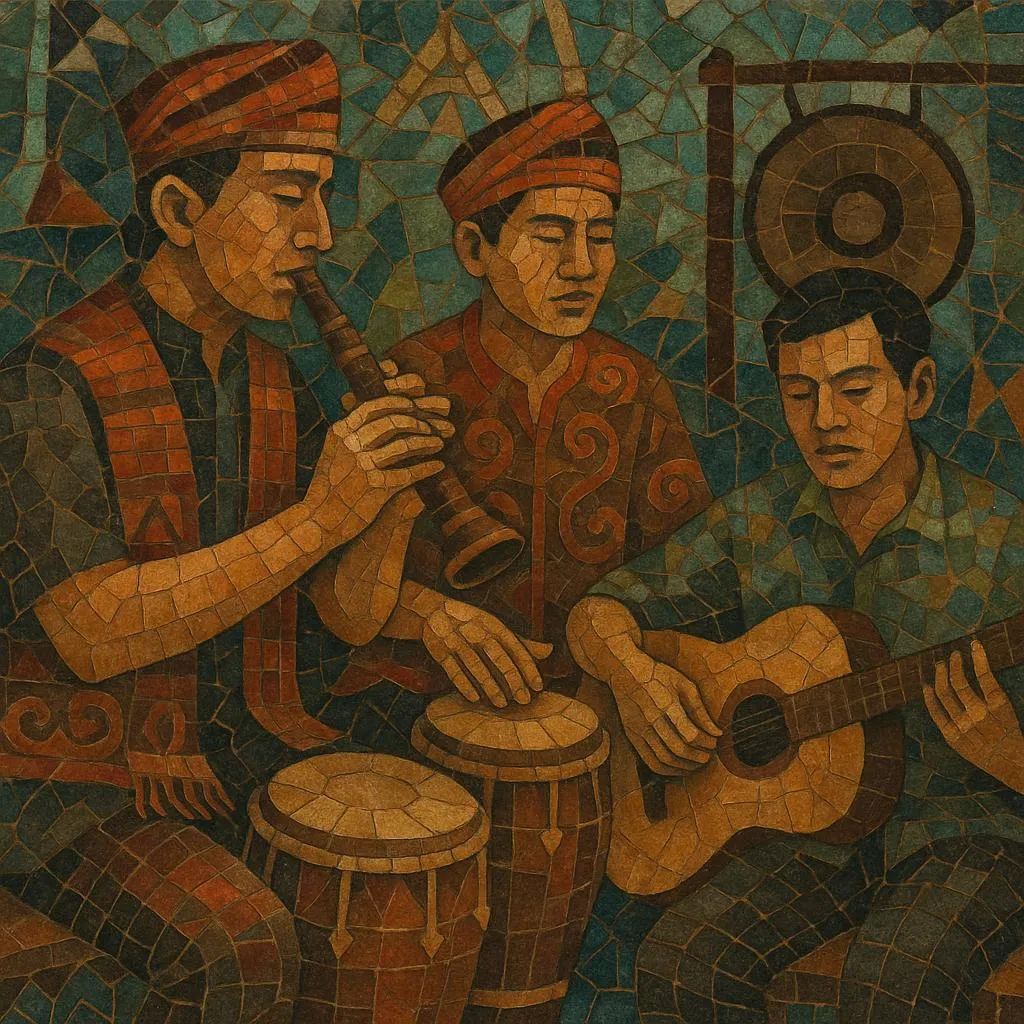
At one pole are pieces rooted in the Gendang Karo ensemble (sarune double-reed, paired hand drums, large gong and small kettle-gongs), dance grooves for landek (social dancing), and lyrical topics tied to kinship, weddings, and village life. At the other pole are studio-produced "pop Karo" numbers—often keyboard- and guitar-driven—that borrow harmony, backbeats, and arrangements from Indonesian pop and dangdut while retaining Karo melodic contours and poetry.

The result is a regional pop style that is unmistakably Karo in phrasing and rhythm, yet contemporary in sound and production.


Sources: Spotify, Wikipedia, Discogs, RYM, MB, user feedback and other online sources

History

Roots and early 20th century

Karo song culture long predates recording, with music woven into adat (customary) life—weddings, healing, life-cycle rites—and social dancing (guro-guro aron). The core sound was the Gendang Karo ensemble: sarune (nasal double-reed), two hand drums in dialogue, a large gong (gung), and small kettle-gongs (penganak), sometimes alongside the two‑string lute kulcapi. Melodies often follow pentatonic contours, with ornamented, call-and-response singing.

Mid-century composers and first recordings (1950s–1970s)

With urbanization and radio/cassette growth after WWII, composed Karo songs entered studios and stages. Influential arrangers drew on keroncong string textures and, increasingly, national Indonesian pop. The period cemented the term "lagu Karo" for authored, singable pieces in Karo language that could live outside ritual contexts.

Pop Karo, keyboards, and VCD era (1980s–2000s)

Affordable keyboards and drum machines reshaped arrangements: steady backbeats, synth pads, and electric guitars framed Karo melodies and poetic forms. Dangdut’s rhythmic feel and bass lines seeped in, while cassette/VCD markets in Medan and diaspora communities spread the repertoire regionally.

Digital present (2010s–today)

YouTube, karaoke, and social media further diversified lagu Karo. Wedding bands mix traditional gendang sets with pop covers; faith-oriented Karo pop thrives in choir and praise settings; indie creators issue lyric videos and live-room takes. Despite modern production, the language, melodic turns, and thematic focus (kinship, courtship, nature, migration) keep the style distinctively Karo.


How to make a track in this genre

Melody and scale
•   Favor pentatonic or hemitonic pentatonic contours typical of North Sumatran song, with ornamented approach notes and short melismas. •   Shape phrases to land naturally under Karo-language lyric stresses; cadence on stable tones doubled by drone or gong.
Rhythm and groove
•   For traditional flavor, base grooves on landek dance feels: interlocking drum patterns (call–response between the two gendang) and cyclical gong cues. •   For pop Karo, use 4/4 backbeats (80–110 BPM for ballads, 110–130 BPM for dance tunes), add offbeat guitar/keys for lift, and allow percussion fills to reference gendang accents.
Harmony and form
•   Keep harmony simple: I–V, I–IV–V, or I–vi–IV–V progressions support modal melodies without over-harmonizing. •   Use verse–refrain–verse with an instrumental hook (sarune, kulcapi, or lead guitar) that mirrors the vocal motif.
Instrumentation
•   Traditional core: sarune (double-reed), two hand drums (gendang singindungi/singanaki), gung (large gong), penganak (small kettle‑gongs), and kulcapi (two‑string lute). •   Pop setup: lead vocal(s), rhythm/lead guitars, keyboard (pad, bell, and string patches), electric bass, drum kit or programmed drums; optionally feature sarune or kulcapi as signature timbres.
Lyrics and delivery
•   Write in Karo language with imagery around kinship (marga), courtship, landscapes, and community; employ parallelism and proverbial turns. •   Sing with a bright, slightly nasal placement; add antiphonal responses or group shouts on chorus tags for a communal feel.
Production tips
•   Layer a traditional intro (kulcapi or sarune) before the full band enters. •   Sidechain pads subtly to kick for modern punch, but leave space for ornamented vocal pickups and sarune fills.

Top tracks

Locked
Share your favorite track to unlock other users’ top tracks

Upcoming concerts

in this genre
Influenced by
Has influenced
No genres found

Download our mobile app

Get the Melodigging app and start digging for new genres on the go
© 2026 Melodigging
Melodding was created as a tribute to Every Noise at Once, which inspired us to help curious minds keep digging into music's ever-evolving genres.
Buy me a coffee for Melodigging