Your digging level
Description
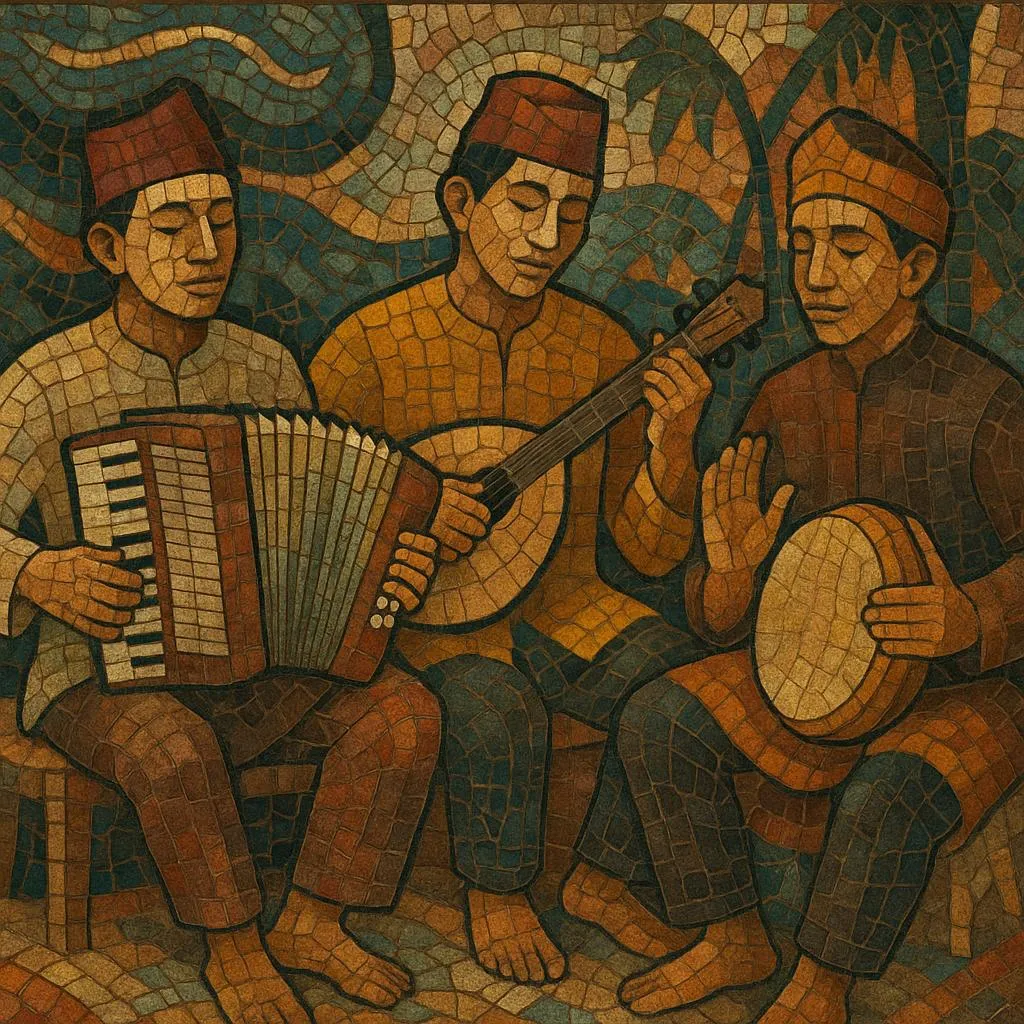
Lagu Jambi is a genre of regional music (Lagu Daerah) from the Jambi province in Sumatra, Indonesia. It is characterized by a blend of traditional Malay Melayu rhythms (such as Zapin, Inang, and Joget) with local Jambi dialects and folklore. The music often features the accordion as a lead melodic instrument, supported by traditional percussion like the gendang and rebana, as well as the gambus (lute).
Lyrically, songs often employ the 'Pantun' structure (traditional Malay quatrains) and explore themes of daily life, romance, the beauty of the Batanghari river, and moral advice. While rooted in tradition, modern Lagu Jambi often incorporates elements of Dangdut and Pop, creating a vibrant 'Pop Daerah' style widely enjoyed in the region.
History
The roots of Lagu Jambi lie in the ancient oral traditions of the Melayu Jambi culture, dating back to the era of the Malay kingdoms. Early forms included Senandung Jolo, a vocal tradition where farmers and fishermen would sing pantuns (poems) while waiting for harvests or rowing boats on the Batanghari river. These songs were initially unaccompanied or used simple percussion like wood blocks.
With the spread of Islam, instruments like the Gambus (oud) and Rebana (frame drum) were integrated, blending with local styles to create a distinct Jambi Malay sound. The music became a staple of social gatherings, weddings, and traditional ceremonies, often accompanying dances like the Tari Sekapur Sirih.
The genre formalized in the mid-20th century, particularly after Indonesian independence. Radio Republik Indonesia (RRI) played a crucial role in recording and broadcasting local songs, elevating folk tunes like "Injit-Injit Semut" and "Batanghari" to national recognition. Artists like A. Matcik and Cik Minah became icons during this period, defining the classic orchestral Malay sound of Jambi.
In the late 20th and early 21st centuries, Lagu Jambi evolved into Pop Daerah Jambi. Modern production techniques introduced synthesizers and drum machines, often merging the traditional rhythms with Dangdut and Pop beats. Despite modernization, the genre remains a vital part of Jambi's cultural identity, preserved through local festivals and digital media.
Use a 4/4 time signature with a Rentak Melayu beat. Common rhythms include the Joget (upbeat, danceable), Zapin (syncopated, moderate tempo), or Inang. The percussion should emphasize the off-beats, traditionally played on a Gendang (two-headed drum).
The Accordion is essential for the melody and fills, providing a nostalgic, breathing texture. Combine this with a Gambus (or acoustic guitar imitating a lute) for rhythmic strumming. A Violin (Biola) can add weeping, ornamental lines. For the bass, a Gong or electric bass playing root-fifth patterns works well.
Melodies should be diatonic but feature Cengkok—the distinctive Malay vocal ornamentation (slurs and microtonal bends). Harmonies are generally simple, relying on I-IV-V progressions, often in major keys to evoke a sense of longing or joy.
Structure your lyrics using Pantun: four-line stanzas with an A-B-A-B rhyme scheme. The first two lines (sampiran) set the scene (often referencing nature, the Batanghari river, or local flora), while the last two (isi) deliver the message. Use the Jambi Malay dialect, which often modifies vowel sounds (e.g., ending words with 'o').