Your digging level

For this genre
0/8
🏆
Sign in, then listen to this genre to level up

Description

Karbi pop is contemporary popular music sung primarily in the Karbi (Arlêng) language by the Karbi community of Assam, India. It blends local vocal styles and folk melodies with modern pop arrangements, guitars, keyboards, and programmed beats.

While its lyrical themes often revolve around love, place, and community life, Karbi pop also carries cultural pride by foregrounding indigenous language and imagery. The sound palette frequently nods to traditional timbres (e.g., hand drums and flutes) alongside radio‑friendly hooks and verse–chorus song forms.


Sources: Spotify, Wikipedia, Discogs, Rate Your Music, MusicBrainz, and other online sources

History

Beginnings (late 1970s–1980s)

Modern Karbi-language songs began to appear through pioneering singers who took folk-rooted melodies into a "modern song" format distributed on cassette and broadcast on regional radio. This period marks the emergence of what would become Karbi pop.

Cassette and stage culture (1990s)

Cassettes and stage programs across Karbi Anglong helped standardize a pop idiom in Karbi. Annual events such as the Karbi Youth Festival formalized "modern song" competitions, giving young singers and bands a platform to develop a contemporary repertoire while keeping language central.

Video era and local studios (2000s–2010s)

Affordable video production, VCDs/YouTube, and small labels in Assam expanded the audience. Artists began releasing singles and performance videos that mixed pop ballads with folk instrumentation and occasional rock arrangements, raising the profile of Karbi-language music beyond the district.

Streaming and stylistic spread (2020s)

With streaming services listing Karbi-language singles, a steady flow of releases has sustained the scene. Festival bills now place modern pop alongside newer strands (e.g., local rap slots), while pop singers continue to foreground Karbi identity through accessible hooks and polished production.

How to make a track in this genre

Core ingredients
•   Write in the Karbi language and center everyday stories (love, landscapes, kinship, pride). Keep verses concise and hook‑driven. •   Use a pop song form (intro–verse–pre‑chorus–chorus–bridge) with memorable melodic motifs and call‑and‑response phrases that work on festival stages.
Instrumentation and timbre
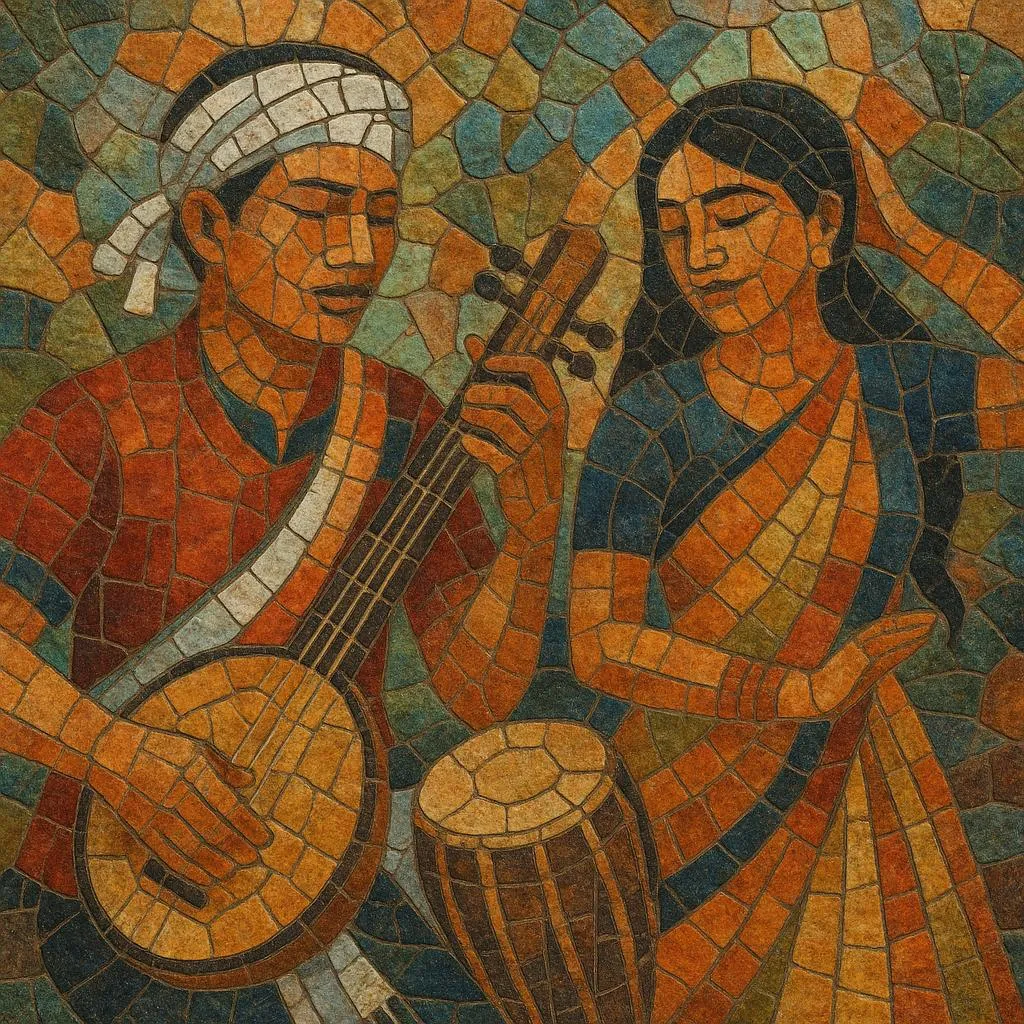
•   Combine modern rhythm section (drum kit or programmed drums, bass, electric/acoustic guitars, pads/synths) with traditional colors for identity: cheng/chengpi (double‑headed Karbi drum), cheng‑burup (waist drum), and bamboo/wooden flutes (pangche/muri). Layer handclaps and shakers for communal feel.
Rhythm and groove
•   Mid‑tempo pop (≈ 80–110 BPM) for ballads; 100–124 BPM for dance‑pop. Backbeats and four‑to‑the‑floor patterns suit festival settings; intersperse breaks where traditional drum phrases answer the vocal.
Harmony and melody
•   Favor diatonic, singable melodies in major modes; briefly borrow folk turns (pentatonic inflections, grace notes) at line endings. Keep harmonic rhythm simple (I–V–vi–IV and ii–V–I variants) to let language and timbre lead.
Production and performance
•   Double‑track choruses, add group vocals for anthemic lift, and feature short instrumental fills (flute or guitar) between vocal lines. Onstage, alternate soloist and group responses to mirror community singing traditions.

Top tracks

Locked
Share your favorite track to unlock other users’ top tracks
Influenced by
Has influenced
No genres found
Challenges
Digger Battle
Let's see who can find the best track in this genre
© 2026 Melodigging
Melodding was created as a tribute to Every Noise at Once, which inspired us to help curious minds keep digging into music's ever-evolving genres.
Buy me a coffee for Melodigging