Your digging level
Description
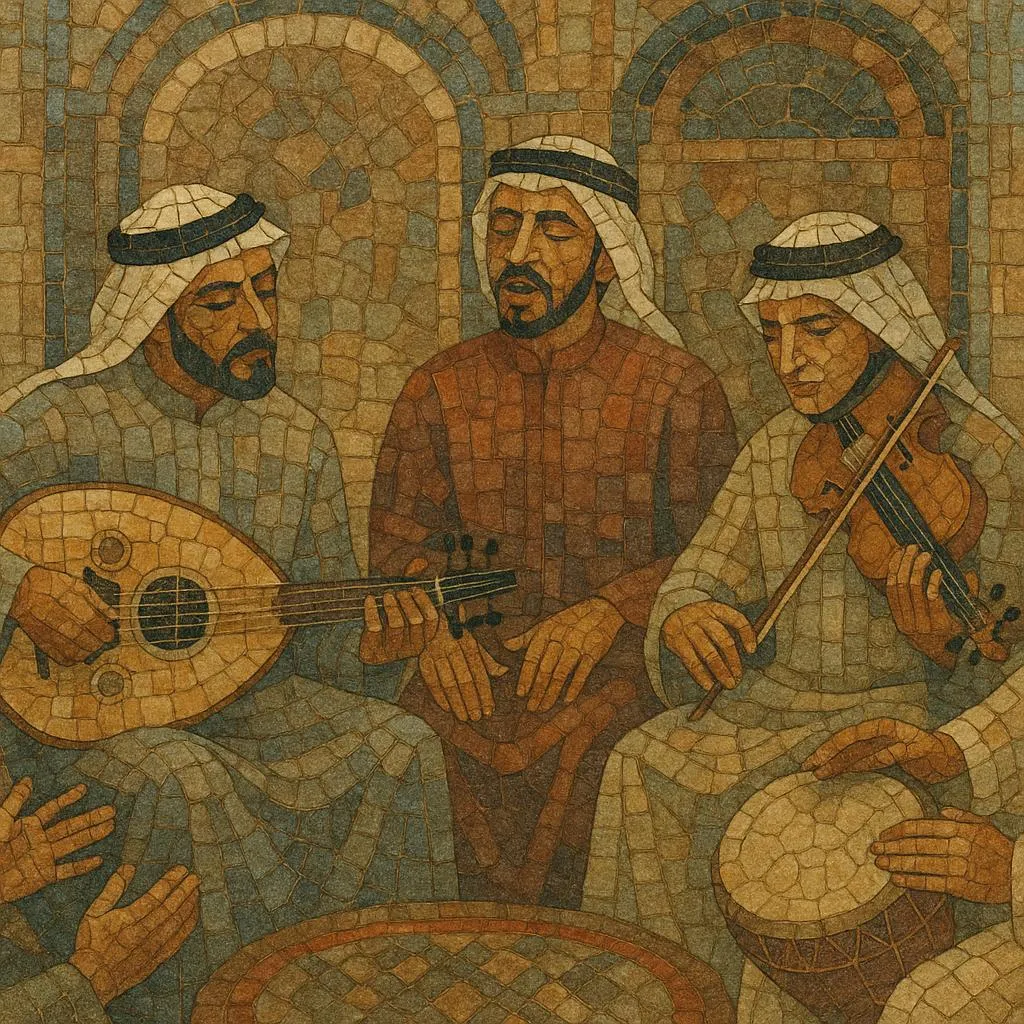
Jalsat (Arabic for “sessions”) is an intimate Gulf-Arab performance format where singers and a small ensemble gather in a majlis-style sitting to perform acoustic renditions of Khaleeji repertoire.
Rooted in social gatherings across the Arabian Peninsula, jalsat emphasize voice, poetry, and ornamented melodic improvisation over amplified spectacle. Arrangements typically center on oud, violin section, qanun, and hand percussion (riq, tabl/tabla, mirwas), with unison clapping and call‑and‑response refrains. The music commonly uses Gulf rhythms and maqam-based melodies (e.g., Bayati, Hijaz, Rast), and lyrics are often in Gulf dialects, using Nabati imagery of love, longing, and desert motifs.
In the recording era, the jalsah became a recognizable acoustic “unplugged” variant of modern Khaleeji pop, prized for its warmth, close-mic vocals, and extended taqasim (instrumental improvisations).
History
Jalsat grew from majlis culture in the Arabian Peninsula, where families and friends gathered for poetry, storytelling, and song. Before commercial recording, singers performed seated, accompanied by oud and light percussion, in a circle that encouraged communal clapping and chorus responses. The performance practice drew on Arabic classical aesthetics (maqam, melisma, taqasim) while carrying distinctly Gulf rhythmic feels and vernacular poetry.
With the rise of cassette culture in the 1970s–80s, artists in Saudi Arabia, Kuwait, Bahrain, Qatar, the UAE, and Oman began documenting “jalsat” as acoustic sessions distinct from full studio productions. Broadcasters and labels later branded televised and recorded “sessions” series, reinforcing the jalsah as a recognized format: seated musicians, live takes, modest amplification, and close audience proximity. These recordings popularized jalsat-style interpretations of both traditional songs and contemporary Khaleeji hits.
In the 2010s–present, large media networks and festivals in the Gulf revived and globalized the format, presenting high‑fidelity, multi-camera jalsat while preserving acoustic intimacy. Streaming platforms now host dedicated jalsat catalogs, and many pop stars release “session” versions of their singles—valued for raw vocal presence, microtonal inflections, and extended instrumental passages.
Beyond a sound, jalsat encode social etiquette and hospitality: performers and listeners share space, clapping reinforces groove, and poetic delivery invites reflection. The result is a recognizable Gulf “living‑room” performance aesthetic that sits between folklore and modern pop—rooted in community yet fully at home in today’s media.