Your digging level

For this genre
0/8
🏆
Sign in, then listen to this genre to level up

Description

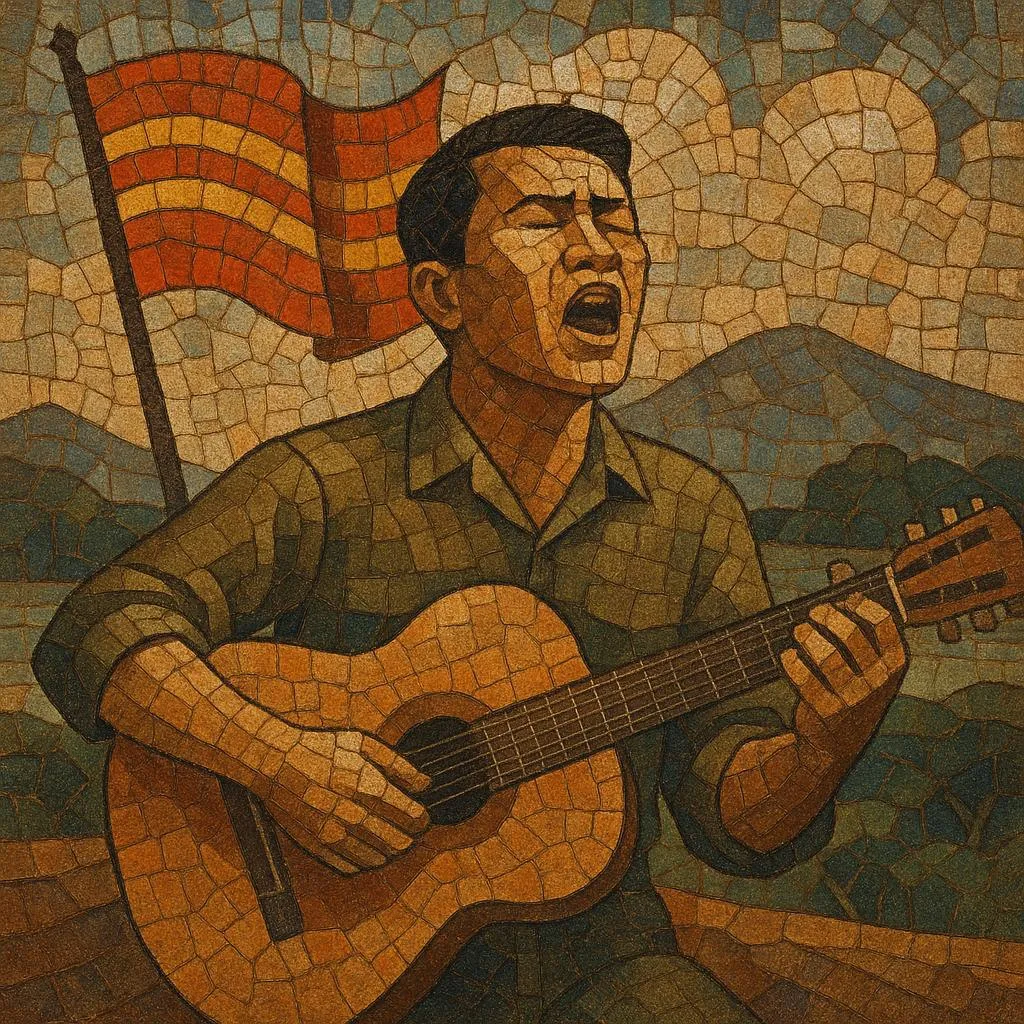
Hưng ca is a diasporic Vietnamese song movement that emerged in the United States in the 1980s.

It is characterized by strongly nationalistic and socio-political lyrics that reflect exile, anti-communist sentiment, and a desire to preserve Vietnamese cultural identity.

Musically, it is often built on accessible, song-oriented forms (verse–chorus), frequently drawing from Vietnamese popular song traditions and Western singer-songwriter and pop/rock accompaniment.

Performances commonly emphasize clear vocal delivery and lyrical intelligibility, because the message is central to the style.


Sources: Spotify, Wikipedia, Discogs, Rate Your Music, MusicBrainz, and other online sources

History

Origins (1980s)

Hưng ca developed among Vietnamese refugee and diaspora communities in the United States after the end of the Vietnam War.

It functioned as a cultural and political response to displacement, focusing on themes such as national memory, freedom, and community cohesion.

Themes and dissemination

The genre’s identity is primarily lyrical: songs frequently address socio-political issues, historical trauma, and diaspora identity.

It spread through community concerts, diaspora media, and especially Vietnamese-language audio/video releases and variety shows that circulated widely within overseas Vietnamese networks.

Continuity and legacy

Hưng ca remains closely tied to overseas Vietnamese cultural life, where it continues to be performed in commemorative and community settings.

While it overlaps with broader Vietnamese diaspora popular music, it is distinguished by its explicitly nationalistic and socio-political focus.

How to make a track in this genre

Core concept

Write the song around a clear socio-political or national-identity message, then choose a simple musical setting that keeps the lyrics understandable.

Instrumentation
•   Use an acoustic-guitar-led band or a light pop/rock ensemble (acoustic guitar, electric guitar, bass, drums, and keyboard). •   Keep arrangements uncluttered; add strings or pads only to underline emotional peaks.
Rhythm and groove
•   Favor steady mid-tempo pop/rock or folk-rock grooves with straightforward drum patterns. •   Avoid overly syncopated rhythms if they obscure diction; the vocal should sit clearly on top of the beat.
Harmony and melody
•   Use familiar diatonic progressions (e.g., I–V–vi–IV, I–IV–V, vi–IV–I–V) to support singable melodies. •   Write a strong, memorable chorus that can be sung communally, reflecting the genre’s community function.
Lyrics and delivery
•   Use direct Vietnamese language with vivid images of homeland, exile, freedom, remembrance, and collective resilience. •   Keep phrasing natural for speech-like clarity; prioritize strong consonants and a vocal range that supports confident projection.
Form and arrangement
•   Standard verse–chorus form works best; consider adding a bridge that intensifies the statement or offers reflection. •   Build dynamics gradually: lighter verses, fuller chorus, and a climactic final chorus or outro.
Performance practice
•   Deliver vocals with conviction and emotional control rather than heavy ornamentation. •   In live settings, encourage audience participation on the chorus, emphasizing solidarity and shared memory.

Top tracks

Locked
Share your favorite track to unlock other users’ top tracks
Challenges
Digger Battle
Let's see who can find the best track in this genre
© 2026 Melodigging
Melodding was created as a tribute to Every Noise at Once, which inspired us to help curious minds keep digging into music's ever-evolving genres.
Buy me a coffee for Melodigging