Your digging level
Description
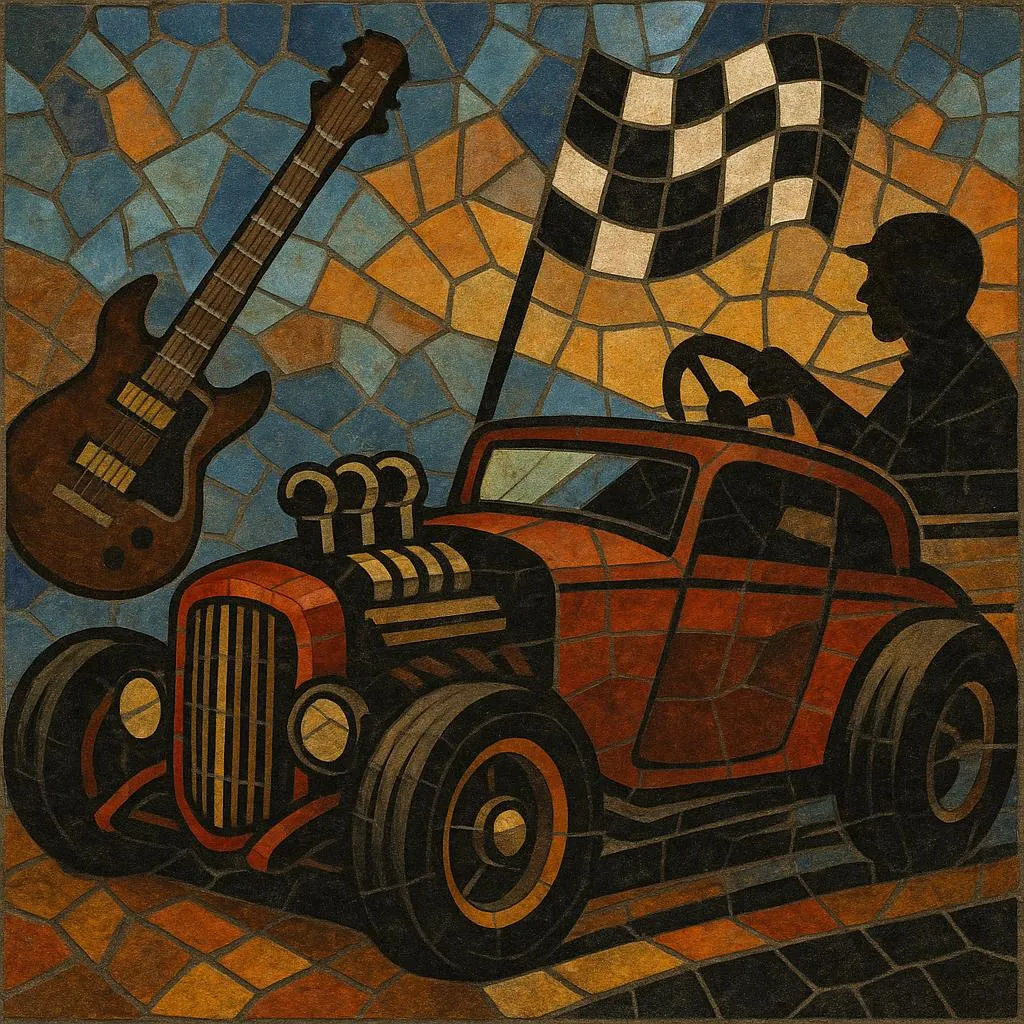
Hot rod music is a 1960s American pop and rock offshoot that celebrates car culture—especially customized hot rods, drag racing, and the Southern California cruising scene.
It emerged in two intertwined strands: high-energy instrumental tracks closely related to surf rock (twangy guitars, spring reverb, driving 4/4 beats), and vocal harmony pop built on doo‑wop and early rock and roll patterns. Lyrics are packed with gearhead slang and brand/model shout‑outs (Little Deuce Coupe, 409, G.T.O., Cobra), while arrangements often use stop‑time "gear shift" breaks, stacked harmonies, and car sound effects to dramatize speed and competition.
At its peak (circa 1963–1965), hot rod music was a national teen craze, codified by hit singles, concept albums, and studio‑assembled "car bands" guided by writer‑producers like Gary Usher and lyricist/DJ Roger Christian.
History
Hot rod music grew out of the same Southern California youth culture that birthed surf rock. As teen car clubs, drag strips, and magazine culture boomed, musicians adapted surf’s reverb‑drenched guitars and the vocal group tradition of doo‑wop and early rock and roll to celebrate cars and racing. The Beach Boys’ singles “409” (1962) and “Shut Down” (1963) and Jan & Dean’s “Drag City” (1963) helped define the style.
Labels rapidly commissioned concept LPs and one‑off “car bands,” often assembled by producer‑songwriter Gary Usher with lyricist/DJ Roger Christian. Studio projects such as The Super Stocks, The Kickstands, and The Hondells sat alongside charting groups like The Rip Chords and Ronny & The Daytonas. Instrumental sides drew on surf technique; vocal sides featured tight block harmonies, doo‑wop progressions, and hooky choruses. The Beach Boys’ Little Deuce Coupe (1963) is a canonical concept album of the craze.
By the later 1960s, tastes shifted toward folk‑rock, psychedelia, and album‑oriented pop. Many hot rod artists moved on or evolved: The Beach Boys pursued increasingly sophisticated pop, while the broader car‑song trope lived on across rock and country. The sound’s guitar language and bright harmonies fed into sunshine pop and, later, power pop.
Periodic revivals—especially surf and rockabilly revivals—have kept the sound of hot rod instrumentals and the imagery of car culture alive. The style’s hallmarks (reverb‑heavy guitars, shout‑outs to makes and engines, stacked harmonies, and racing drama) remain a recognizable shorthand for American teen car culture in film, advertising, and retro scenes.