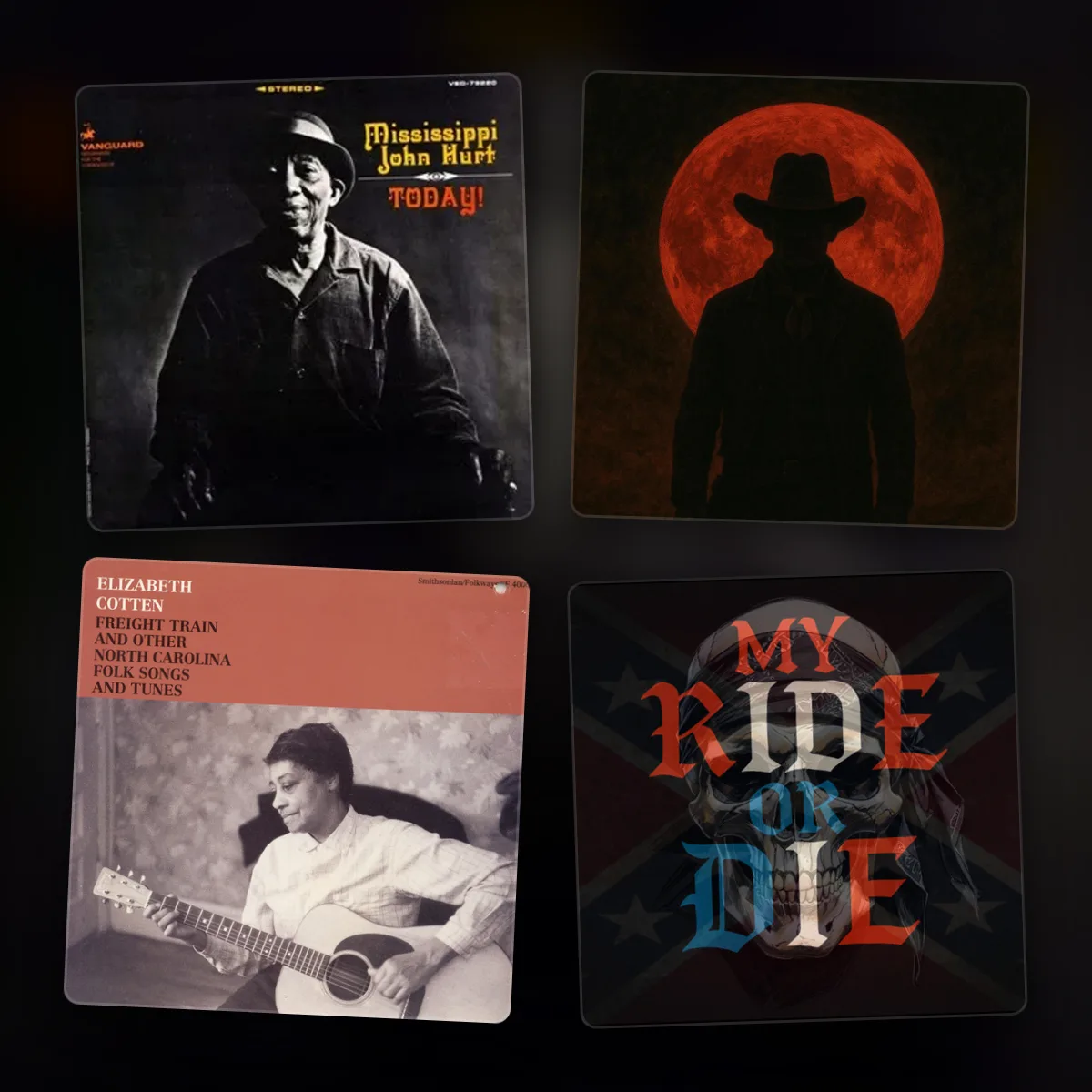
Description
Hokum is a type of American blues song distinguished by humorous sexual innuendo, often sustained through euphemisms and extended analogies. Its playful, mischievous character is central: the joke is carried as much by the singer’s delivery and wordplay as by the subject of the lyric.
The music is often bouncy and influenced by ragtime, with a livelier dance feel than the slow drag associated with some dirty blues. The two labels sometimes overlap, but researchers have also distinguished hokum’s comic sass from the more earnest innuendo of earlier dirty blues.
History
Early blues and the hokum boom
Hokum grew out of early American blues and became commercially successful in the 1920s and 1930s. Papa Charlie Jackson’s “Shake That Thing” helped establish the approach later associated with the name. Tampa Red and Georgia Tom had a major hit with “It’s Tight Like That” in 1928; a 1929 billing named their ensemble Tampa Red’s Hokum Jug Band. They later recorded as the Hokum Boys.
Crossover and criticism
Hokum also crossed into early country music. The Allen Brothers recorded a hit version of “Salty Dog Blues” as “Bow Wow Blues” in 1927, while Cliff Carlisle recorded numerous hokum songs. Some commentators criticized hokum’s urban style as a degradation of folk blues; some scholars have also criticized the era as commercially driven, with producers encouraging musicians to repeat slick formulas.
Decline and legacy
Hokum bands were fading by the mid-1930s, though the approach continued to surface in later blues and blues rock. Hokum also fed into rhythm and blues and Chicago blues. The formal label “hokum blues” did not become a style designation until the 1960s.
Build the song around a joke
Start with a humorous idea that can sustain an extended analogy. Give ordinary objects or situations a second, suggestive meaning, and let euphemisms and wordplay carry the innuendo. Aim for a mischievous, comic delivery rather than an earnest treatment of the subject.
Shape the musical setting
Give the song a buoyant blues feel suited to lively dancing. You could draw on the syncopation of ragtime when shaping the accompaniment, while keeping enough space for the words and their punch lines to be heard.
Arrange and perform
A common approach in blues is to build verses over a repeating harmonic pattern; you could use that as a flexible frame for successive variations on the joke. Emphasize key words through phrasing, and leave short instrumental responses between vocal lines to keep the performance conversational and animated.

Influenced by