Your digging level

For this genre
0/8
🏆
Sign in, then listen to this genre to level up

Description

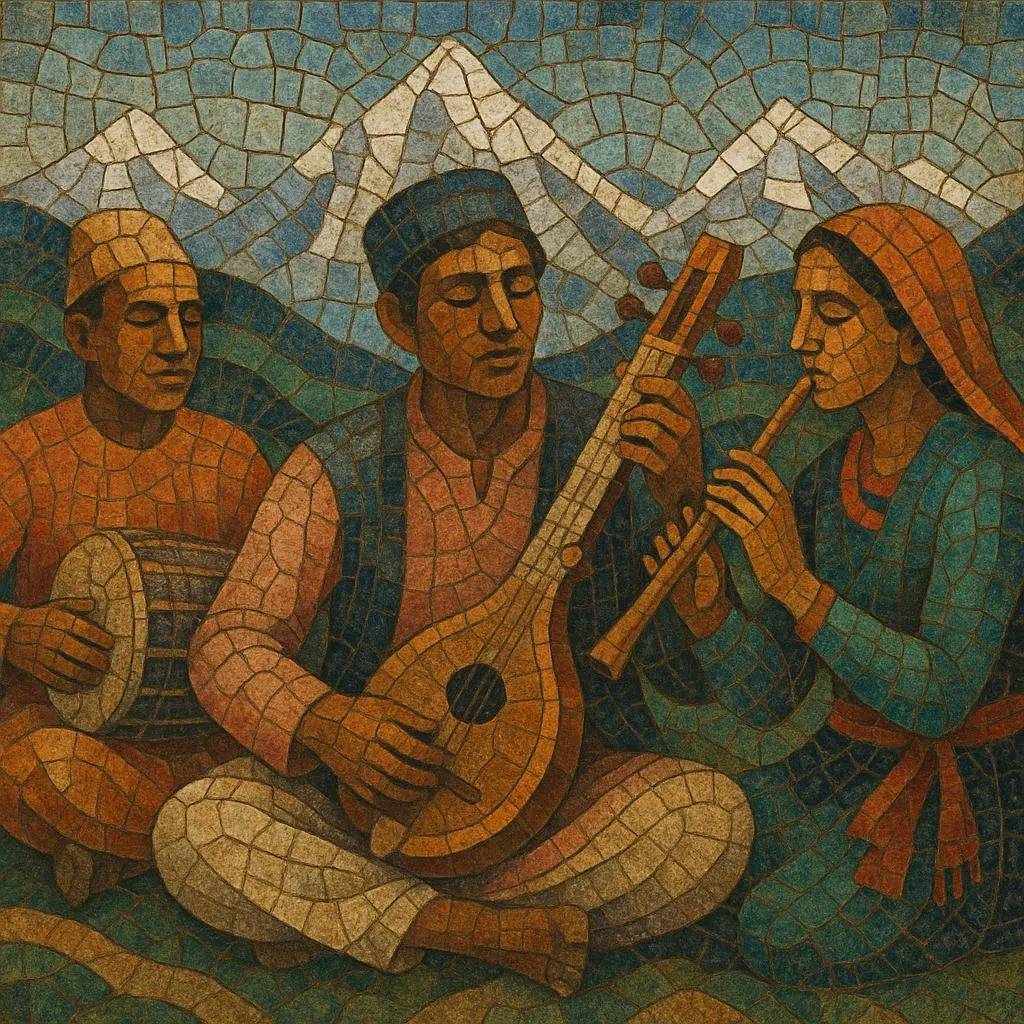
Himalayan folk refers to the traditional musics of the Himalayan belt—especially Nepal, Tibet (Xizang), Bhutan, and the Himalayan regions of India such as Ladakh, Himachal, Uttarakhand, and Sikkim.

It is characterized by pentatonic and modal melodies, drones, and ornamental vocal styles; cyclic, dance-derived rhythms; and a distinctive palette of indigenous instruments (madal, damphu, tungna/dranyen, sarangi, bansuri, gyaling, dungchen, piwang, lingbu, damru). Songs range from devotional and ritual repertoires (Buddhist and Hindu) to ballads, pastoral work songs, wedding/festival pieces, and dance tunes associated with specific ethnic communities (Tamang, Newar, Sherpa, Gurung, Ladakhi, etc.).

Performance contexts include monasteries and ritual grounds, communal dances on terraces and village squares, and informal household music. Call‑and‑response textures, heterophony, and unison singing accompanied by steady percussion and drone are common, conveying an intimate yet expansive, mountain soundscape.


Sources: Spotify, Wikipedia, Discogs, Rate Your Music, MusicBrainz, and other online sources

History

Early roots

The musical languages of the Himalaya crystallized over centuries as agrarian, pastoral, and monastic communities adapted local instruments, ritual chant, and Indo‑Tibetan modal systems to everyday life. Buddhist liturgical music and folk dance repertoires coexisted with Hindu bhajans and regional ballad traditions, producing a porous exchange between sacred and secular spheres.

Regional streams
•   Tibet and Ladakh developed long-horn (dungchen), shawm (gyaling), and chant-based ensembles, alongside folk lutes (dranyen/piwang) and circular dance tunes. •   Nepal’s many ethnic groups (Newar, Tamang, Gurung, Magar, Tharu, etc.) sustained song-dance cycles with madal and damphu drums, sarangi fiddles, and bamboo flutes. •   Bhutan’s courtly and village songs share pentatonic contour and heterophony, often tied to masked dance and tsechu festival cycles.
20th century mediation

Field recordings, radio, and folk stage troupes helped codify regional repertoires. Urban centers (Kathmandu, Thimphu, Leh) fostered ensembles that presented village genres on concert stages, while instrument makers standardized sizes/tunings for touring and broadcast.

Contemporary continuities

Revivalists and traditionalists document repertoires threatened by migration and modernization, while crossover acts arrange folk melodies for acoustic ensembles, film, and world music stages. Despite modernization, communal ritual, festival dance, and village ceremonies continue to sustain core styles and playing techniques.

How to make a track in this genre

Scales, melody, and texture
•   Favor pentatonic and anhemitonic modes; mixolydian and Dorian colorations are common. •   Use stepwise motion with occasional leaps to a reciting tone; incorporate ornaments (grace turns, portamenti, and mordents) and sustained drone (tonic/5th) on a lute or shruti/drone source. •   Heterophony suits ensembles: multiple instruments render the same melody with individual embellishments.
Rhythm and form
•   Build on cyclical dance grooves (2/4, 4/4, 6/8); let hand drums (madal, damphu) articulate off‑beat accents and cadential rolls. •   Phrase structures often use short refrains with call‑and‑response; strophic lyrics over repeating cycles.
Instrumentation
•   Core: madal/damphu (hand drums), tungna or dranyen (plucked lute), sarangi/piwang (bowed), bansuri/lingbu (bamboo flutes). •   Ritual colors: gyaling (shawm), dungchen (long horns), small cymbals (tingsha), and frame drums for processional or ceremonial passages. •   Arrange parts so one instrument sustains a drone, one leads with melody, others provide countermelodies and rhythmic punctuation.
Lyrics and themes
•   Draw on landscape, seasons, labor, courtship, weddings, epics, and devotional texts (Buddhist or Hindu). Keep imagery concrete (rivers, passes, terraces, yaks, prayer flags) and communal.
Production and performance tips
•   Record in natural acoustic spaces to retain air and overtones; minimal compression preserves dynamic drum hits and flute breath. •   Keep tempo organic—allow slight rubato before entries, then lock into the dance cycle. Encourage unison choruses with communal claps or footwork.

Top tracks

Locked
Share your favorite track to unlock other users’ top tracks
Influenced by
Challenges
Digger Battle
Let's see who can find the best track in this genre

Download our mobile app

Get the Melodigging app and start digging for new genres on the go
© 2026 Melodigging
Melodding was created as a tribute to Every Noise at Once, which inspired us to help curious minds keep digging into music's ever-evolving genres.
Buy me a coffee for Melodigging