Your digging level
Description
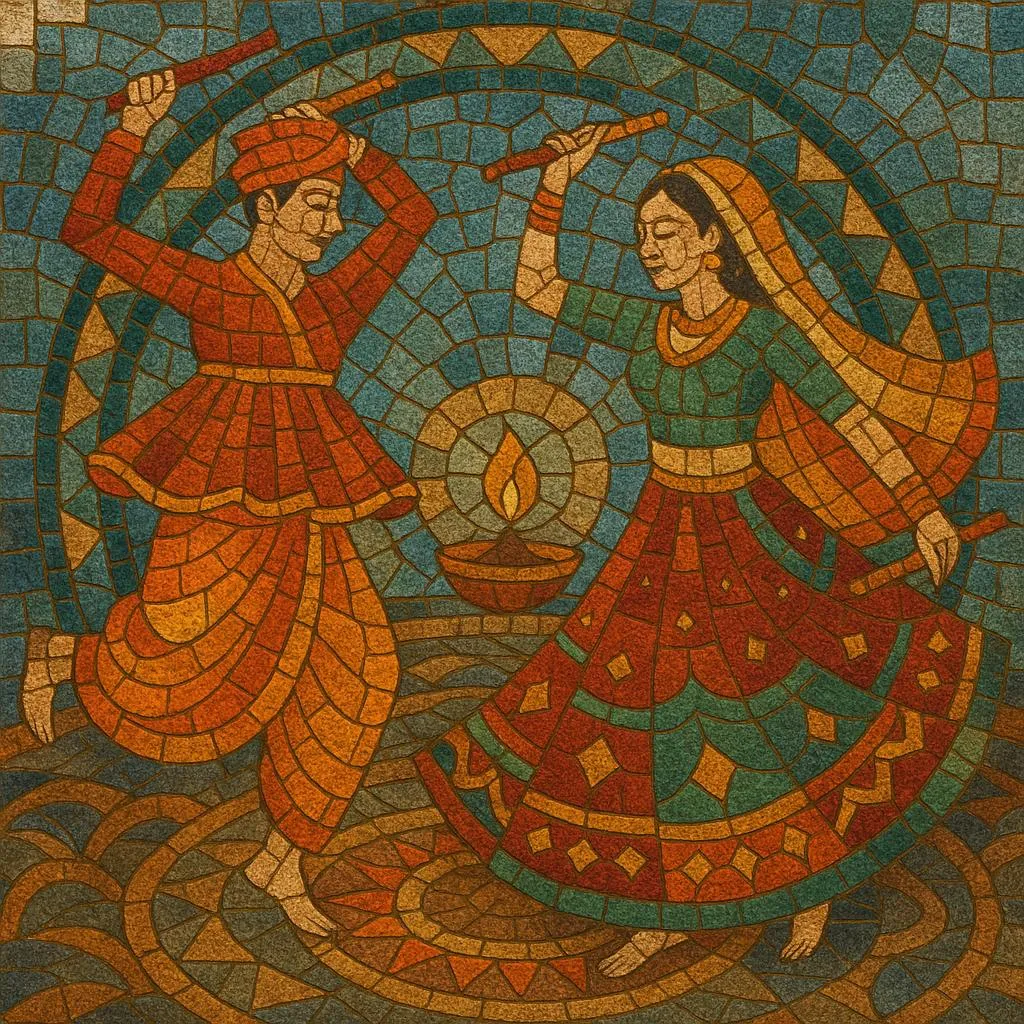
Gujarati Garba is a devotional folk music-and-dance tradition from the Indian state of Gujarat, performed in circular formations around a symbolic lamp (garbha deep) that represents the Goddess Shakti. The songs are typically in Gujarati and praise manifestations of the Goddess (Amba, Durga), celebrate the harvest and monsoon, and sometimes narrate folk love and community themes.
Musically, Garba is driven by handclaps and percussion in buoyant 8-beat (keherva) or lilting 6-beat (dadra) cycles, with call-and-response refrains that encourage communal singing. Melodies draw on Hindustani folk-classical sensibilities (e.g., Khamaj-, Des-, and Bhairavi-like flavors) and are carried by strong, open-throated lead vocals, harmonium, shehnai/bansuri lines, and a battery of drums (dhol, dholak, nagara). In modern contexts—especially at large Navratri celebrations—the ensemble expands with keyboards, bass, drum kit, and sound reinforcement that preserves the music’s participatory, dance-first energy.
History
Garba takes its name from "garbha" (womb/lamp), referencing the lamp placed at the center of a dancing circle that symbolizes the creative energy of the Goddess. The tradition crystallized in Gujarat as a devotional community practice tied to Navratri (the nine nights of Goddess worship), with songs invoking Amba/Durga and celebrating agrarian cycles. Early performances were acoustic and intimate—voice, claps, and drums—facilitating long, trance-like rounds of circular dance.
By the 1800s and early 1900s, Garba’s musical vocabulary had stabilized around 8-beat keherva and 6-beat dadra cycles, clapping patterns, and antiphonal choruses. Urbanization (Ahmedabad, Vadodara) and printed songbooks helped standardize repertoires and texts. Folk-classical instrumentation (harmonium, shehnai/bansuri, tabla/dholak) augmented village drums (dhol, nagara), and semi-classical ragas colored many melodies.
From the mid-20th century onward, public Navratri grounds, cultural sabhas, and regional radio amplified Garba beyond local mandals. Large organized events in cities professionalized ensembles, lengthened sets, and codified stage presentation. Recordings, cassettes, and later VCDs/YouTube established canonic versions of popular aartis and refrains. Parallel forms—dandiya raas and dodhiya step styles—cross-pollinated Garba tempo, arrangement, and choreography while remaining distinct.
Today Garba flourishes at stadium-scale Navratri events in Gujarat and in Gujarati diaspora hubs worldwide. Modern bands layer keyboards, bass, drum kit, and in-ear monitoring onto the traditional percussion-and-harmonium core, while DJs produce EDM-tinged Garba remixes for youth audiences. Despite modern staging, the core remains participatory and devotional: cyclic rhythms, call-and-response hooks, and texts praising Shakti, designed to sustain hours of communal dance.