Your digging level

For this genre
0/8
🏆
Sign in, then listen to this genre to level up

Description

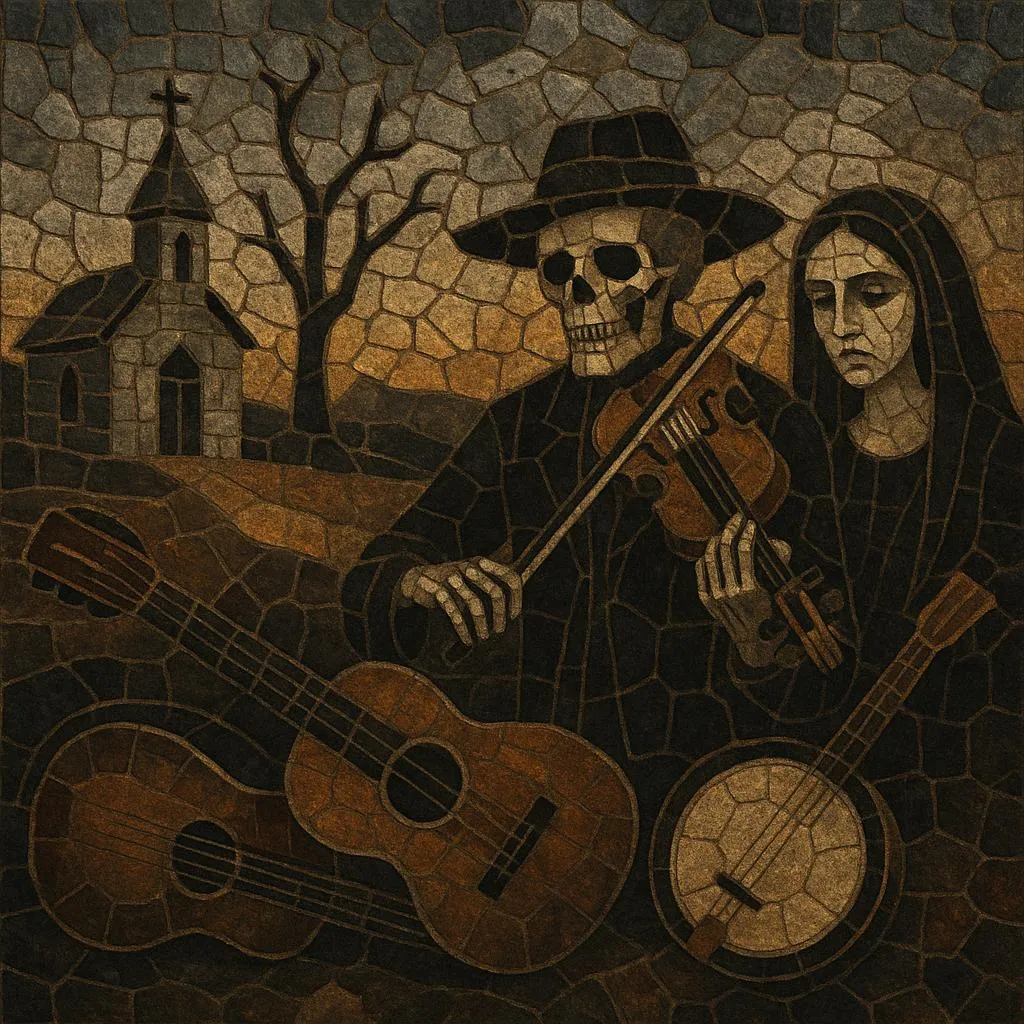
Gothic Americana (often overlapping with terms like "gothic country" or "dark Americana") blends the instruments and songcraft of traditional American roots music with the brooding mood, religious imagery, and fatalistic storytelling associated with Southern Gothic art.

The sound typically features acoustic guitar, banjo, fiddle, upright bass, resonator or slide guitar, and occasional pump organ/harmonium, hand percussion, and foot-stomp rhythms. Vocals tend toward baritone or close-mic’d, intimate deliveries. Harmonically it leans on minor modes, modal mixture, drones, and blues inflections; production is usually sparse, reverb-laden, and warmly analog. Lyrically it deals with sin and salvation, hauntings and murder ballads, drought and dust, backroads and church pews—American myths recast in chiaroscuro.


Sources: Spotify, Wikipedia, Discogs, RYM, MB, user feedback and other online sources

History

Origins (1990s)

Gothic Americana coalesced in the mid-to-late 1990s at the fringes of alt-country and Americana. Artists took the storytelling of classic country and folk and steeped it in the fatalism of Southern Gothic literature and the starkness of field hymns and murder ballads. A notable hotspot was the Denver scene, where bands fused old-time instrumentation with post-punk austerity and evangelical imagery, establishing a template of sparse arrangements, baritone voices, and lyrical preoccupations with sin, penance, and the supernatural.

2000s: Codification and Spread

Through the 2000s, the style was codified on independent labels and in DIY circuits, with acoustic ensembles incorporating resonator guitar, banjo, and fiddle alongside drum-toms and harmonium. Production aesthetics favored tape warmth and room reverb, while songwriting emphasized minor modes, drones, and processional rhythms (3/4 and 6/8). The repertoire expanded beyond reimagined murder ballads to original parables about small-town ruin, itinerancy, and apocalyptic visions.

2010s–Present: Cross-Pollination

In the 2010s, Gothic Americana intertwined with neofolk, dark folk, and indie rock, while retaining rustic instrumentation and biblical or folkloric symbolism. Artists explored lusher chamber textures (strings, pump organ) or harsher timbres (overdriven baritone guitars) without abandoning the core: haunted storytelling over spare, roots-derived frameworks. The style’s influence surfaced in adjacent scenes—from doom-tinged singer‑songwriters to country-adjacent acts importing shoegaze atmospherics—while the live tradition remained anchored in intimate clubs, art spaces, and small festivals.

How to make a track in this genre

Instrumentation and Texture
•   Start with acoustic folk/country tools: acoustic or resonator guitar, banjo, fiddle, upright bass, and harmonium or pump organ for droning pads. Add hand percussion (floor-tom, chain rattle, foot-stomps, handclaps) before a full drum kit. •   Use open tunings (open D, open G, DADGAD) and slide to create mournful sustain. Sustain notes with organ/accordion drones to evoke chapel or funeral atmospheres.
Harmony, Melody, and Rhythm
•   Favor minor modes (Aeolian, Dorian) and modal mixture (borrowed bVI, bVII). Blues vocabulary (flat 3rd/7th) fits naturally. •   Useful progressions: i–bVII–IV, i–VI–III–VII, or drones over a pedal bass. Lean on ostinatos and voice-leading rather than complex chord counts. •   Rhythms often sway: 3/4, 6/8, or slow 4/4 with a processional pulse. Stomps and claps can act as the backbeat; tom-heavy parts suggest a marching or revival feel.
Lyrics and Themes
•   Write narrative songs that feel like parables: sin/redemption, drought/flood, revenants, borderlands, and small-town decay. Biblical allusions, folk superstitions, and courtly old-time language heighten the mood. •   Use concrete imagery (train trestles, cottonwood, river mud, church bells) and let moral ambiguity linger.
Arrangement and Production
•   Keep arrangements spare; leave air around vocals and melodic leads. Double a melody with fiddle or lap steel an octave apart for spectral shimmer. •   Employ room mics and plate/spring reverb; aim for warm, tape-like dynamics. Slight saturation on upright bass or pump organ adds grit. •   Incorporate field sounds subtly (wind, creaking pews) only if they serve the story, not as gimmicks.
Performance Practice
•   Vocals: close-mic’d baritone or intimate mezzo with controlled vibrato; occasional call-and-response nods to gospel. •   Live, favor seated, candlelit, or minimalist staging that enhances narrative focus rather than volume.

Top tracks

Locked
Share your favorite track to unlock other users’ top tracks

Upcoming concerts

in this genre
Influenced by

Download our mobile app

Get the Melodigging app and start digging for new genres on the go
© 2026 Melodigging
Melodding was created as a tribute to Every Noise at Once, which inspired us to help curious minds keep digging into music's ever-evolving genres.
Buy me a coffee for Melodigging