Your digging level
Description
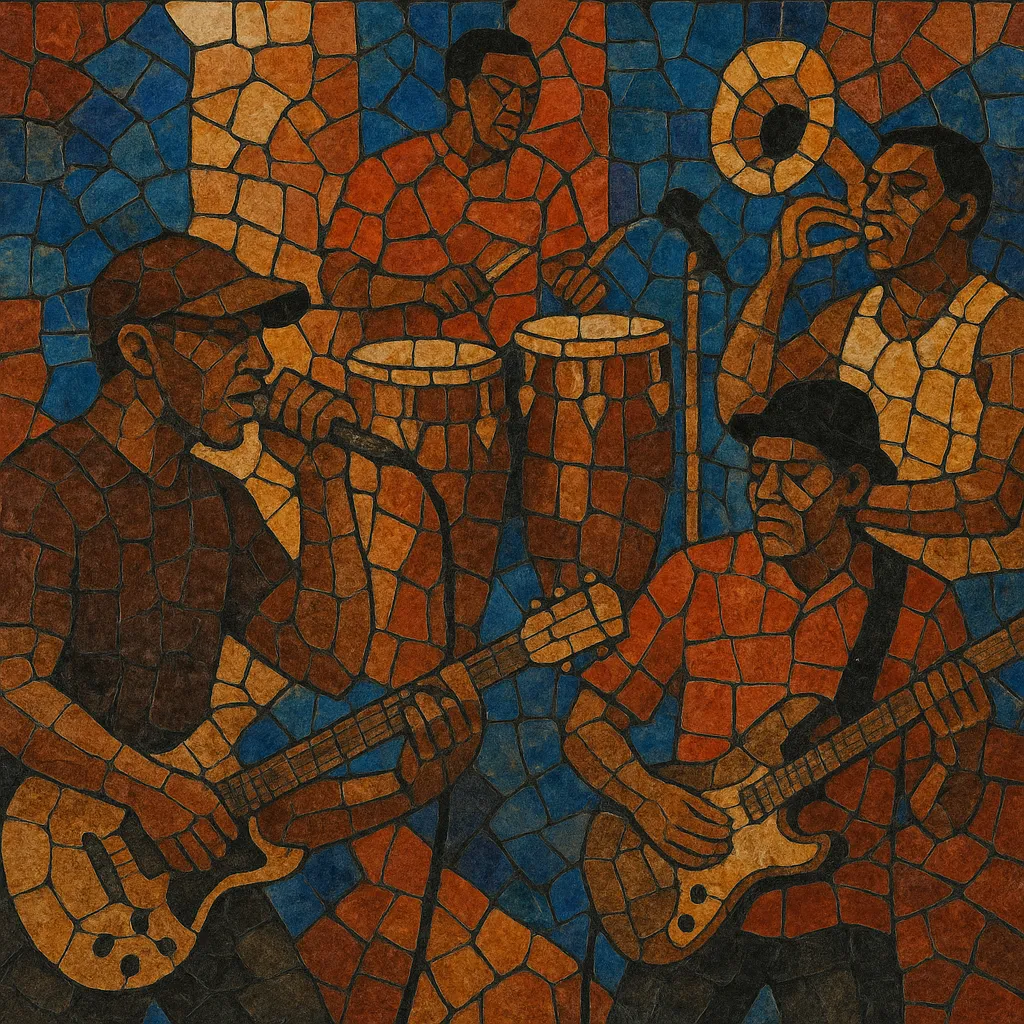
Go-go is a percussion-heavy, mid-tempo offshoot of funk that originated in Washington, D.C. It emphasizes an unbroken, danceable groove built from drum kit "pocket" rhythms interlocking with congas, timbales, cowbell, and rototoms.
Unlike most popular forms that focus on discrete songs, go-go is designed for continuous live performance: bands vamp on riffs, chain songs into medleys, and keep the beat going while the lead talker (MC) drives call-and-response with the crowd. Bass locks into syncopated ostinatos, guitars provide percussive scratches and clipped chords, keyboards fill textures, and horn stabs punctuate the groove.
The feel draws from funk, R&B, and Latin/Caribbean percussion, with a strong community-centered, party-forward ethos. Later variants such as the D.C. "bounce-beat" style slowed the tempo and foregrounded tom-rolls and 808 drops while retaining the signature audience participation.
History
Go-go emerged in mid-1970s Washington, D.C., spearheaded by Chuck Brown & the Soul Searchers. Seeking to keep people dancing between songs, Brown extended funk vamps and added prominent congas, cowbell, and audience call-and-response. By the late 1970s, records like "Bustin' Loose" crystallized the style’s mid-tempo pocket and percussion-driven arrangements.
Local bands such as Trouble Funk, Rare Essence, and E.U. developed powerful live shows known for seamless medleys and crowd shout-outs. Go-go broke through nationally via tours and recordings—most notably E.U.’s "Da Butt" (1988), which spotlighted the genre’s party energy. While it remained a largely regional live phenomenon, go-go’s rhythmic concepts seeped into R&B and hip hop production.
The scene diversified with groups like Junkyard Band, Northeast Groovers, Backyard Band, and the Huck-A-Bucks, each refining the core groove with different tempos and textures. In the 2000s, a younger wave popularized a "bounce-beat" variant—slower, heavier, and driven by rolling toms and 808 accents—through bands like TCB, XIB, and TOB, while legacy bands maintained classic go-go pocket shows.
Go-go’s role as a D.C. community soundtrack came into national focus with the 2019 "Don’t Mute DC" movement advocating for the music’s presence in public life. In 2020, Washington, D.C. officially designated go-go as the city’s official music. Contemporary artists and producers continue to fuse go-go with pop, R&B, and hip hop, while live bands preserve the tradition of participatory, percussion-led performances.