Your digging level
Description
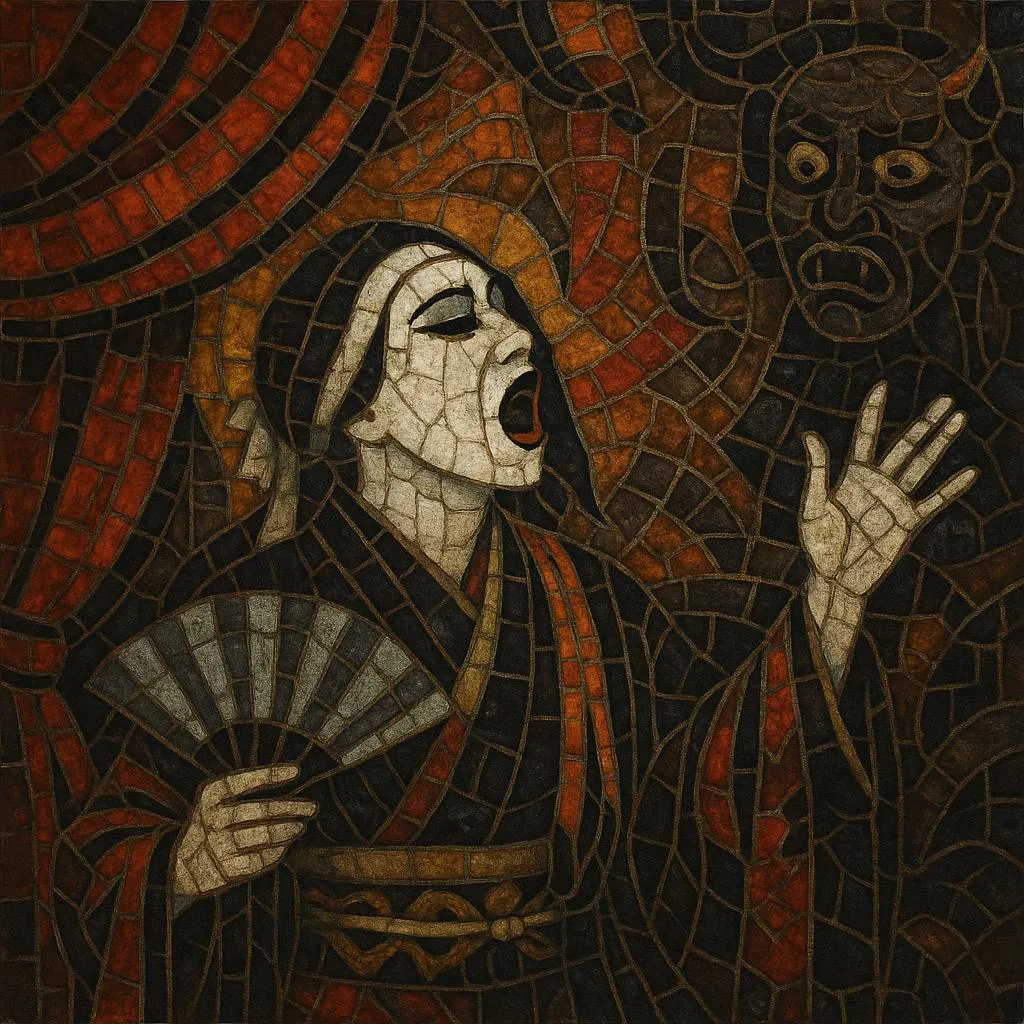
Gekijou (often referred to as Gekijou-kei or Gekijou-gata) is a theatrical subgenre of Visual Kei and Japanese Rock that emphasizes narrative storytelling, dramatic stage performances, and a retro-grotesque aesthetic. The term translates to "theatre" or "theatrical style," and bands in this genre often present themselves as performance troupes rather than traditional music groups. Musically, it fuses heavy metal, punk rock, and progressive rock with elements of Showa-era Kayokyoku (retro pop) and traditional Japanese music. The aesthetic is heavily influenced by the "Angura" (underground) theatre movement of the 1960s and 70s, featuring costumes like kimonos, military uniforms, and white face paint (shironuri), often exploring themes of tragedy, horror, social satire, and the bizarre.
History
The roots of Gekijou lie in the Japanese 'Angura' (underground) theatre movement of the 1960s and 1970s, led by figures like Shūji Terayama and composer J.A. Seazer, who blended avant-garde performance with rock music to challenge Western realism.
In the early 1990s, as the Visual Kei movement exploded, a subset of bands began to adopt this theatrical, retro-Japanese aesthetic, rejecting the polished, Westernized look of mainstream acts. This crystallized into the 'Angura Kei' subgenre, with 'Gekijou' representing the most explicitly theatrical and narrative-driven end of that spectrum.
Formed in 1994, Inugami Circus-dan (The Dog God Circus Troupe) became the pioneers of this style, combining heavy metal with Enka-influenced vocals and a concept based on a grotesque circus. They were closely followed by Guruguru Eigakan (Spinning Cinema) in 1995, who adopted a 'retro-future' literary style. These bands established the tropes of white face paint, kimono/uniform costumes, and spoken-word interludes.
In the 2000s, the style evolved with bands like Strawberry Song Orchestra, who describe themselves as a 'freak show punk troupe,' incorporating actors and dancers directly into their musical performances. While remaining a niche underground scene, Gekijou continues to influence modern Visual Kei acts that prioritize concept and storytelling over pure musical technicality.
Composing Gekijou music requires a focus on narrative structure and dramatic tension.
Vocals: Utilize a wide range of vocal techniques, shifting between theatrical singing (often with heavy vibrato reminiscent of Enka), spoken word narration, hysterical laughter, and aggressive screaming. The delivery should feel like acting.
Instrumentation: Build a rock or metal foundation (distorted guitars, driving drums) but layer it with 'retro' or 'traditional' textures. Common additions include accordion, piano, organ, and sometimes traditional Japanese instruments like the Shamisen.
Rhythm and Harmony: Experiment with shifting time signatures to mimic the flow of a play. Use marching rhythms (2/4 time) to evoke a military or circus atmosphere, and employ minor scales or the 'Yonanuki' pentatonic scale to create a nostalgic, Japanese melody.
Lyrics: Write lyrics as stories or scripts. Themes often revolve around tragic romance, grotesque folklore, societal taboos, or nostalgic reflections on the Showa era. Use archaic Japanese phrasing to enhance the retro atmosphere.