Your digging level
Description
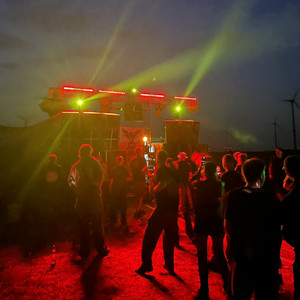
Free tekno (also written tekno, freetekno, or hardtek) is a fast, hard-edged offshoot of the European free‑party movement. It is typically played on large DIY sound systems at illegal raves and teknivals across Europe, and its spelling “tekno” is a deliberate cultural separation from club‑oriented “techno.”
Musically, it is driven by a pounding, highly repetitive 4/4 kick at very high tempos—commonly 150–185 BPM, with many contemporary tracks at 170 BPM or above. Compared with mainstyle hardcore, its bass‑drum distortion is often less clipped and more rounded, emphasizing a relentless, rolling pulse with syncopated fills, shuffling hats, and tribal percussive accents. While largely minimal and percussive, it can fold in rave stabs, acid lines, and trance‑ or psy‑influenced textures due to the close overlap between tekno and psytrance scenes.
![Genetek - SynthetikForest [ TEKNO TRIBE ] - Son de Teuf - Free Tekno](https://i.ytimg.com/vi/lCdmNTlp1Mk/hqdefault.jpg)


History
Free tekno emerged in the early 1990s within the UK and European free‑party circuits that grew out of acid house, rave, and harder strains of techno and hardcore. Sound systems such as Spiral Tribe helped cement the aesthetic: self‑built rigs, squatted or open‑air sites, and marathon sessions that privileged raw energy over club polish. The “tekno” spelling signaled a DIY, anti‑commercial stance distinct from mainstream techno.
Following intensified policing and the UK’s Criminal Justice and Public Order Act (1994), many crews moved to continental Europe, catalyzing the rise of teknivals in France, the Czech Republic, Italy, and beyond. The sound coalesced around very fast 4/4 patterns, heavy but not overly clipped kick drums, sparse harmonic content, and tribal percussion—closer in feel to hard techno than to gabber’s maximalism.
French and Central European sound systems (e.g., Heretik System, Narkotek) popularized regional variants often called hardtek, while the broader freetekno culture integrated aspects of psytrance and classic rave timbres. Large gatherings like Teknival in France and CzechTek became emblematic of the style’s scale and nomadic ethos.
With widespread DAW access and portable production gear, tekno spread further online while remaining anchored to free parties. Producers frequently blend tekno’s skeleton with acid, trance/psy textures, and ragga samples. Although still underground, the style remains a cornerstone of the European free‑party network, known for high‑tempo intensity, community‑run infrastructure, and a strong DIY ethic.






![[PIAS]](/placeholders/vinyl-1.png)