Your digging level

For this genre
0/8
🏆
Sign in, then listen to this genre to level up

Description

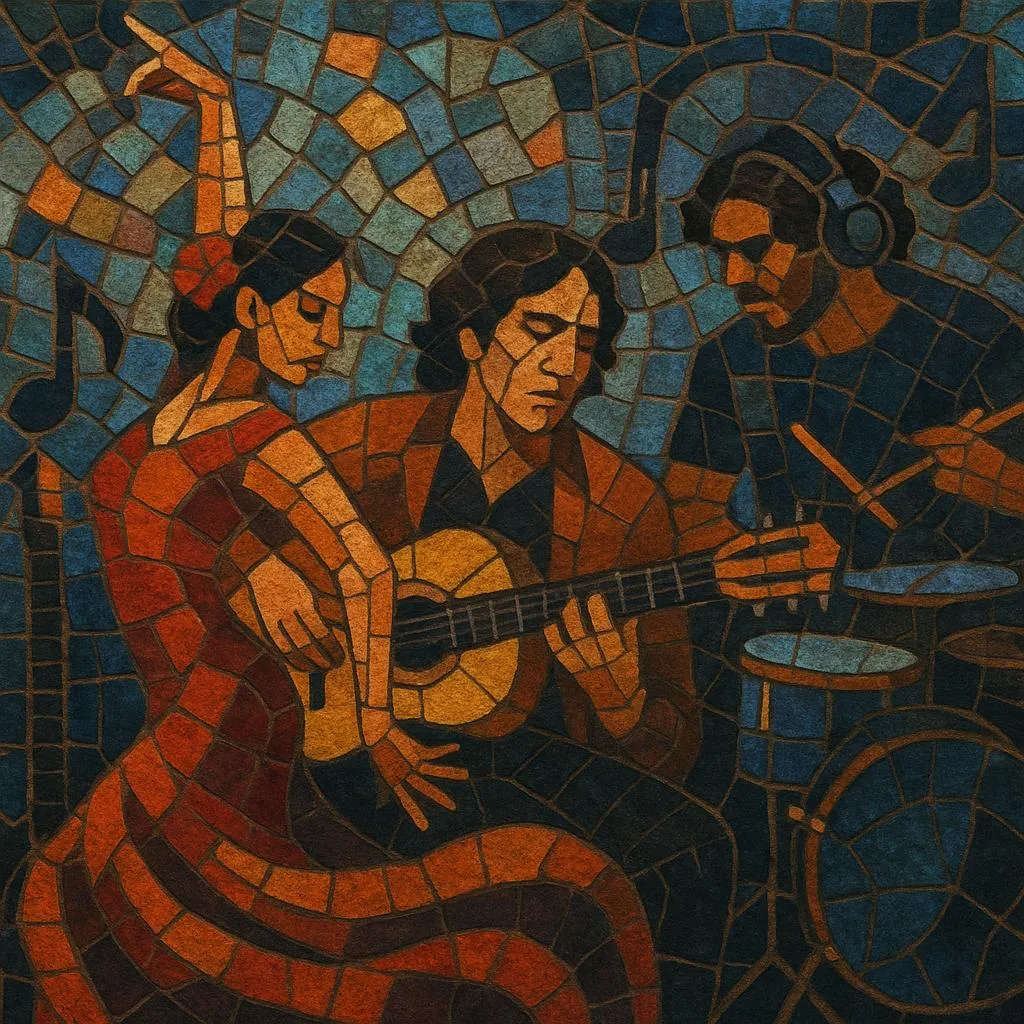
Flamenco fusion blends the rhythmic, melodic, and vocal language of flamenco with contemporary forms such as rock, jazz, funk, hip hop, and electronic music.

At its core are flamenco palos (forms) like bulería, tangos, soleá, and rumba, carried by compás (cyclical meters), palmas (handclaps), and cante (vocal melisma). In fusion settings these are combined with drum kits and bass grooves, jazz harmonies, rock guitars, electronic production, and even rap flows, expanding flamenco’s expressive palette while keeping the duende-driven intensity that defines it.

The result is a style that can move from hypnotic Phrygian vamps to heavy riffs and breakbeats, from intimate cante jondo phrasing to expansive, cinematic arrangements—rooted in Andalusia yet open to global sounds.


Sources: Spotify, Wikipedia, Discogs, RYM, MB, user feedback and other online sources

History

Early crossovers (late 1960s–1970s)

Flamenco’s earliest modern hybrids grew from collaborations between virtuoso guitarists and adventurous singers. Explorations with jazz harmony and extended ensembles began to open space for drum kits, electric bass, and modal vamping alongside traditional compás. These experiments established the vocabulary for marrying bulería and tangos grooves to non‑flamenco instrumentation.

Nuevo impulso (1980s)

In the 1980s, a new generation of Spanish artists brought flamenco into dialogue with rock, blues, and pop. Street‑level rumba flamenca and Catalan rumba aesthetics mixed with electric guitars and backbeat, while jazz players embraced Phrygian modes and compás subdivisions. The era normalized palmas with drum set, cajón with electric bass, and cante over chord progressions beyond the Andalusian cadence.

Globalization and club culture (1990s–2000s)

As “world music” circuits grew, flamenco fusion expanded into hip hop, trip‑hop, and electronic downtempo. Producers sampled palmas, looped bulería cycles, and layered cante over breakbeats and synth pads. Festival circuits and international labels helped codify flamenco fusion as a flexible, exportable identity that could sit between jazz festivals, rock stages, and dance clubs.

2010s–present

A digital‑native wave has integrated urban genres—trap, R&B, and electronic pop—while maintaining flamenco’s vocal timbres and rhythmic DNA. Studio craft (side‑chained pads, 808s, chopped palmas) now sits comfortably with nylon‑string guitar, cajón, and jaleo. Meanwhile, conservatory‑trained musicians continue to blend advanced jazz harmony with traditional palos, keeping the style both rooted and exploratory.

How to make a track in this genre

Rhythm and compás
•   Start with a flamenco palo and its compás: bulería (12-beat: accents on 12-3-6-8-10), tangos (4/4 with off‑beat palmas), rumba (4/4 with a tresillo/clave feel). •   Layer palmas patterns: mix sordas (soft) and claras (sharp), and interlock with cajón strokes (bajo for downbeats, tonos for slaps). •   If using a drum kit, let kick and snare reinforce compás accents rather than a strict rock backbeat; add ghost notes that mimic palmas.
Harmony and melody
•   Use the Phrygian and Phrygian dominant colors central to flamenco; the Andalusian cadence (iv–III–II–I in Phrygian) remains a staple. •   For jazz inflection, treat a one‑chord Phrygian vamp as a modal canvas, adding upper extensions (♭9, ♮9, 11, ♭13) while preserving flamenco tension. •   Compose vocal lines with melismas and micro‑ornamentation; lean into portamenti and appoggiaturas typical of cante.
Instrumentation and texture
•   Core: flamenco guitar (rasgueados, picado, alzapúa), palmas, cajón, jaleo. •   Fusion layer: electric bass (syncopated ostinati), drums/percussion (shakers, darbuka, timbales as color), keyboards (pad drones, Rhodes), horns/strings for cinematic swells. •   Electronic approaches: sample and loop palmas, side‑chain pads to compás accents, and blend 808 sub with cajón lows.
Production and arrangement tips
•   Keep the guitar’s transient detail (rasgueados) upfront; use transient shaping and midrange clarity (2–5 kHz) so strums cut through. •   Pan palmas in stereo pairs; add short room reverb to simulate a cuadro (small ensemble) feel. •   Build arrangements in cycles: 2–4 compases for verses, expand for estribillos with added jaleo and palmas fuertes.
Lyric themes and performance
•   Respect flamenco’s poetic lineage: metaphors, love and loss, social grit, and place (barrios, caminos). Even in hip hop or pop settings, keep imagery concise and emotive. •   On stage, integrate baile (dance) when possible; choreographic footwork can act as a rhythmic instrument, dialoguing with drums and palmas.

Top tracks

Locked
Share your favorite track to unlock other users’ top tracks

Upcoming concerts

in this genre
Influenced by
Has influenced

Download our mobile app

Get the Melodigging app and start digging for new genres on the go
© 2026 Melodigging
Melodding was created as a tribute to Every Noise at Once, which inspired us to help curious minds keep digging into music's ever-evolving genres.
Buy me a coffee for Melodigging