

Your digging level

For this genre
0/8
🏆
Sign in, then listen to this genre to level up

Description

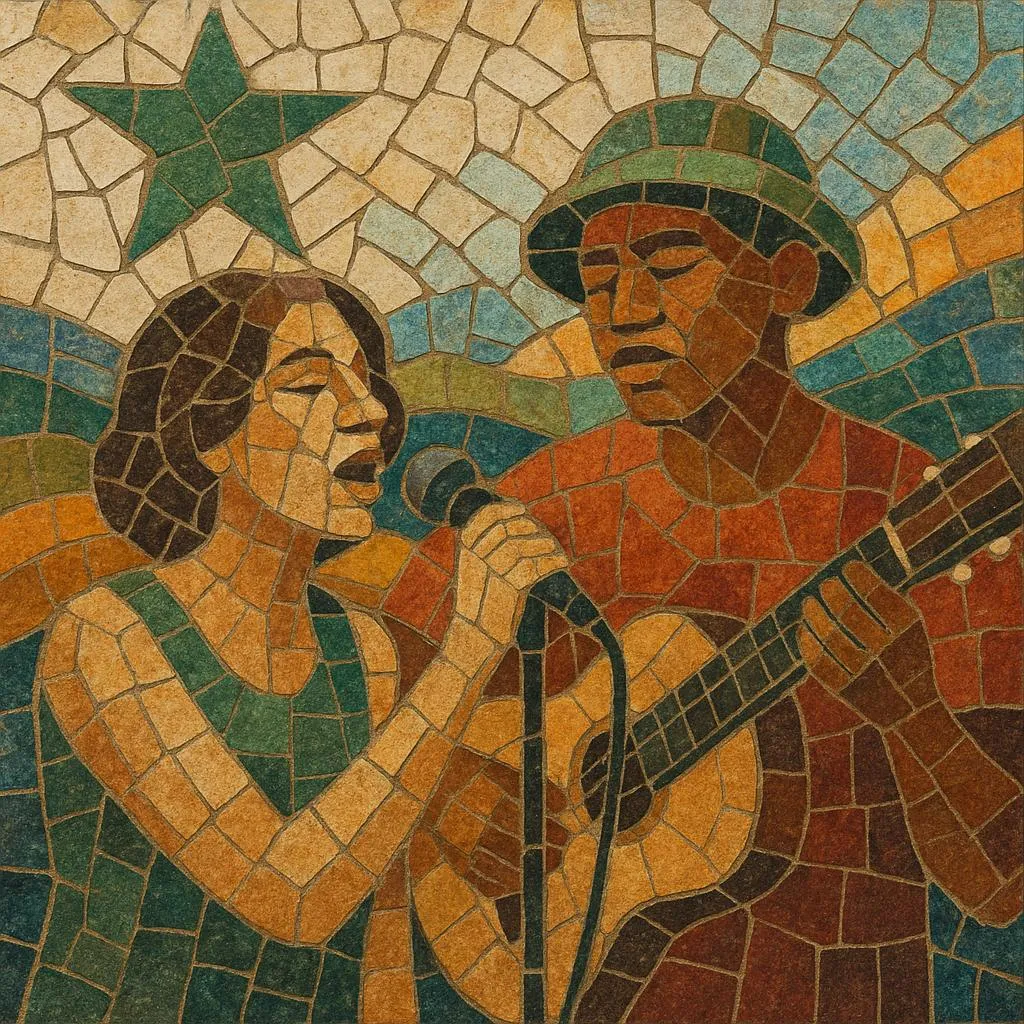
Esperanto music is defined not by a single musical style, but by its linguistic medium: songs written, recorded, and performed in the international language Esperanto. It also sometimes includes music about the Esperanto movement itself.

Because the definition is language‑based, the repertoire spans many styles—folk, rock, pop, hip hop, choral, and singer‑songwriter traditions. Esperanto’s phonetic spelling, regular stress (penultimate syllable), and vowel purity make it well‑suited to singing, and its international community fosters cross‑border collaboration, festivals, and scene‑specific labels.

Typical venues for Esperanto music include concerts at World Esperanto Congresses and youth meetings, dedicated radio streams and podcasts, and independent labels that publish multilingual and Esperanto‑exclusive releases.


Sources: Spotify, Wikipedia, Discogs, RYM, MB, user feedback and other online sources

History

Early origins (1900s–1930s)
•   After L. L. Zamenhof introduced Esperanto (1887), songs appeared early in the movement. The best‑known text, La Espero, received multiple musical settings in the early 20th century and became an informal anthem at meetings. •   Community songbooks and choirs at Esperanto gatherings circulated parlor pieces, marches, and hymns, establishing a participatory song culture rather than a commercial industry.
Postwar consolidation (1950s–1970s)
•   As the international Esperanto community rebuilt after World War II, choral music and folk repertoires flourished at congresses and local clubs across Europe and the Americas. •   Translations of art songs and popular standards into Esperanto coexisted with original compositions, reinforcing the idea that Esperanto music is a medium spanning multiple idioms.
Rock era and underground (1980s–1990s)
•   The global spread of rock and indie culture reached the Esperanto scene. Bands such as Amplifiki and later Persone developed a dedicated following, proving that original Esperanto‑language rock could sustain a scene. •   Independent networks matured: festivals, fanzines, and labels connected fans and artists transnationally. In France, the label Vinilkosmo (founded in the 1990s) became a central publisher and promoter of Esperanto artists across genres.
Digital age and diversification (2000s–present)
•   The internet enabled wider distribution, crowdfunding, and cross‑border collaboration. Acts such as Dolchamar (electro‑rock), La Perdita Generacio (folk‑pop), and Jonny M (reggae/dancehall) demonstrated the stylistic breadth of contemporary Esperanto music. •   Streaming, web radio, and podcasts expanded access, while concerts at World Esperanto Congresses and youth events continued to be major live hubs. Today, Esperanto music ranges from intimate singer‑songwriter releases to full‑band rock and hip hop, unified by language rather than genre.

How to make a track in this genre

Language and prosody
•   Write lyrics in Esperanto (or explicitly about Esperanto). Keep the language natural and idiomatic; Esperanto favors clear, direct phrasing and regular word formation. •   Respect pronunciation: vowels are pure (a, e, i, o, u), stress is penultimate (e.g., kan-TA-to), and spelling is phonetic. Diphthongs include aj, ej, oj, uj, aŭ, eŭ. •   Leverage morphology and rhyme: endings like -o (nouns), -a (adjectives), -e (adverbs), and verb endings -as/-is/-os/-us provide stable rhyme scaffolds without forcing awkward phrasing.
Style and instrumentation
•   Choose any musical style; Esperanto music is genre‑agnostic. Folk (acoustic guitar, violin), rock/pop (drums, bass, guitars, keys), hip hop (beats, samples), and choral arrangements are all common. •   For choral or community singing, favor comfortable tessituras, clear melodic contours, and call‑and‑response refrains that work well in group settings at congresses.
Melody, harmony, and rhythm
•   Melodies benefit from Esperanto’s vowel clarity—sustain open vowels on longer notes and align consonant clusters on shorter or passing notes. •   Harmonies and grooves should match your chosen idiom (e.g., I–V–vi–IV progressions in pop; modal folk cadences; off‑beat skank for reggae/dancehall; backbeat for rock). •   Hip hop tracks should prioritize intelligibility of flow; Esperanto’s regular stress pattern supports tight multisyllabic schemes.
Community and production
•   Collaborate internationally; many projects form across borders. Consider bilingual hooks or translated versions to reach non‑Esperanto listeners. •   Release through indie platforms and labels that already serve the scene; perform at Esperanto meetings and festivals where audiences value lyrical clarity and sing‑along choruses.

Top tracks

Locked
Share your favorite track to unlock other users’ top tracks

Upcoming concerts

in this genre
Influenced by
Has influenced
No genres found

Download our mobile app

Get the Melodigging app and start digging for new genres on the go
© 2026 Melodigging
Melodding was created as a tribute to Every Noise at Once, which inspired us to help curious minds keep digging into music's ever-evolving genres.
Buy me a coffee for Melodigging