Your digging level
Description
Early modern classical is Western art music from the early modern era, spanning roughly the 1500s through the mid-1700s.
It includes late Renaissance polyphony and the major stylistic changes of the Baroque period, such as the rise of tonal harmony, basso continuo, virtuosic instrumental writing, and dramatic vocal genres.
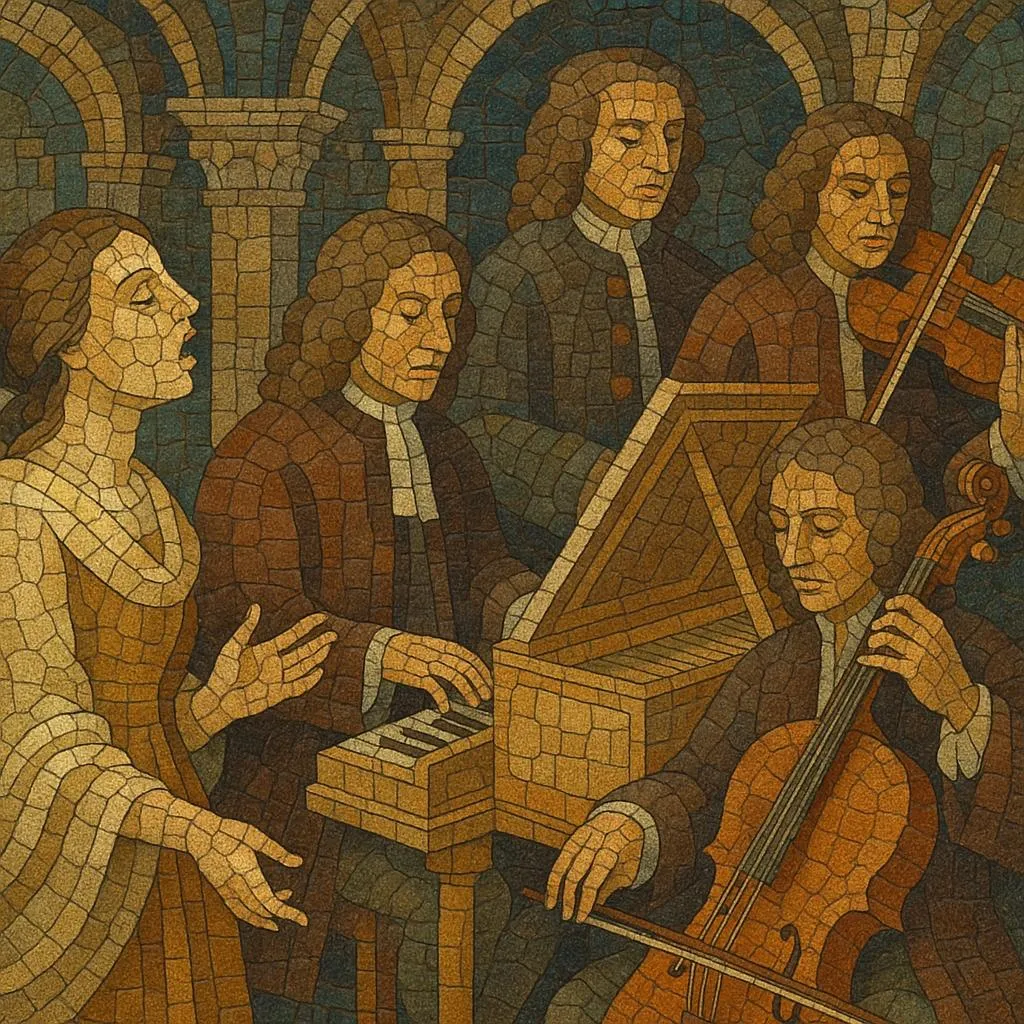
Typical sound worlds range from intricate a cappella choral counterpoint to richly ornamented solo/ensemble music with harpsichord and continuo bass, and from courtly dance suites to large-scale sacred works and early opera.
History
Early modern classical broadly covers Western art music from the 16th century into the Baroque, when music moved from modal counterpoint toward functional tonality and more explicit musical rhetoric.
Composers refined imitative polyphony, controlled dissonance, and text-driven expression in sacred and secular vocal music.
Printing and court/church patronage helped standardize styles across Europe.
The "seconda pratica" emphasized expressive text setting and daring dissonance, especially in vocal music.
Basso continuo became the harmonic backbone, and major/minor tonality consolidated.
New genres flourished: opera, cantata, concerto, sonata, and dance suite.
Instrumental virtuosity and large formal designs expanded, including concerto grosso and mature fugue.
By the mid-1700s, galant and early Classical approaches began to replace dense Baroque textures, setting the stage for the Classical period.