Your digging level

For this genre
0/8
🏆
Sign in, then listen to this genre to level up

Description

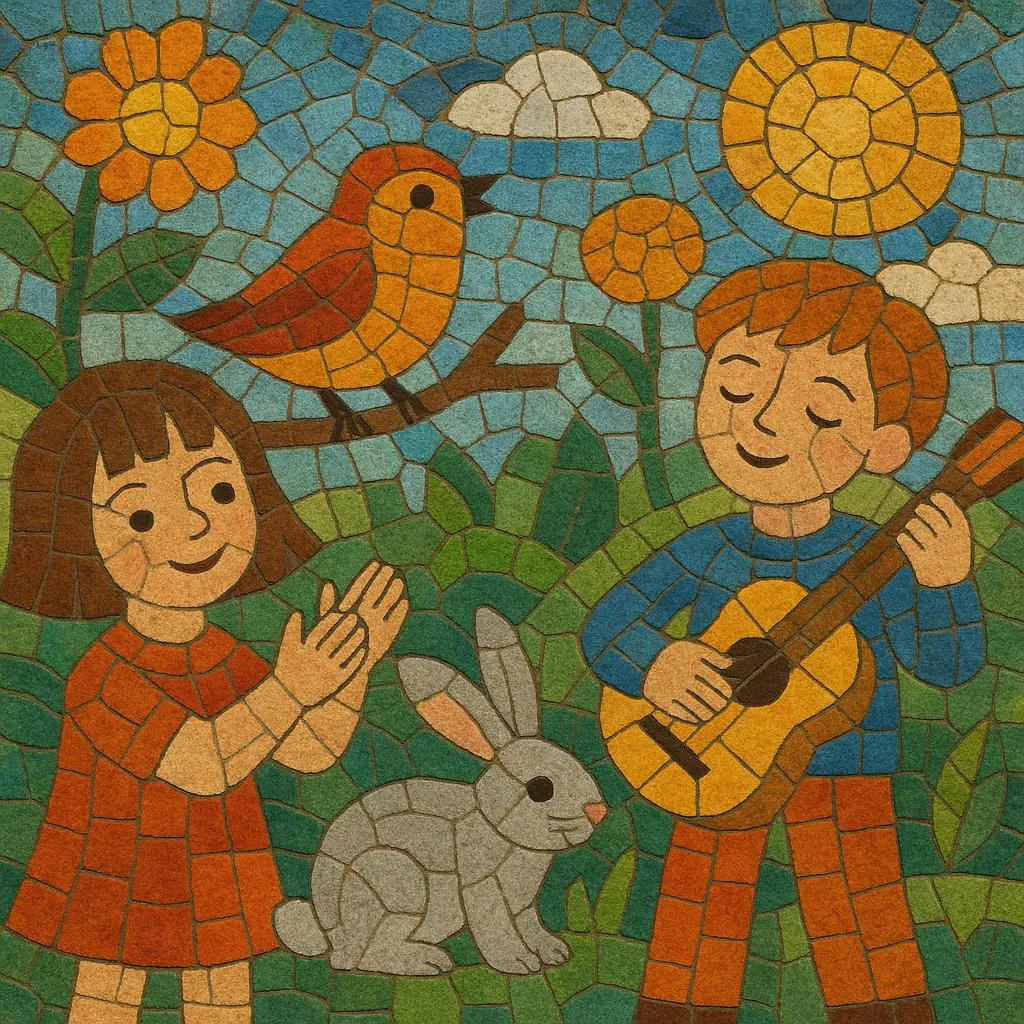
Detskie pesni (Russian: детские песни) refers to Russian-language children's songs created for singing by or to children. The genre blends simple, memorable melodies with clear diction and playful, concrete imagery about nature, animals, friendship, and everyday activities.

Musically it favors diatonic, stepwise tunes in major keys, moderate tempos, and easy rhythmic patterns suited to clapping, marching, or dancing. Arrangements range from solo voice with piano or guitar to light orchestra and children's choirs—especially in radio, TV, and animated film contexts. Pedagogical aims (language, coordination, social values) are often embedded in the lyrics and call-and-response forms.


Sources: Spotify, Wikipedia, Discogs, RYM, MB, user feedback and other online sources

History

Early roots (folk and lullabies)

Detskie pesni grows out of long-standing Russian folk traditions—especially lullabies, counting-out rhymes, and round dances—which provided a store of simple melodies and repetitive texts suitable for children. These materials were transmitted orally in families and schools and later adapted by professional composers.

Institutionalization in the USSR (1930s–1950s)

From the 1930s, children’s repertoire became a priority for state radio, schools, Pioneer Palaces, and publishing houses. Composers and poets were commissioned to write songs with clear moral and educational messages. The rise of children’s choirs and school songbooks standardized style: tuneful, diatonic melodies; march and waltz rhythms; and texts promoting cooperation, curiosity, and care for nature.

Golden age of media songs (1960s–1980s)

The genre flourished via animated films, radio shows, and television variety programs. Composers crafted highly singable themes for child or mixed-age voices, often backed by light orchestras or studio ensembles. Catchy refrains, onomatopoeia, and character songs linked to beloved screen figures helped the repertoire become intergenerational—cherished by children and nostalgic adults alike.

Post-Soviet diversification (1990s–2000s)

With new labels and private studios, productions expanded to pop-leaning children’s ensembles and family-oriented concerts. Synthesizers and contemporary drum patterns joined the traditional piano–guitar–orchestra palette, while lyrics retained concreteness and pedagogical clarity.

Digital era (2010s–present)

YouTube channels, streaming platforms, and edutainment apps revitalized detskie pesni with vibrant visuals, interactive movements, and karaoke-friendly subtitles. Alongside classic repertoire performed by choirs, new creators emphasize participation (claps, movements), phonemic awareness, and bite-sized formats well-suited to mobile viewing.

How to make a track in this genre

Melody and harmony
•   Write in major keys (C, G, F, D) with diatonic, stepwise motion and a tessitura within one octave. •   Craft a hooky refrain with clear cadences (I–IV–V–I) and minimal chromaticism; occasional IV6 or ii adds color. •   Favor short phrases (4–8 bars) and simple call-and-response between soloist and group.
Rhythm and form
•   Use straightforward meters (2/4, 4/4; waltz 3/4 for a gentler feel) at 90–130 BPM. •   Align rhythm with natural speech accents; include clapping or body-percussion cues. •   Forms commonly are verse–refrain, with a bridge that introduces a new action or idea.
Lyrics and themes
•   Choose concrete topics children relate to: animals, seasons, friendship, family, play, and discovery. •   Prefer short, vivid nouns and verbs, onomatopoeia, and benign humor; avoid abstractions and irony. •   Build repetition and cumulative lines to aid memory and participation; embed gentle social or educational messages.
Instrumentation and arrangement
•   Core: voice(s) + piano or guitar; add light percussion (shaker, tambourine), recorder, xylophone, or small strings. •   For larger settings: children’s choir in unison or simple 2-part harmony; keep textures transparent so text remains intelligible. •   In studio pop settings, use soft synth pads, bass, and a steady kick–snare without heavy processing; keep dynamic range listener-friendly.
Performance and pedagogy
•   Encourage movements (clap, march, swirl) tied to specific lyrics or refrains. •   Keep introductions short; add count-ins and clear cues for entries. •   Test singability with actual children; simplify where articulation or breathing is difficult.

Top tracks

Locked
Share your favorite track to unlock other users’ top tracks

Upcoming concerts

in this genre
Influenced by
Has influenced

Download our mobile app

Get the Melodigging app and start digging for new genres on the go
© 2026 Melodigging
Melodding was created as a tribute to Every Noise at Once, which inspired us to help curious minds keep digging into music's ever-evolving genres.
Buy me a coffee for Melodigging