Your digging level
Description
Deep Gothic Post-Punk is a sub-category of post-punk that emphasizes the genre's darker, more atmospheric, and introspective qualities.
It is characterized by a brooding soundscape driven by prominent, melodic basslines, angular yet chiming guitars often drenched in chorus and reverb effects, and baritone vocals that deliver melancholic or existential lyrics.
Unlike the more aggressive or raw forms of punk, this style leans heavily into mood and texture, creating a sonic bridge between the jagged energy of early post-punk and the ethereal soundscapes of dream pop and dark wave.
The 'deep' designation often refers to its association with cult bands and underground gems that existed alongside mainstream goth giants, as well as the modern revivalists who emulate this specific, reverb-heavy aesthetic.

History
The roots of Deep Gothic Post-Punk lie in the late 1970s United Kingdom, emerging from the disintegration of the initial punk rock explosion. As bands sought to move beyond punk's three-chord simplicity, they began incorporating slower tempos, dub-influenced basslines, and atmospheric production techniques.
While bands like Joy Division and The Cure laid the groundwork, a wave of 'deep' artists such as The Chameleons, The Sound, and Sad Lovers & Giants developed a distinct sound that was less theatrical than 'Goth' but darker than standard 'New Wave'. These bands utilized the studio as an instrument, layering flanged guitars and synthesizers to create a sense of space and melancholy. This era also saw the rise of the 'Cold Wave' movement in France and Belgium, with bands like Asylum Party adding a mechanical, icy edge to the sound.
Many of these bands never achieved stadium status, instead cultivating devoted cult followings. Their music often bridged the gap between the aggression of post-punk and the emerging ethereal textures of shoegaze and dream pop. Labels like Factory Records, 4AD, and Midnight Music were pivotal in documenting this sound.
In the 2010s and 2020s, the genre experienced a massive resurgence, often tagged as 'Deep Gothic Post-Punk' on streaming platforms. Modern acts like Molchat Doma, Lebanon Hanover, and Drab Majesty have revitalized the sound, blending vintage drum machine samples with modern production to capture the bleak yet danceable essence of the original era.
Composing Deep Gothic Post-Punk requires a focus on atmosphere, texture, and a driving rhythm section.
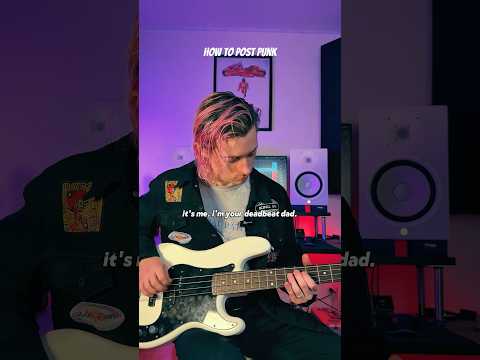
Bass: The bass guitar is often the lead melodic instrument. Use a pick to get a sharp attack and play high on the neck to create melodic hooks that drive the song.
•Guitar: Avoid standard power chords. Instead, play arpeggios or angular single-note riffs. Heavily process the guitar signal with chorus, flanger, delay, and reverb to create a 'watery' or 'icy' tone.
•Drums: Use a mechanical, repetitive beat. This can be a real drummer playing a motorik beat (krautrock style) or a vintage drum machine (like a Roland TR-707) with a gated reverb snare sound.
•Synths: Add subtle layers of analog synthesizers (string pads or cold, sustained notes) to fill out the background and add gloom.
Tempo: Keep the tempo moderate to fast (around 120–150 BPM) to maintain a danceable, driving energy.
•Scales: Stick to minor keys, particularly the Aeolian or Dorian modes, to evoke a sense of sadness and tension.
Vocal Style: Vocals should be deep, resonant, and often monotone (baritone range). A detached, distant delivery works best, often drenched in reverb to sit 'back' in the mix.
•Lyrics: Focus on themes of urban alienation, existential dread, romantic longing, nature, and introspection. Avoid overt aggression; aim for poetic melancholy.


![How to make a post punk / molchat doma / doomer / coldwave / darkwave type beat Fl studio 20 [ 22 ]](https://i.ytimg.com/vi/CO9fQt9gjFk/hqdefault.jpg)

Best playlists