

Your digging level
Description
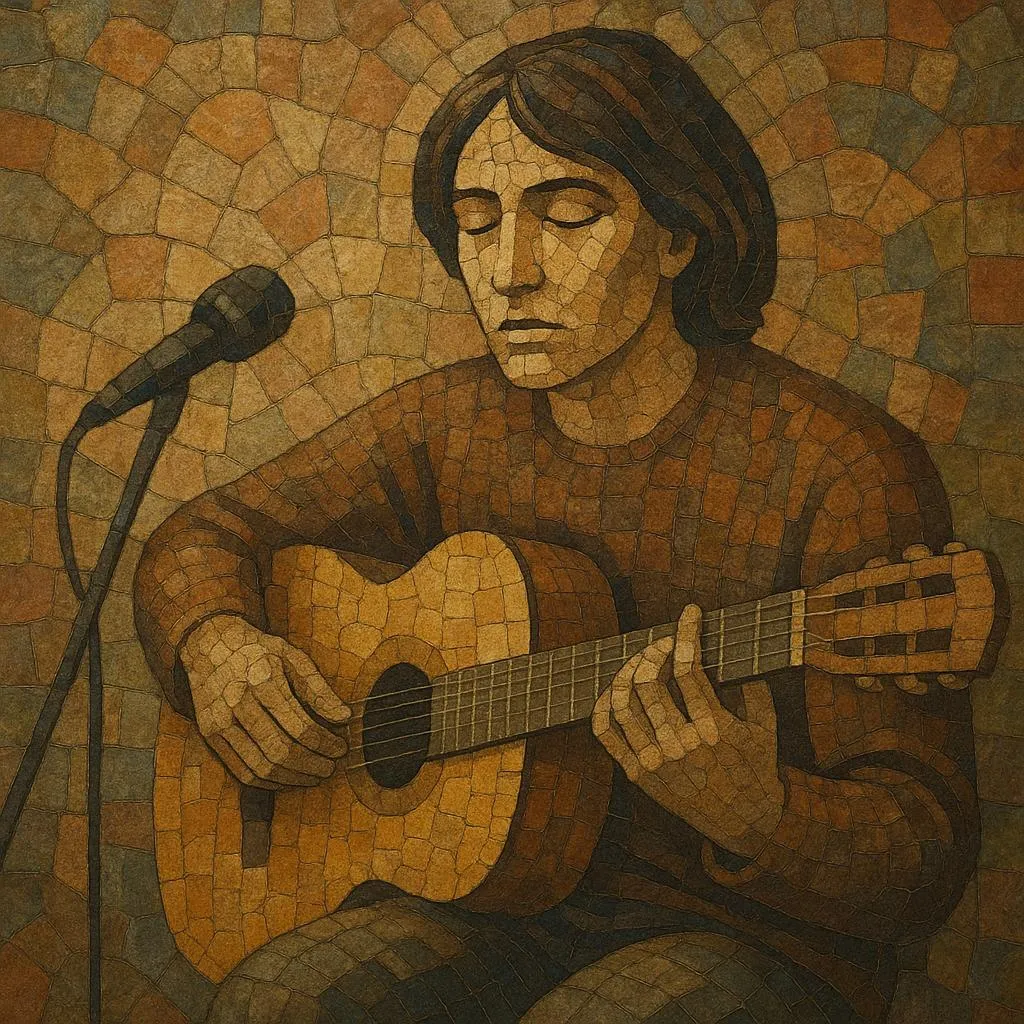
Dainuojamoji poezija ("sung poetry") is a Lithuanian singer‑poet tradition that sets literary texts to intimate, mostly acoustic song forms. It prioritizes the poem’s meaning, diction, and prosody over commercial hooks, using sparse accompaniment—often just voice and guitar—to foreground words and storytelling.
Though it overlaps with the wider singer‑songwriter world, dainuojamoji poezija is distinctive for its close ties to theater, literature, and academic poetry, its preference for small venues, and its roots in late‑Soviet student and cultural circles. Metaphor, allegory, and historical memory are common devices, giving the style a reflective, often bittersweet tone.
History
Dainuojamoji poezija crystallized in Lithuania’s late‑Soviet cultural milieu, where student clubs, theater troupes, and literary circles nurtured a practice of singing poems with minimal accompaniment. The approach paralleled neighboring traditions such as Russian bard song (avtorskaya pesnya) and Polish poezja śpiewana, but quickly developed a Lithuanian voice through local poets, language prosody, and folklore inflections.
Because overt political speech was constrained, artists relied on metaphor, historical allusion, and intimate performance to explore identity, memory, and ethics. Acoustic guitar and unadorned vocals became practical and aesthetic signatures—portable, inexpensive, and perfectly suited to close listening in small halls, universities, and salons. Collaboration with actors, directors, and poets embedded the genre in theater culture as well.
After 1990, festivals, concert series, and recordings broadened the genre’s audience. The tradition’s literary focus meshed with a renewed interest in national history and language. Younger performers absorbed folk, jazz, and chamber colors while keeping the primacy of text. Dedicated singer‑poetry gatherings and theater productions helped canonize seminal performers and mentor new voices.
Today, dainuojamoji poezija coexists with indie folk and modern singer‑songwriter scenes. Artists set classic and contemporary Lithuanian poets, write original verse, and occasionally incorporate strings, reeds, or subtle electronics without losing the conversational intimacy that defines the style. Its influence persists across Lithuanian acoustic music, theater‑song, and literature‑forward popular songwriting.
-
•
Select or write the poem and mark stresses/caesuras.
•Sketch a simple harmonic loop that supports the poem’s emotional arc.
•Improvise sung speech over the loop to discover natural melodic contours.
•Orchestrate sparingly; arrange countermelodies that never mask key words.
•Rehearse elocution as much as pitch—clarity of language is the “lead instrument.”

Best playlists

![Domantas Razauskas - GERIAUSIOS DAINOS [ rinkinys ]](https://i.ytimg.com/vi/rVTTTIV24oY/hqdefault.jpg)





