Your digging level

For this genre
0/8
🏆
Sign in, then listen to this genre to level up

Description

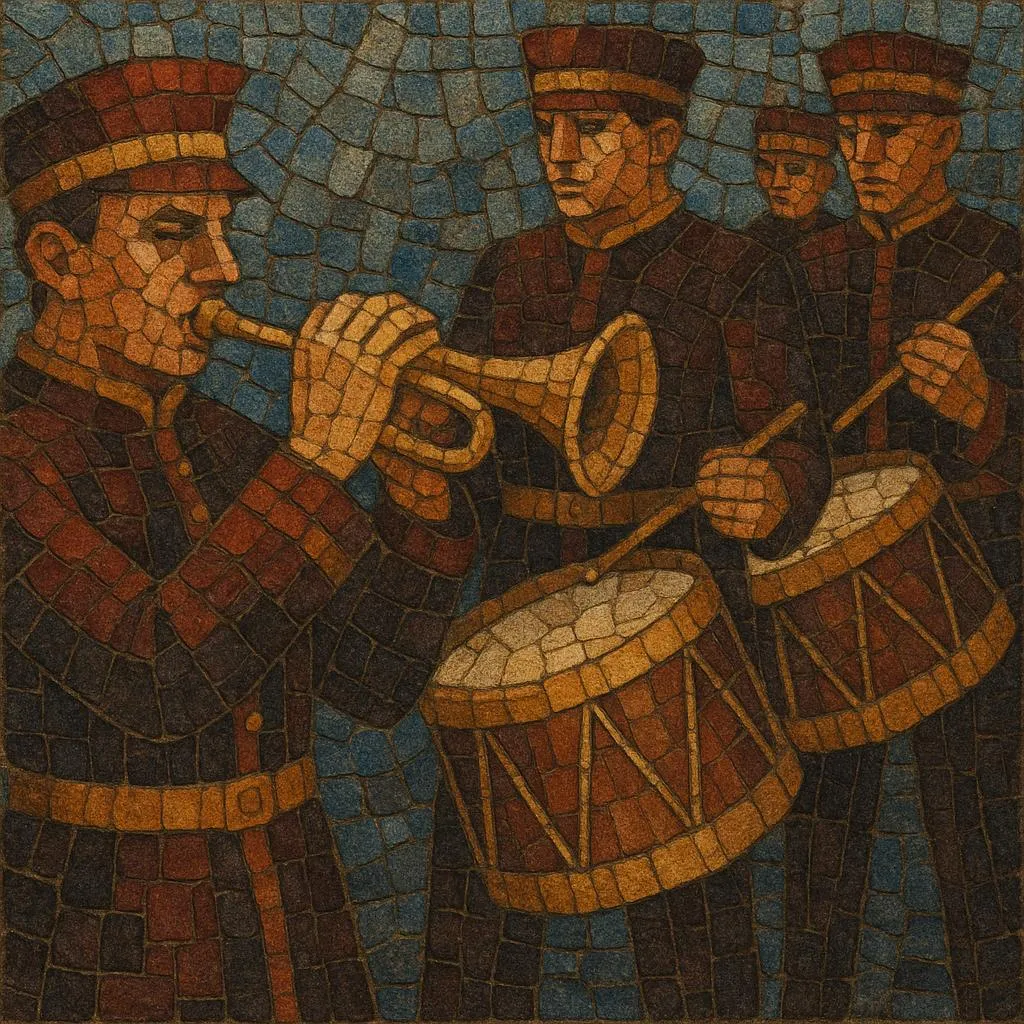
Cornetas y tambores (“cornets and drums”) is a devotional, martial style of Spanish processional band music heard most prominently during Holy Week (Semana Santa), especially in Andalusia. It is performed by brass-and-percussion ensembles whose historical core was the military bugle (corneta) and snare/bass drums accompanying Catholic processions.

The idiom blends solemn religious character with bold, fanfare-like gestures and a steady march pulse. Melodies are often minor or modal (with Andalusian/Phrygian color), arranged in call-and-response between cornet choirs and drums, and shaped with dynamic swells to match the ritual drama of the pasos (floats) in procession.


Sources: Spotify, Wikipedia, Discogs, RYM, MB, user feedback and other online sources

History

Origins (late 19th–early 20th century)

Cornetas y tambores grew out of Spanish military bugle-and-drum traditions that were invited into Catholic processions as devotional escorts. In Andalusia—especially Seville—cofradías (brotherhoods) began formalizing these ensembles in the early 1900s as processional bands distinct from full wind bands, emphasizing cornet/bugle calls and martial drumming for penitential rites.

Consolidation and identity (mid–20th century)

By the mid-century, the style had a recognizable profile: compact brass forces centered on cornets/bugles with snare, bass drum, and cymbals, performing solemn marches at a slow processional tempo. Repertoires expanded from simple fanfares and traditional hymns to composed processional marches written specifically for Holy Week.

Modern expansion (1970s–1990s)

From the late 1970s, leading Sevillian bands professionalized the sound, refining intonation and arrangement practice and—crucially—adding lower brass (trombones, euphoniums, tubas) to enrich harmony while keeping the cornet-led identity. This period standardized the distinction between three Holy Week band types: (1) bandas de cornetas y tambores; (2) agrupaciones musicales (larger brass ensembles with broader harmony); and (3) bandas de música (full wind bands).

Today

Cornetas y tambores remains a hallmark of Andalusian Holy Week, with renowned ensembles touring widely and recording dedicated march repertoires. While the core language stays martial and devotional, contemporary composers incorporate richer harmonies and Andalusian melodic turns, keeping the genre vibrant across Spain and among diaspora communities.

How to make a track in this genre

Ensemble and instrumentation
•   Core: cornets/bugles (traditionally in B♭/E♭), snare drums (cajas), bass drums (bombos), and cymbals. •   Modern practice often adds trumpets, trombones, euphoniums/baritones, and tubas to thicken harmony while keeping cornet lines front-and-center.
Tempo, meter, and rhythm
•   Processional tempo: typically 60–72 BPM to match walking pace of the paso (float). •   Meters: mostly 2/4 or 4/4. •   Drumming emphasizes martial rolls, dotted figures, and cadence calls; cymbals articulate structural accents and climaxes.
Melody and harmony
•   Melodic language favors minor and Phrygian inflections (Andalusian color), lyrical yet declamatory. •   Frequent call-and-response between cornet choirs; sustained brass chorales for contrast. •   Harmony is functional and bold: triads, open fifths, and parallel thirds/sixths; Andalusian cadential movement (e.g., iv–III–II–I flavors in a minor context) appears for dramatic effect.
Form and dynamics
•   Clear, sectional forms: opening fanfare → lyrical middle → reprise/climax → solemn coda. •   Dynamic shaping is essential: crescendi time with the levantá (the float’s lift), sudden hushes for turns or entrances, and grand swells at visual focal points.
Compositional/arranging tips
•   Write memorable upper-voice cornet themes; support with simple, weighty inner brass voicings. •   Reserve the lowest brass for cadences and tuttis to preserve transparency in motion. •   Orchestrate percussion to cue transitions and heighten ritual drama; avoid over-filling the texture at walking pace. •   Keep pieces practical for street performance: stable intonation zones, breathable phrases, and manageable endurance for players over long routes.

Top tracks

Locked
Share your favorite track to unlock other users’ top tracks

Upcoming concerts

in this genre
Influenced by
Has influenced
No genres found

Download our mobile app

Get the Melodigging app and start digging for new genres on the go
© 2026 Melodigging
Melodding was created as a tribute to Every Noise at Once, which inspired us to help curious minds keep digging into music's ever-evolving genres.
Buy me a coffee for Melodigging