Your digging level

For this genre
0/8
🏆
Sign in, then listen to this genre to level up

Description

Commons (often short for Creative Commons music) is not a single sonic style but a community-driven practice of releasing music under Creative Commons licenses that explicitly permit legal sharing, remixing, and reuse.

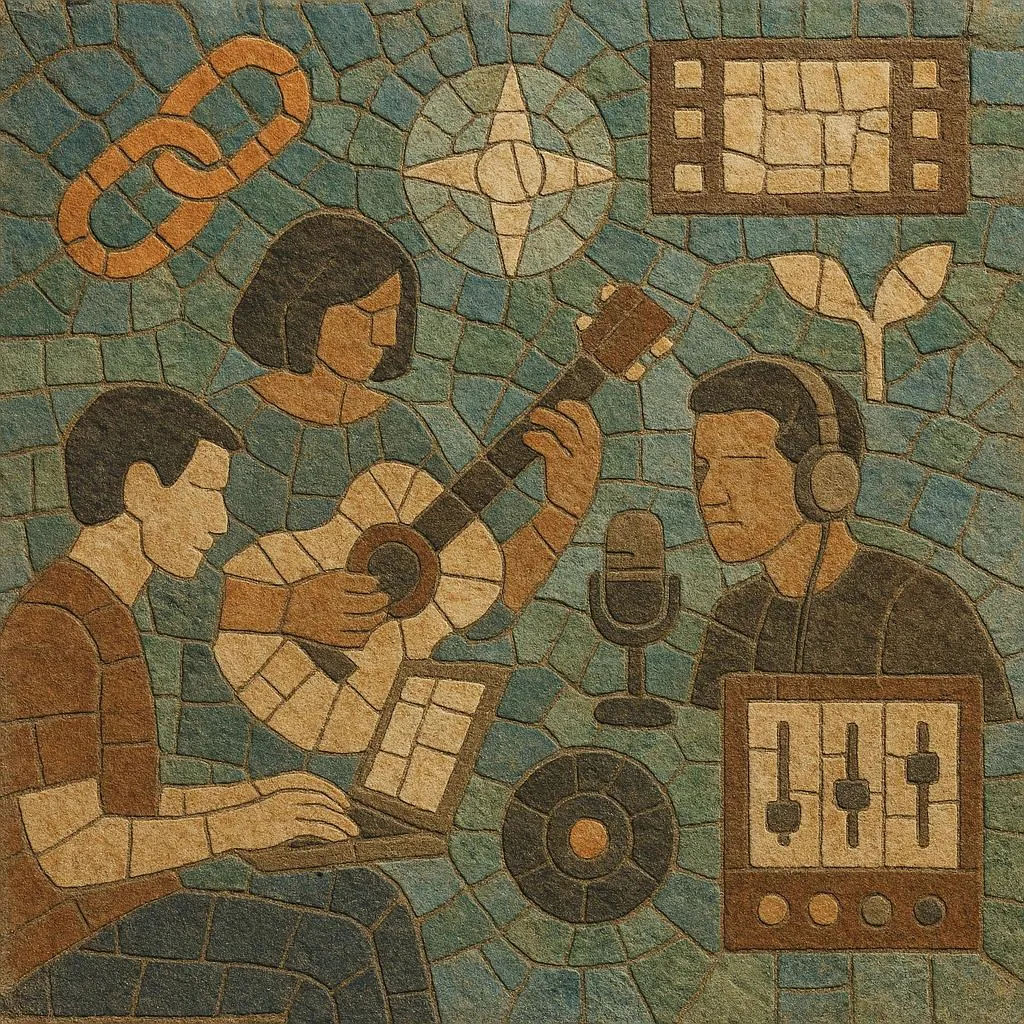
As a result, the "commons" repertoire spans many aesthetics—ambient, electronica, indie, hip hop, and post‑rock are especially prevalent—yet is unified by open licensing, netlabel culture, and an ethos of attribution and collaboration. Artists typically publish on open platforms and netlabels, provide stems for remixing, and cultivate communities of derivative works (for games, videos, podcasts, and other media).


Sources: Spotify, Wikipedia, Discogs, RYM, MB, user feedback and other online sources

History

Origins (early 2000s)

Creative Commons was founded in 2001 to provide standard, machine‑readable licenses that broaden what listeners can legally do with media. Musicians quickly adopted CC licenses to bypass traditional gatekeepers and to encourage legal sharing and remixing online.

Netlabels and open platforms

From the mid‑2000s, netlabels and CC‑friendly platforms (e.g., ccMixter, Jamendo, Free Music Archive, archive.org’s Netlabels collection) catalyzed a flourishing ecosystem. Genres most compatible with home studios—ambient, electronica, downtempo, indie, experimental hip hop—became especially visible, but the commons umbrella remained stylistically diverse.

2010s–present: Embedded in creator economies

As online video, indie games, and podcasting exploded, CC music provided legally reusable soundtracks. Artists increasingly released stems and instrumental versions, enabling derivative works at scale. Some mainstream acts experimented with CC releases, while thousands of independent creators built sustainable careers through open licensing, micro‑patronage, and sync‑friendly distribution.

Ethos and practice

The commons is defined by licensing and community more than by sound: attribution, transparency of rights, remix culture, and access. Its history tracks the broader open‑culture movement, from early netlabel culture to today’s creator‑driven ecosystems.

How to make a track in this genre

Choose an open license first
•   Decide what you allow: CC BY (free use with attribution), CC BY-SA (share‑alike), CC BY-NC (non‑commercial), CC BY-ND (no derivatives), or combinations. •   Favor BY or BY‑SA if you want remixes and wide distribution; avoid ND if you intend to foster derivative works.
Write and produce with reuse in mind
•   Provide clean mixes plus instrumentals and stems (drums, bass, lead, vocals) so others can adapt or sync your music. •   Avoid uncleared samples; use self‑made, licensed, or public‑domain material to keep downstream use legal. •   Common tempos and feels that travel well: 70–110 BPM for ambient/downtempo and lofi; 80–95 BPM for boom‑bap; 120–128 BPM for house‑leaning cues; 60–80 BPM for cinematic beds. •   Harmonies: keep sections loop‑friendly (4–8 bar phrases), use diatonic progressions for easy editing, and export alternate cue lengths (15/30/60 sec, stingers).
Sound design and mix
•   Prioritize clarity and headroom over extreme loudness (e.g., target around −14 LUFS for platforms; keep true peaks ≤ −1 dBTP). •   Deliver lossless masters (WAV/AIFF), plus high‑quality MP3/FLAC; embed metadata and license info in files and readme.
Publish and participate
•   Distribute on CC‑friendly platforms and netlabels; clearly state the license on pages and artwork. •   Upload stems to remix hubs (e.g., cc‑oriented communities) and tag works for discoverability (tempo, key, mood, use‑case). •   Credit upstream sources and respond to derivative creators—attribution and reciprocity are central to the commons ethos.

Top tracks

Locked
Share your favorite track to unlock other users’ top tracks

Upcoming concerts

in this genre
Has influenced

Download our mobile app

Get the Melodigging app and start digging for new genres on the go
© 2026 Melodigging
Melodding was created as a tribute to Every Noise at Once, which inspired us to help curious minds keep digging into music's ever-evolving genres.
Buy me a coffee for Melodigging