Your digging level
Description
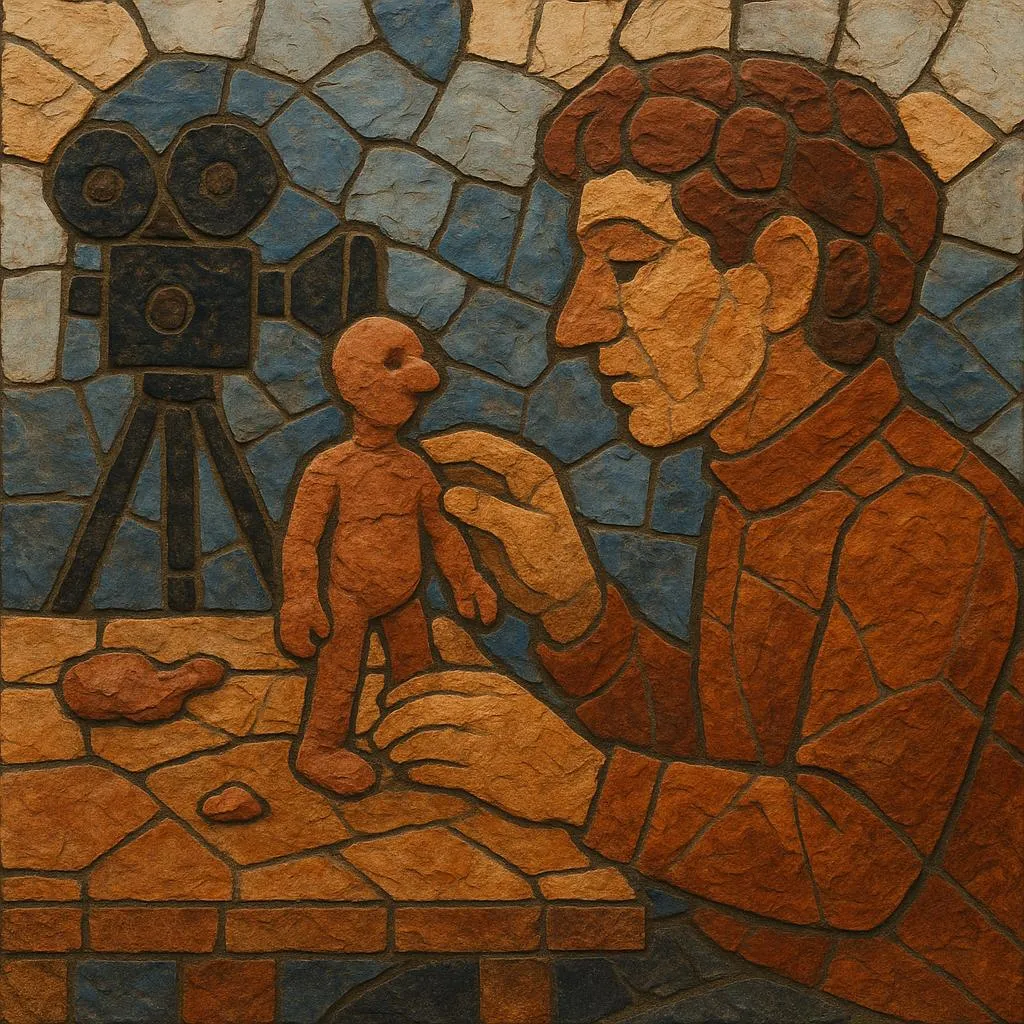
Claymation (clay animation) is a form of stop-motion animation in which characters, props, and environments are sculpted from clay or similarly pliable materials such as Plasticine, then photographed frame by frame to create the illusion of movement.
Each frame captures a tiny repositioning of the clay model; when the frames are played in sequence, the figures appear to come alive. Claymation covers several sub-techniques, from fully articulated puppets built around wire or metal armatures, to clay painting (moving, smearing, and reshaping clay on a flat surface), and replacement animation (swapping pre-sculpted mouth shapes or entire heads).
Beyond film and television, claymation became a signature look in commercials and music videos thanks to its tactile charm, squash-and-stretch expressiveness, and hand-made imperfections that audiences find personable and nostalgic.
History
Clay as an animation medium appeared very early in cinema history. Plasticine was invented in the late 19th century, and filmmakers in the 1900s experimented with modeling clay for stop-motion gags, morphs, and object animation tests. These experiments established the basic frame‑by‑frame methodology that claymation still uses.
Television’s rise created a demand for short, eye‑catching animation. Art Clokey’s Gumby (debuting in the mid‑1950s) popularized clay characters for a mass audience and codified many production practices (armatures inside clay, modular facial features, and minimal set designs optimized for rapid shooting). By the 1970s, regional studios and independent animators were refining lighting, rigging, and replacement‑mouth systems to boost production value and expressivity.
Will Vinton coined and trademarked the term “Claymation” in the late 1970s, and his studio’s work (e.g., the California Raisins ads) brought the look into mainstream advertising and music culture. In the UK, Aardman Animations and director Nick Park achieved international acclaim with Creature Comforts and Wallace & Gromit, demonstrating how clay’s tactile properties enhance character acting, comedic timing, and physical world‑building. The period also saw striking auteur uses of clay by Bruce Bickford and Jan Švankmajer, who pushed surreal morphing and unsettling textures.
Digital cameras, motion‑control rigs, and compositing tools streamlined production while preserving the handmade look. Studios increasingly mix clay with 3D‑printed parts, replacement faces, and digital cleanup, while independent creators leverage affordable DSLR or mirrorless cameras and software onion‑skinning. Claymation remains a go‑to aesthetic for commercials, short films, title sequences, and music videos, prized for its warmth, humor, and vivid physicality in an otherwise digital landscape.