

Your digging level

For this genre
0/8
🏆
Sign in, then listen to this genre to level up

Description

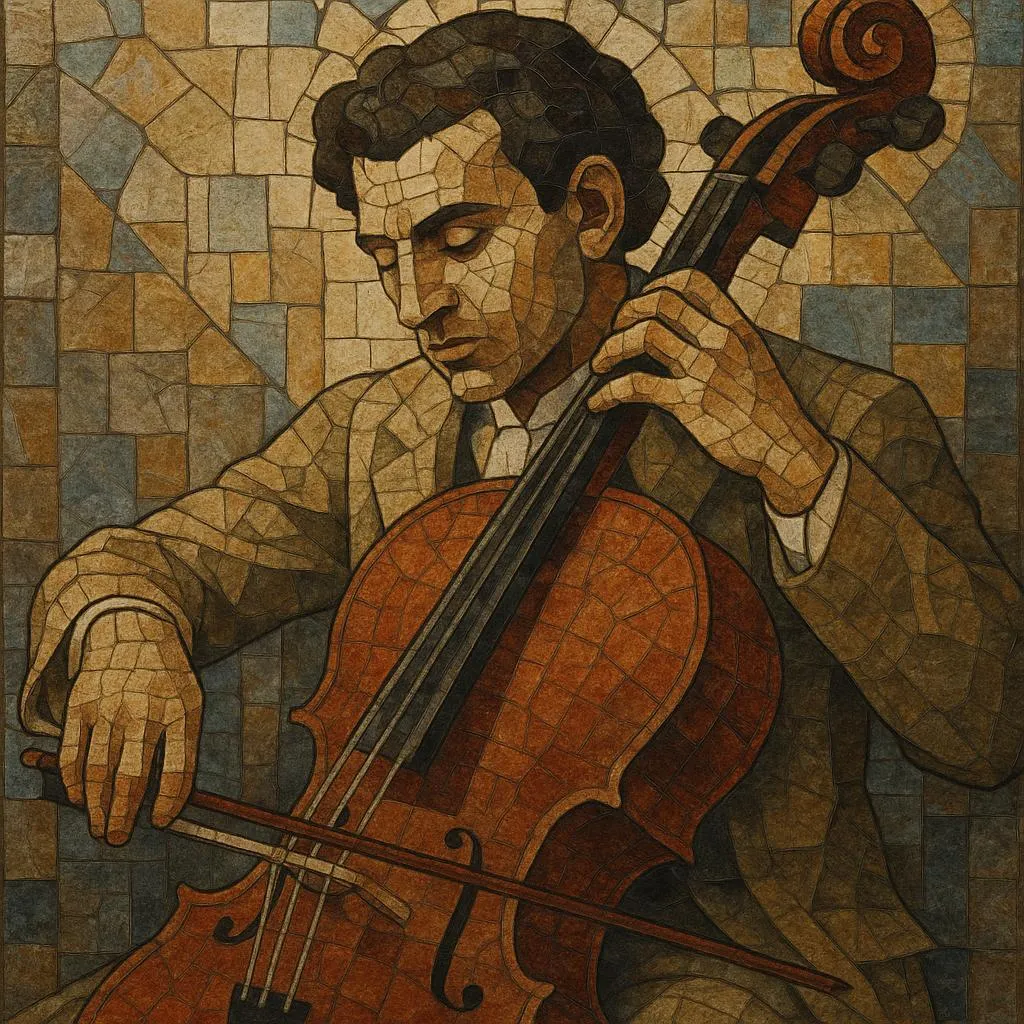
Classical cello refers to the body of Western art-music repertoire, performance practices, and techniques centered on the violoncello from the Baroque era to the present.

It encompasses solo works (unaccompanied suites, caprices), concertos with orchestra, sonatas with keyboard, chamber music (trios, quartets, quintets), and orchestral parts. The style prizes nuanced bow control, cantabile phrasing, and a wide dynamic palette, exploiting the instrument’s baritone-to-tenor range and vocal expressivity.


Sources: Spotify, Wikipedia, Discogs, RYM, MB, user feedback and other online sources

History

Origins (Late 17th–18th centuries)

The cello emerged in northern Italy as a bass member of the violin family, replacing various viols in continuo roles. By the early 1700s, composers such as Giuseppe Maria Jacchini and Antonio Vivaldi were writing concertos and sonatas that established the cello as a solo voice. In this period, scordatura and continuo accompaniment were common; articulation was lighter, and gut strings shaped a warm, flexible tone.

Classical Era (Late 18th century)

The instrument gained formal solo stature with concertos and sonatas by Luigi Boccherini and Joseph Haydn, while the rise of the fortepiano reshaped duo writing (cello and keyboard as equal partners). Notation norms stabilized across bass, tenor, and treble clefs, and bow design gradually evolved, improving projection and clarity.

Romantic Expansion (19th century)

With the Romantic emphasis on lyricism and personal expression, the cello’s singing quality flourished. Works by Schumann, Saint-Saëns, and Dvořák expanded the concerto and chamber repertoire, while salon miniatures and character pieces proliferated. Technical demands increased—double-stops, high-register cantabile, advanced shifts—supported by modernized Tourte bows and metal-wound strings.

20th Century to Contemporary

The instrument became a laboratory for new sounds and forms. Composers like Kodály (solo sonata with folk-modal language and extended techniques), Prokofiev, Shostakovich, and Britten deepened the solo canon, while avant-garde and spectral composers explored harmonics, sul ponticello, col legno, microtonality, and electronics. Historically Informed Performance revitalized Baroque cello practices with period bows and gut strings, coexisting with modern techniques. Today the classical cello tradition is global, interweaving concert hall repertoire, commissions, and cross-genre collaborations.

How to make a track in this genre

Instrument and Range
•   Standard tuning: C–G–D–A (low to high). Exploit the cello’s vocal middle register and brilliant upper positions; use bass, tenor, and treble clefs for clarity. •   Timbres and techniques: arco (legato, détaché, spiccato, sautillé, martelé), pizzicato (left/right hand), harmonics (natural/ artificial), sul tasto, sul ponticello, col legno, ricochet, portamento, tasteful vibrato.
Forms and Settings
•   Solo: suites, partitas, caprices, and contemporary études that mix melody with implied harmony. •   Duo: sonatas for cello and keyboard; write true dialogue (avoid mere accompaniment). Balance registers so piano texture doesn’t mask cello midrange. •   Concerto: classical three-movement archetype (fast–slow–fast) or modern alternatives. Ensure orchestration leaves space—doubling with bassoons/violas sparingly; avoid persistent unison with horns or low winds that bury the cello. •   Chamber: string trios/quartets/quintets, piano trios/quartets; allocate inner-voice lyric solos and counter-melodies to the cello.
Harmony, Melody, Rhythm
•   Harmony: from functional tonality (Baroque/Classical) to late‑Romantic chromaticism, modal/folk inflections, and post-tonal or spectral palettes. •   Melody: cantabile lines with breath-like phrasing, strategic shifts to higher positions for intensity. Use appoggiaturas, suspensions, and expressive leaps. •   Rhythm: Baroque dance-derived figures, Classical periodicity, Romantic rubato, and modern asymmetric meters or ostinati. Allow space for bow changes and resonance.
Notation and Balance
•   Clefs: bass for low register, tenor for mid-high, treble for soaring lines; switch early to keep reading natural. •   Dynamics/Articulation: specify hairpins and bowings that reveal gesture; mark color changes (sul tasto/pont.) precisely. •   Orchestration: thin textures below 300 Hz when the cello leads; double cello lines an octave above with clarinet/viola sparingly for warmth without masking.
Extended and Contemporary Practices
•   Employ multiphonics, microtonal inflections, overpressure, bow noise, and live electronics judiciously; provide clear performance notes. •   For HIP styles, favor lighter articulation, reduced vibrato, terraced dynamics, and continuo awareness (figured-bass logic).
Interpretation and Production
•   Encourage rubato and phrasing cues at cadences. Write breathing marks (commas) for long spans. •   For recording, capture body resonance (bridge mic + room pair); avoid over-boosting 200–300 Hz to keep clarity.

Top tracks

Locked
Share your favorite track to unlock other users’ top tracks

Upcoming concerts

in this genre
Influenced by
Has influenced

Download our mobile app

Get the Melodigging app and start digging for new genres on the go
© 2026 Melodigging
Melodding was created as a tribute to Every Noise at Once, which inspired us to help curious minds keep digging into music's ever-evolving genres.
Buy me a coffee for Melodigging
