Your digging level
Description
Chabad niggunim are devotional melodies of the Chabad–Lubavitch movement within Hasidic Judaism. They are sung to cultivate inward contemplation (hisbonenus) and cleaving to the Divine (deveikus), and to channel communal joy during farbrengens (Hasidic gatherings), prayer, and Torah study.
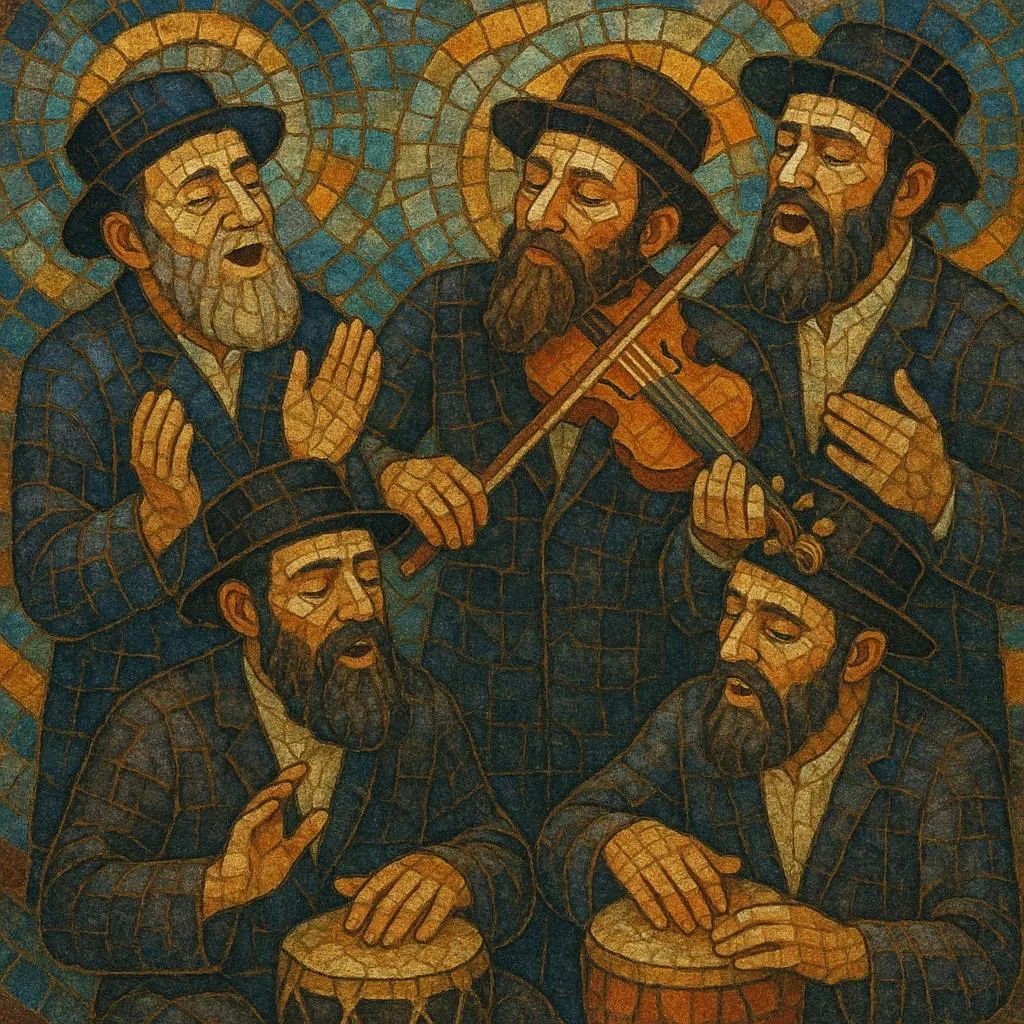
Typically performed a cappella in unison, these melodies range from slow, meditative tunes (niggunim of dveikus) to lively dance songs (niggunim of rikud) and march-like pieces. Musical language often draws on Ashkenazi synagogue modes such as Ahava Rabbah (Freygish/Phrygian dominant) alongside major and minor modalities. Forms are strophic and mantra-like, featuring short motives repeated with gradual intensification, call-and-response, and dynamic crescendos. While primarily wordless, some include brief sacred phrases or Psalm verses; vocables (yai-dai-dai, bim-bam) are common.
In recent decades, selected Chabad niggunim have entered broader Jewish popular music and even mainstream settings through choral arrangements, studio productions, and sampling, while remaining a living spiritual practice in Chabad communities worldwide.
History
Chabad niggunim arose with the founding of Chabad Hasidism by Rabbi Schneur Zalman of Liadi (the Alter Rebbe) in the late 1700s in present-day Belarus/Lithuania. From the outset, niggunim functioned as vehicles for the movement’s intellectual–mystical path, using melody to focus the mind and open the heart. Many iconic tunes are attributed to or curated by successive Rebbes (e.g., the Alter Rebbe’s "Niggun of Four Stanzas," the "Napoleon’s March" tradition, and meditative niggunim tied to specific teachings).
As Chabad communities spread across the Russian Empire, niggunim were taught orally by the Rebbes and their Hasidim and embedded in the rhythms of prayer and farbrengens. Ethnographic collectors and early Jewish-music activists began documenting Hasidic melodies in the early 20th century, but transmission remained primarily communal and experiential.
Soviet repression and the upheavals of the World Wars disrupted public religious life in Eastern Europe. After World War II, Chabad’s center shifted to Brooklyn (Crown Heights). Under Rabbi Menachem Mendel Schneerson, farbrengens, recordings, and educational initiatives helped standardize and disseminate core niggunim. The Nichoach (Nigunei Chabad) series codified repertory for home and communal use.
From the 1970s onward, Chabad niggunim entered the broader Jewish music ecosystem through choirs, singer–songwriters, and concert stages. In the 2000s–2020s, streaming, world-music inflections, and occasional sampling carried select melodies beyond synagogue and farbrengen contexts. Despite these adaptations, the core practice remains a lived, participatory devotional song tradition anchored in Chabad spiritual life.