Your digging level
Description
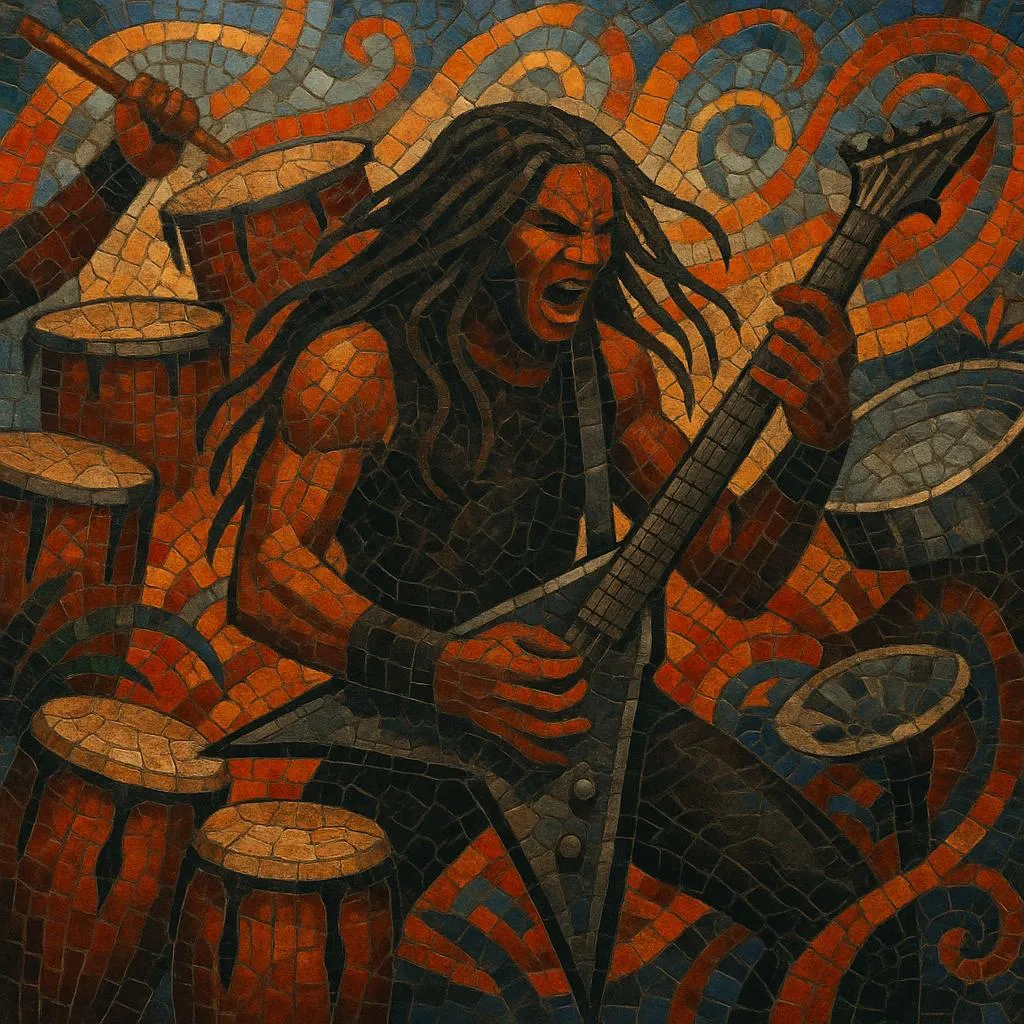
Caribbean metal is a regional umbrella for heavy metal scenes across the islands and coastal rim of the Caribbean. It fuses foundational metal subgenres (thrash, death, groove, black, power) with Afro‑Caribbean rhythmic vocabularies and instruments drawn from reggae, ska, calypso, soca, salsa, merengue, bomba, and plena.
Bands often retain the aggression and distorted timbres of metal while importing Caribbean groove: off‑beat skank upstrokes, one‑drop feels, tumbao bass motion, 3‑2/2‑3 clave references, carnival percussion, and even steelpan and timbales. Lyrically it traverses social critique, post‑colonial identity, spirituality (Rastafari, Santería, Vodou), disaster resilience, and street reportage, delivered in English, Spanish, Kreyòl, and island creoles. The result is a high‑energy, rhythm‑forward metal that can be both mosh‑friendly and danceable.
History
The first recognizable Caribbean metal scenes coalesced in the late Cold War era as local rock communities adopted the aesthetics of the New Wave of British Heavy Metal and early thrash. Cuba (with bands emerging despite cultural headwinds) and Puerto Rico saw early adopters who adapted distorted guitar riffing and double‑kick drumming to island sensibilities and audiences.
During the 1990s, regional bands increasingly blended metal with homegrown rhythms. Puerto Rican and Cuban groups incorporated salsa, bomba/plena, and son motifs into arrangements; Trinidad & Tobago acts brought carnival energy and soca‑adjacent percussion; the Dominican Republic’s growing scene pulled in merengue propulsion. Recording access, cassette/CD exchange, and cross‑island gigs helped a shared Caribbean heavy identity take shape.
The 2000s brought better recording infrastructure and the internet, enabling scenes to connect internationally. Cuban festivals and tours (including visiting extreme‑metal acts), Puerto Rican club circuits, and Trinidadian showcases drew attention to the region’s hybrid metal language. Extreme metal (death, black) flourished alongside groove‑oriented fusions, and bilingual releases broadened reach.
Today, Caribbean metal covers a spectrum from pure extreme styles to hybrid forms that splice in reggae/dancehall, soca, and Afro‑Latin percussion. Diaspora musicians maintain links to island roots while touring Europe and the Americas. Thematically, lyrics increasingly address migration, climate disasters (hurricanes/earthquakes), and cultural survival, while production values approach international standards without sacrificing local rhythmic DNA.