Your digging level
Description
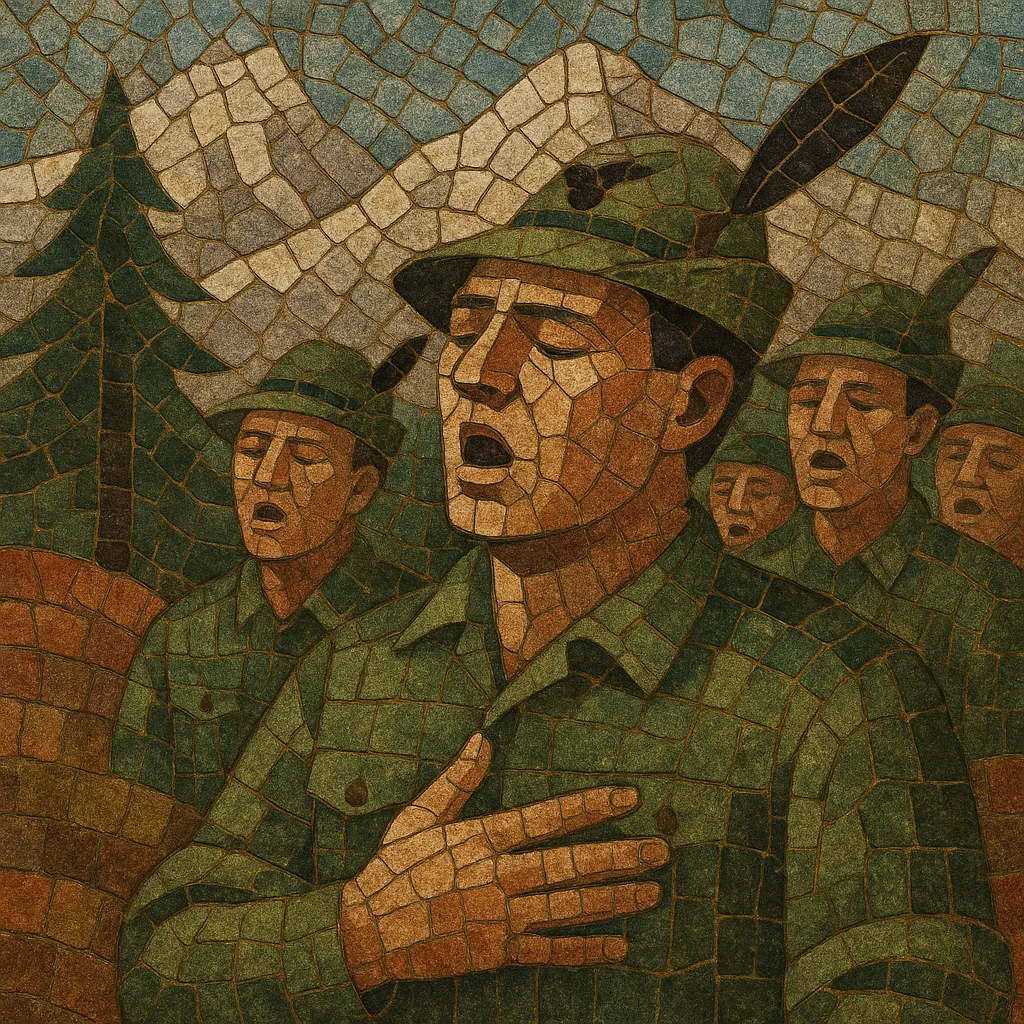
Canto degli Alpini is the choral song tradition associated with the Alpini, Italy’s elite mountain infantry. Rooted in Northern Italian folk melodies and sung primarily by male choirs, these songs celebrate mountains, comradeship, homesickness, and remembrance of the fallen.
Musically, the style favors a cappella performance with rich, warm harmonies (often in TTBB voicing), clear melodic lines, and expressive rubato. Texts are in Italian and regional dialects (e.g., Friulian, Ladin, Piedmontese), with a vocal delivery that alternates between intimate storytelling and resonant, communal choruses.
The repertoire ranges from gentle, pastoral pieces to dignified, march-like songs, using diatonic melodies, modal colorings, and dynamic swells to evoke the Alpine landscape and the collective memory of wartime and peace.
History
The Alpini corps was founded in 1872 to defend Italy’s Alpine borders. Soldiers brought with them the folk songs of Northern Italy, which mixed with barracks and mountain-life traditions to form a recognizable body of "canti degli Alpini." By the 1910s—especially during World War I—these songs crystallized as expressions of camaraderie, hardship, and attachment to the mountains.
In the 1920s and 1930s, community and club choirs in Trentino–Alto Adige, Veneto, and Piedmont began arranging and performing this repertoire publicly. The emergence of dedicated Alpine choirs (notably in Trento) helped stabilize texts, harmonies, and performance practices, moving the songs from oral tradition into concert settings while preserving their a cappella character and regional dialects.
After 1945, the Associazione Nazionale Alpini (ANA) and municipal/civic choirs spread the repertoire nationwide. Annual gatherings (such as the Adunata Nazionale degli Alpini) popularized massed-choir performances, and commercial recordings brought the style to broader audiences. New compositions in an “Alpine choral” idiom joined older soldier and mountain songs, keeping the tradition living rather than purely archival.
Today, canto degli Alpini is performed by professional and amateur choirs across Italy and abroad. While male TTBB ensembles remain typical, mixed and youth choirs also interpret the repertoire. Modern arrangements may feature expanded harmonic palettes, but the core values—clarity of melody, text intelligibility, and communal resonance—remain central.