

Your digging level
Description
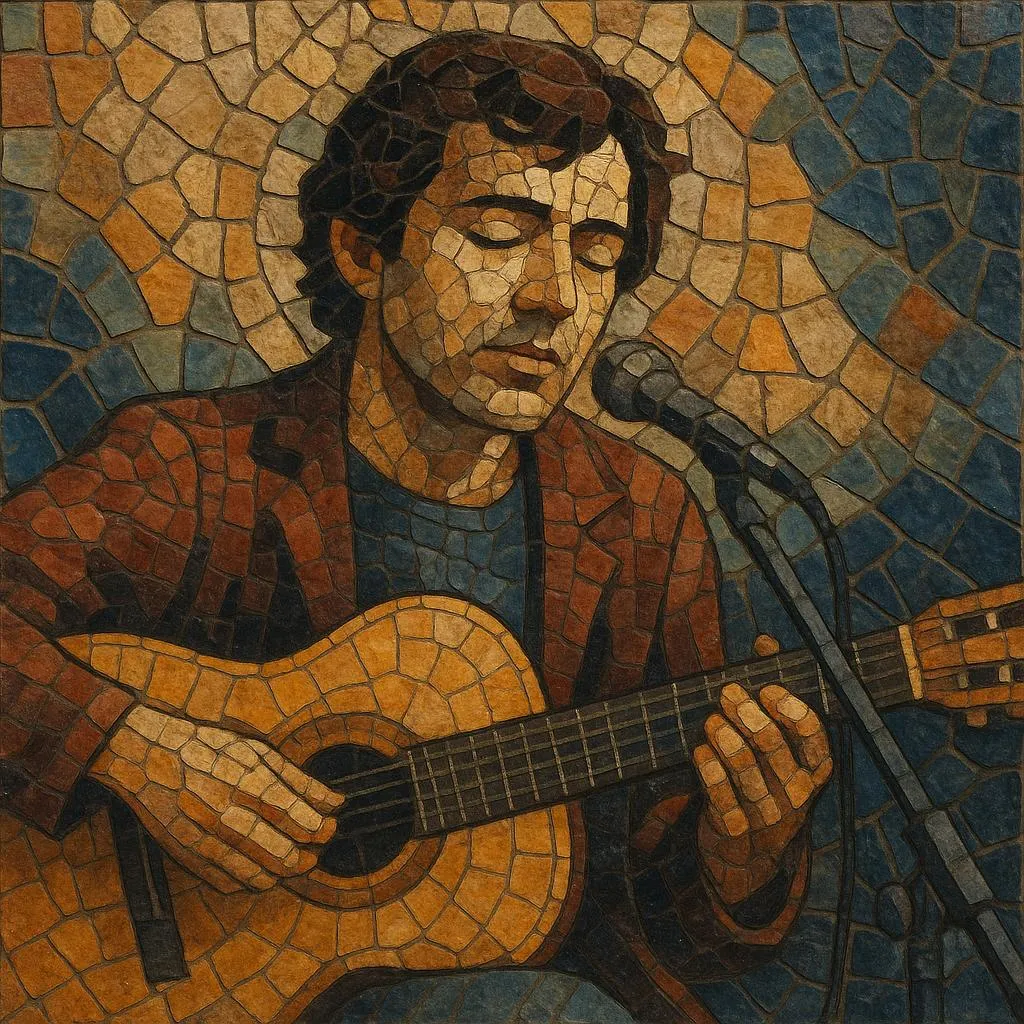
Cantautor music refers to the Spanish-language singer‑songwriter tradition in which the author both composes and performs their own songs, placing special emphasis on poetic lyrics, personal voice, and social or philosophical reflection.
Rooted in Spain and intertwined with parallel movements across Latin America, the style draws from folk accompaniment (especially nylon‑string guitar), French and Italian chanson, and the global protest‑song wave. While musically understated—often intimate and acoustic—it is lyrically sophisticated, prioritizing metaphor, storytelling, and careful diction over vocal virtuosity or studio spectacle.
Over time the cantautor approach has expanded from politically charged repertoire to deeply personal and romantic themes, influencing Spanish pop/rock writing, indie singer‑songwriters, and contemporary Spanish‑language popular music.
History
The aesthetic foundations of cantautor music formed at the crossroads of several currents: French chanson (Brassens/Brel’s literary lyricism), Italian canzone d’autore, Anglo‑American folk singer‑songwriters, and Iberian folk and flamenco song forms. These influences converged as a new cohort of Spanish writers embraced the idea that the performer’s own text and authorship should be central.
In Spain, the genre took shape during the late Franco era, when the sung word became an instrument of cultural identity and veiled dissent. Movements like Nova Cançó (Catalonia) and its analogs in Galician and Basque cultures overlapped with the broader “cantautor” label. Artists developed a repertoire that fused folk accompaniment with high‑literary Spanish and regional languages, smuggling social critique through allegory and metaphor.
Parallel Latin American currents—Nueva Canción (Chile/Argentina) and Cuba’s Nueva Trova—shared aesthetics and often repertoire exchange with Spanish cantautores, reinforcing a transatlantic network of poet‑singers.
After Spain’s transition to democracy, cantautor music diversified beyond protest anthems. Themes broadened to romance, urban chronicles, existential reflection, and everyday poetics. Production values gradually expanded (piano, small ensembles), but the authorial voice and lyric craft remained primary. The genre’s sensibility permeated Spanish pop and rock en español, raising the profile of the songwriter’s text across mainstream formats.
A new generation blends classic cantautor writing with indie, jazz‑tinged harmonies, and modern production. Digital platforms and intimate live circuits (teatros, salas pequeñas) sustain the tradition’s conversational, close‑up feel. While sociopolitical songs persist, present‑day cantautores often balance affective, introspective narratives with refined musical understatement.
-
•
Draft the poem first; define a central image or line that returns as the refrain.
•Map stress patterns to melody; let natural prosody dictate rhythm.
•Choose a harmonic palette that reflects the lyric’s mood; refine voice‑leading for smoothness.
•Record a live take to preserve immediacy; overdub only supportive colors.

