Your digging level
Description
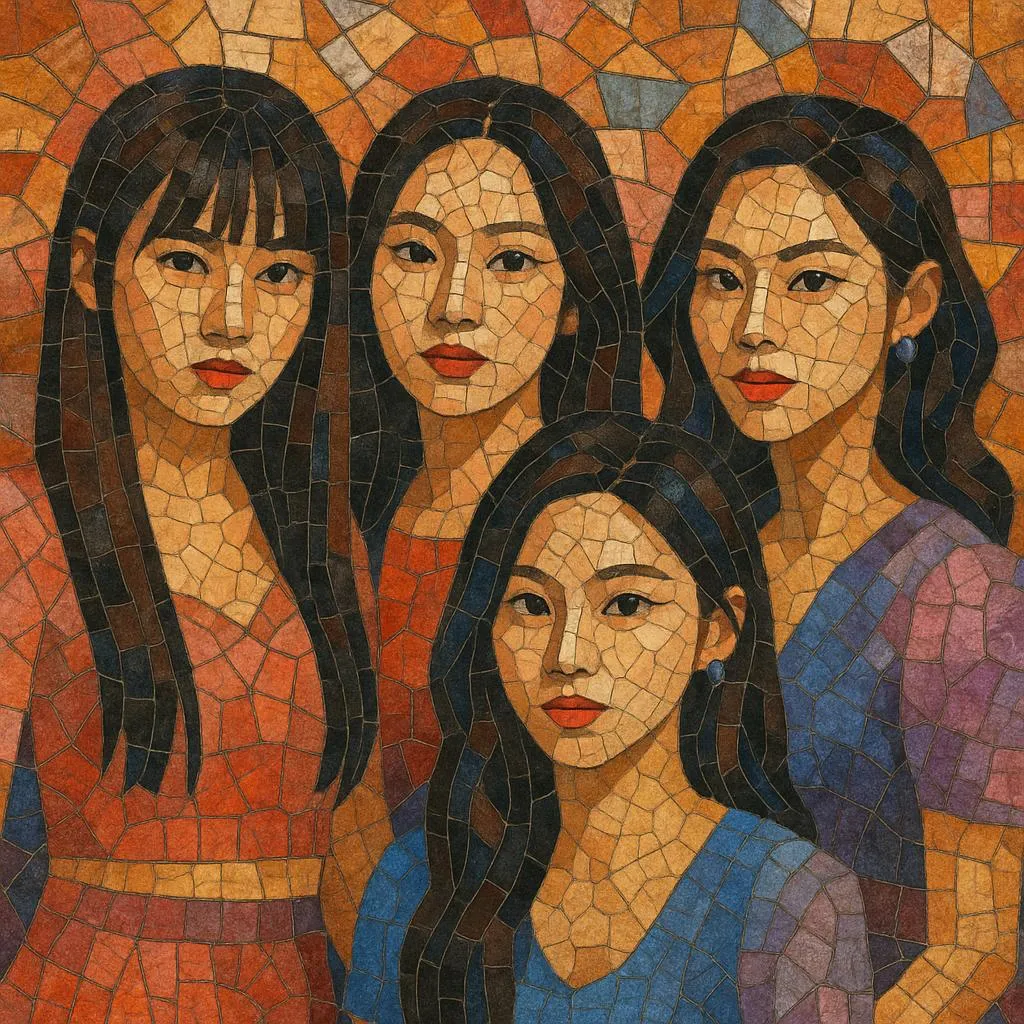
C-pop girl group is a branch of Chinese-language pop centered on multi-member female idol/vocal groups.
It typically blends polished pop songwriting with tightly arranged vocal harmonies, hook-forward choruses, and choreography-ready rhythms.
The genre spans “Greater China” aesthetics (Mainland China, Taiwan, Hong Kong) and often adapts contemporary global pop trends—dance-pop, R&B, EDM, and hip hop—into Mandarin- or Cantonese-language releases.
Beyond music, it is also an idol format: visual concept, group roles, fandom culture, and variety/TV/social-media presence are integral to how the genre is produced and consumed.
History
C-pop girl group music grew out of Chinese-language pop’s increasing industrialization in the 1990s, when record labels and television variety programming made “group acts” a scalable format.
During this period, producers emphasized memorable choruses, approachable themes, and a clean, radio-friendly mix, with Western and Japanese pop arrangements becoming increasingly influential.
In the 2000s, girl groups became a mainstream anchor of Mandarin pop and Cantopop, supported by music television, film/TV tie-ins, and endorsement-driven star systems.
Sound palettes widened to include stronger R&B influence, brighter synth-pop textures, and more explicit dance-pop production, while group identity (member personas, styling, and concept cycles) became more formalized.
From the 2010s onward, Mainland China’s large-scale idol ecosystem accelerated the genre’s growth.
Large-member “48-style” subunit systems, survival shows, and short-video/social platforms reshaped release strategies: frequent singles, performance clips, choreography challenges, and fan-participatory marketing.
Production also trended toward EDM drops, trap-informed drums, and international co-writing camps.
Today, C-pop girl group music spans multiple sub-styles—from bright, youthful dance-pop to darker, performance-heavy, hip hop–leaning tracks.
The genre continues to integrate global pop production while retaining Chinese-language lyricism, local media formats, and fandom-driven consumption patterns.

Top albums