

Your digging level
Description
Burrakatha is a Telugu-language narrative singing and storytelling tradition from the Andhra–Telangana region of India. It blends sung narration, spoken dialogue, percussion, and humor into a portable, small-ensemble performance suited to village squares, temple courtyards, and public gatherings.
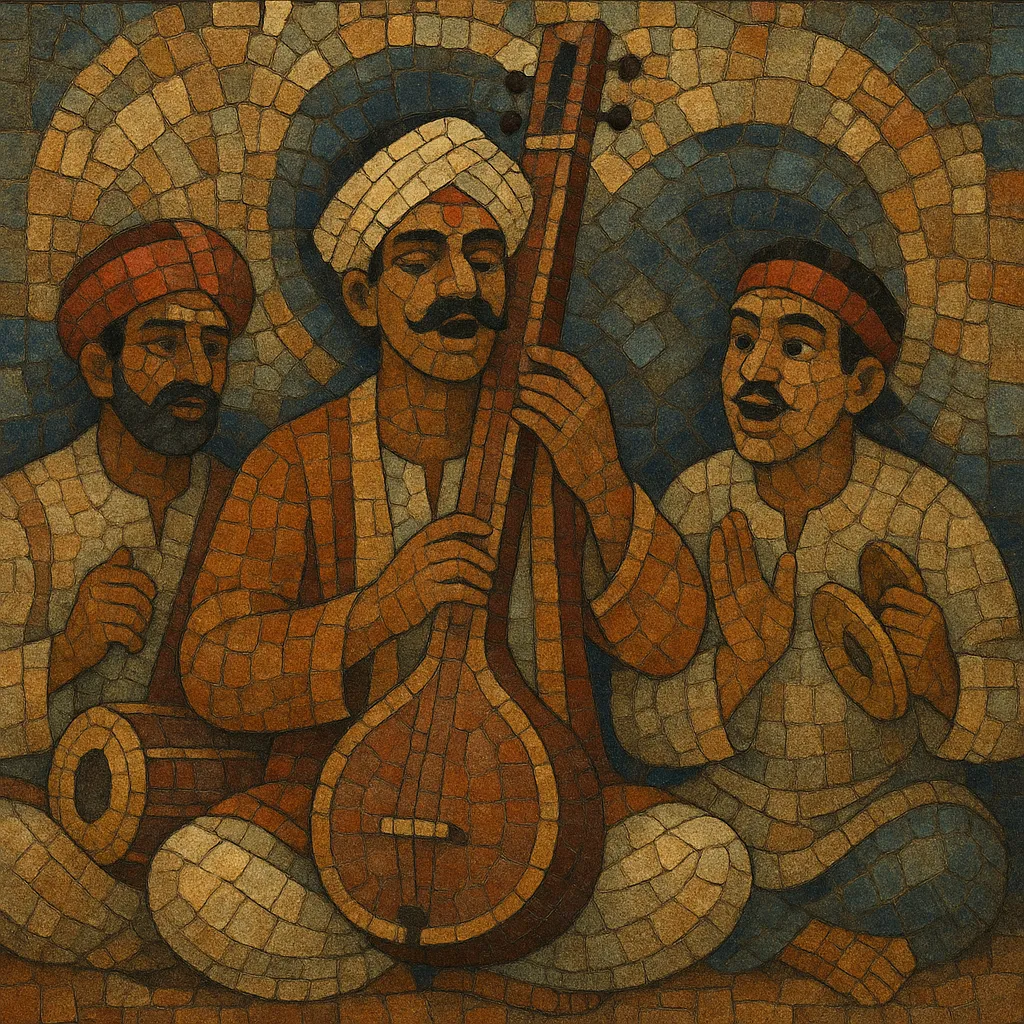
A typical troupe features three performers: a lead storyteller-singer (Kathakudu) who carries the narrative and sings refrains, and two supporting artists who provide antiphonal choruses, rhythmic accompaniment, and comic asides. The ensemble commonly uses a tanpura-like drone (often referred to locally as the burra/tambura), frame drums or hand cymbals for tala, and occasionally small barrel drums; in contemporary settings, harmonium or violin may reinforce the melodic line.
Repertoire spans mythological episodes, local legends, moral fables, and socially conscious or satirical pieces. Musically, it draws on light Carnatic ragas and accessible rhythmic cycles, favors call-and-response hooks that invite audience participation, and interleaves narration with sung stanzas to maintain momentum and clarity.
History
Burrakatha took shape as a popular narrative-singing practice in Telugu-speaking regions, synthesizing older temple and courtly story forms with itinerant folk performance. While antecedents reach back several centuries, the streamlined three-person format, use of a drone and hand percussion, and alternation of narration with strophic song became widely recognizable in the early 20th century.
During the Indian independence movement, burrakatha troupes adapted mythic and moral tales into topical allegories, spreading anti-colonial, reformist, and civic messages to mass audiences. The style’s portability, memorable refrains, and comic interludes made it a potent medium for public pedagogy and mobilization, especially in rural Andhra and Telangana.
After independence, state cultural bodies and people’s organizations commissioned burrakatha for public health, literacy, and development campaigns. Cinema and radio influenced pacing, repertoire, and amplification practices; some troupes recorded for broadcast or gramophone. Urban migration and mass media competition, however, reduced the number of full-time troupes.
Cultural academies, universities, and community festivals have supported training and revival initiatives. Modern burrakatha often features shorter formats, microphones, and harmonium/violin support, while retaining call-and-response, satire, and didactic closure. New texts address migration, labor, environmental issues, and civic rights, keeping the tradition responsive to present-day audiences.

%2C%20Cover%20art.webp)
%2C%20Cover%20art.webp)
%2C%20Cover%20art.webp)
